A two-week ceasefire between the United States and Iran has been agreed, but much remains unclear. What will it entail? Will it last? Will it even materialize? Most importantly, where will it lead?
The good news is that many of the pressures that brought about the ceasefire remain in place.
None of the combatants’ interests would be served by the deployment of US ground forces, attacks on Iran’s civilian infrastructure, or the destruction of neighboring Gulf countries’ water-treatment facilities, oil refineries, or data centers.
This is not to predict the emergence of a formal, comprehensive, and lasting peace. But it does suggest that a return to full-scale war, while possible, is not inevitable. This allows us to make a preliminary assessment of the war and its effects.
The big winner is Russia. Its economy has benefited significantly from rising energy prices.
US relaxation of sanctions on Russian oil added to the windfall and could well outlast the return of energy prices to pre-war levels.
The Kremlin also gained from America’s use of weapons that could have gone to Ukraine and are not easily replaced, and the deterioration in America’s relationship with Europe has further weakened NATO, a long-standing goal of Russian President Vladimir Putin.
China benefits from a renewed US focus on the Middle East
China has also come out a winner. It benefits from a renewed US focus on the Middle East, which translates into reduced US forces and firepower in the Indo-Pacific, meaning that fewer weapons would be available for any Taiwan contingency.
Moreover, with the US having significantly undermined its standing in the Middle East with its reckless war, China could emerge as a sought-after partner in the region.
Who is worse off? The conflict was clearly bad for US-European relations and Taiwan, as well as for Ukraine, because of Russia’s gains.
At the same time, however, Ukraine’s cutting-edge drone technology has helped the country establish new commercial and security ties with Gulf states, including Saudi Arabia.
A more aggressive Iran has exposed the vulnerabilities of the Arab states
A more aggressive Iran has exposed the vulnerabilities of the Arab states (Saudi Arabia, the United Arab Emirates, Bahrain, Kuwait, Qatar, and Oman). Now they must live under Iran’s shadow and face the possibility of renewed conflict, putting the region’s economic model—built on stability, foreign investment, and tourism—at risk.
The other principal loser of the war is not a country but a population: the Iranian people.
The regime, having already killed tens of thousands of civilians before the war began, is now more entrenched than ever, with arguably more hardline leaders.
None of this bodes well for Iranians’ economic prospects or freedom.
Israel reduced Iran’s ability to project power
The three countries most affected by the conflict are the most difficult to assess. All gained and lost, but some lost more than others.
Iran lost much of its conventional military might. Its economy, already in terrible condition before the war, is in far worse shape now. Many political and military leaders were killed.
But one can also argue that Iran gained from the war. It demonstrated a capacity to stand up successfully to the US and absorb punishment while still being able to hurt others and exert regional influence.
Iran is also likely to play a significant, if not exclusive, role in the operation of the Strait of Hormuz going forward, which will give it leverage and possibly revenue. It may well retain elements of its nuclear program. For the foreseeable future, the regime appears secure.
As for Israel, many of its war aims have not been met. Israel reduced, but did not eliminate, Iran’s ability to project power.
It did not bring about the regime change it sought, and the leadership change that did materialize will likely be to Israel’s detriment.
Americans on the right increasingly argue that Israel led the US into a foreign war to serve its own interests
It remains unclear whether any peace agreement will preclude Iranian support for its proxies (Hezbollah, Hamas, and the Houthis) or limit its stock of ballistic missiles and drones.
A peace agreement might even impose constraints on Israel’s ability to use military force against Iran and its proxies.
The US-Israel relationship could also be worse off. The American left’s outrage over the Gaza War had already put these historic ties under pressure.
Now, Americans on the right increasingly argue that Israel led the US into a foreign war to serve its own interests. Should Israel break the ceasefire and draw the US back in, attitudes toward it may worsen.
Trump will continue to insist that the war was a great success
US President Donald Trump started the war under the apparent assumption that it would be quick and easy, like the intervention in Venezuela.
But the administration’s desired outcomes—a decisive military victory, an end to Iran’s nuclear program, and regime change—did not materialize.
In the process, 13 American soldiers died and hundreds were wounded. Several aircraft were shot down.
Five weeks of war cost tens of billions of dollars. Munitions were consumed far faster than they can be replaced.
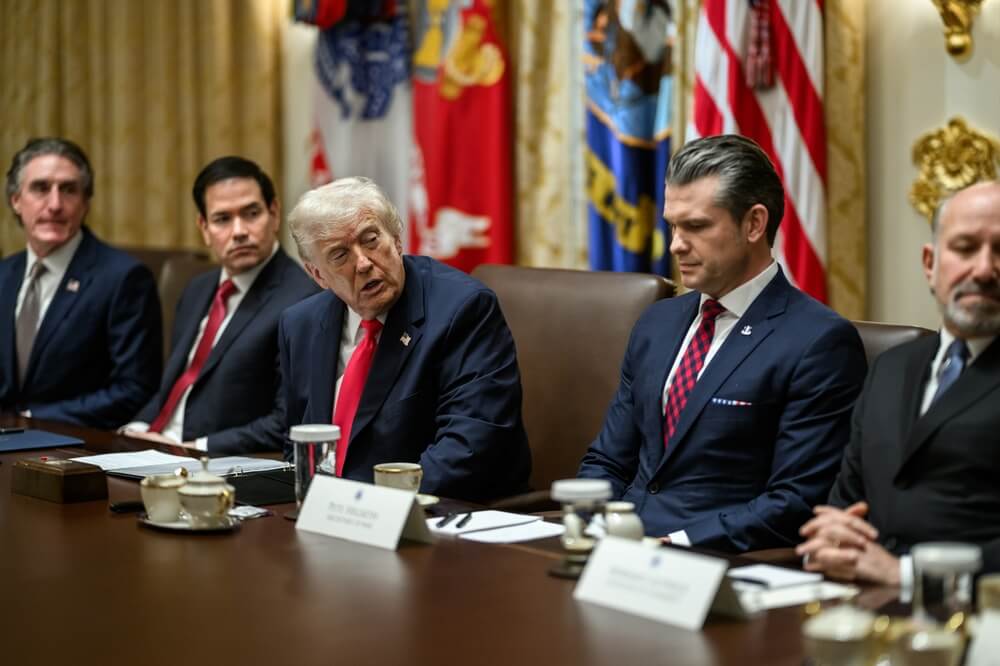 Donald Trump can and will continue to insist that the war was a great success, but the reality is different
The war also exposed America’s inability to provide adequate defense for its allies in the region, weakening those relationships.
America’s decision not to consult with many of its allies before attacking Iran has increased the perception that it is erratic and dismissive of others’ legitimate concerns.
Meanwhile, the cost of gasoline has shot up at home, and farmers are contending with a fertilizer shortage. All this suggests higher inflation and a slower economy are likely.
Trump, for his part, often appeared unsteady, with his social-media posts raising questions about his judgment and temperament.
Objectives were neither clear nor constant, and the policymaking apparatus looked dysfunctional.
Trump can and will continue to insist that the war was a great success, but the reality is different.
Tactical successes on the battlefield and the impressive rescue of a pilot cannot disguise what is emerging as a strategic defeat.
While campaigning for president against the incumbent Jimmy Carter in 1980, Ronald Reagan asked the American people: “Are you better off than you were four years ago?” Many thought not, which contributed to Reagan’s victory that November.
A similar question could be asked of Americans today: “Are you better off than you were five weeks ago?” The answer is a resounding “No.”
If the Iran war had been one of necessity—if America’s vital interests were in jeopardy and there was no alternative to the use of military force—the great cost to the US and its allies might be justified.
But the US had time and other options. Yet Trump undertook a war of choice—a decision that history will almost certainly judge harshly.
Richard Haass, President Emeritus of the Council on Foreign Relations, senior counselor at Centerview Partners, and Distinguished University Scholar at New York University, previously served as Director of Policy Planning for the US State Department (2001-03), and was President George W. Bush's special envoy to Northern Ireland and Coordinator for the Future of Afghanistan.
