In international politics, turning points are rarely recognised as they occur. More often, they become apparent only in retrospect, when they are seen as part of a broader shift in states behaviour. Two news stories from the past week fall into this category.
China has sent a special envoy to the Middle East to attempt to influence the de-escalation of the conflict involving Iran.
Meanwhile, Canada and the five Nordic countries agreed in Oslo to deepen cooperation in defence, technology, critical minerals, and economic security.
At first glance, these events appear unrelated. In reality, they reflect the same change: the international order is increasingly seen less as a framework guaranteeing stability and more as a space in which each state must establish its own protection mechanisms.
China's action is a clear example of this shift. Beijing announced on 4 March that it was sending a special envoy to the Middle East following Foreign Minister Wang Yi's discussions with Saudi Arabia and the United Arab Emirates.
The official explanation was standard: the need for de-escalation, protection of civilians, and a return to political dialogue.
However, an equally important aspect of China's message concerned the security of energy facilities and sea routes.
The scope of the Chinese initiative
Such emphasis clearly shows what China's real interest is in this crisis. For Beijing, the stability of the Gulf concerns the functioning of global energy flows and trade security, on which the Chinese economy directly depends.
Middle East Special Envoy Zhai Jun has been speaking with several regional governments in recent days, including Bahrain, where he met Foreign Minister Abdullatif Al Zayani on 12 March.
In these talks, Beijing repeats several specific positions: the need to reduce tensions, protect civilian and energy facilities, and preserve the security of maritime routes in the Persian Gulf.
The Gulf states insist on another issue – that Iran stop its attacks and ensure the stability of navigation through the region.
Beijing attempts to keep communication channels open with all parties
This exchange of messages shows the real scope of the Chinese initiative. Beijing attempts to keep communication channels open with all parties, but it does not assume the role of a state that takes control over negotiations regarding the crisis.
China has neither the political instruments nor the security capacities for that. Its diplomacy operates within a much narrower framework: it tries to remain an acceptable interlocutor to everyone in the region and to be present in the talks that, eventually, will have to start when the intensity of the conflict decreases.
This is precisely where the real logic of China's approach can be seen. Beijing is not trying to replace the United States as the security pillar of the Middle East.
Such a role would require a military presence, political responsibility for regional stability, and a willingness to respond to crises – all of which China systematically avoids.
Instead, China's strategy is much simpler: ensure a permanent political presence in the region and remain engaged in any serious conversation about its future stability.
In other words, China's goal is not to manage the crisis but to be present when it is decided how it will end.
To be present in the region
For decades, American policy in the region has relied on a military presence, a network of security agreements, and a willingness to use military force when Washington considers its interests threatened.
China has no such infrastructure in the region, nor does it show any intention of building it.
Beijing acts differently. Its presence in the Middle East is primarily based on trade, energy ties, and political contacts with almost all governments in the region.
When a crisis arises, Chinese diplomacy seeks to stay in touch with all parties and participate in discussions about its consequences. This is a limited approach, but it is functional for China.
The Chinese initiative should not be viewed as a serious attempt to mediate between the warring parties
Therefore, the Chinese initiative should not be viewed as a serious attempt to mediate between the warring parties.
It is much more likely that Beijing wants to maintain a political presence in a region crucial to global energy and trade flows.
Such an approach allows China to expand its diplomatic influence without entering into security commitments that would entail significant political and military risks.
Canadian-Nordic initiative
When viewed in isolation, China's initiative might seem like a mere diplomatic manoeuvre with restricted reach.
However, its significance becomes clearer when one considers what occurred simultaneously in Oslo. Canada and the five Nordic countries – Norway, Sweden, Denmark, Finland and Iceland – met to deepen their cooperation.
At that meeting, no new alliance was formed, nor was a new organisation established. However, the political message was very clear.
The joint statement highlighted the growing use of technology, trade, and resource access as tools for political pressure. Therefore, countries must develop their own mechanisms for economic security.
Such wording demonstrates how much the way in which states view economic interdependence today has changed. For a long time, Western politics assumed that trade and economic integration reduced political tensions. The idea was simple: the more interconnected economies are, the more costly and less likely conflict becomes.
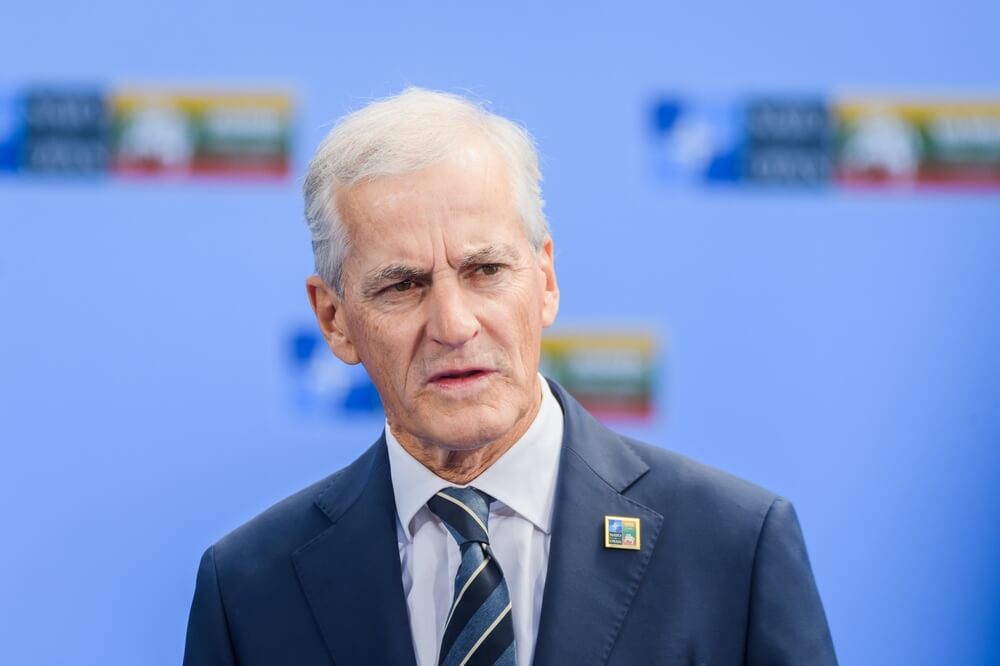 Canada and the Nordic countries agreed to strengthen cooperation in areas that are key to international competition today - Jonas Gahr Støre
In recent years, that logic has been increasingly questioned. Trade sanctions, restrictions on technology exports, control over energy flows and financial pressures have become common elements of state policy. Economic relations are no longer merely a matter of the market but also an instrument of political influence.
In such circumstances, economic connectivity does not automatically mean stability. It can also create dependencies that other states can exploit politically.
For this reason, the meeting in Oslo had much more concrete substance than it appeared at first glance.
Canada and the Nordic countries agreed to strengthen cooperation in areas that are key to international competition today: critical minerals, artificial intelligence, quantum technologies, space and satellite systems, and supply chain security. At the same time, they announced closer coordination in Arctic defence and security.
Flexible partnerships
These questions are part of a broader effort to reduce dependence on increasingly uncertain global economic and technological systems.
In this context, the Oslo decisions and Chinese diplomatic activity in the Middle East indicate the same shift: states rely less and less on the stability of the international system and increasingly seek to strengthen their own position within it.
A key feature of this agreement is that it is not intended as a closed political bloc. Norwegian Prime Minister Jonas Gahr Støre made it clear: cooperation should operate through flexible partnerships that can be expanded and adapted according to specific issues.
In other words, it is not a new organisation with rigid rules and structures but a practical form of cooperation between states with similar security and economic interests.
Great powers increasingly use trade, technology and financial flows as instruments of political pressure
Canadian Prime Minister Mark Carney made a similar observation earlier this year in Davos.
According to him, the international system is no longer undergoing gradual change but rather a break in continuity.
Great powers increasingly use trade, technology and financial flows as instruments of political pressure, while existing international institutions find it ever more difficult to mitigate such conflicts.
In these circumstances, middle powers seek to reduce their own vulnerability.
This is precisely what is evident in the agreements reached in Oslo. Through closer cooperation in technology, energy, defence and supply chains, Canada and the Nordic countries aim to reduce their dependence on an increasingly uncertain system.
The global order no longer guarantees stability
When China's diplomatic activity in the Middle East is considered alongside Canada's cooperation with Nordic countries, a broader pattern of behaviour emerges.
States of varying strength and political influence are beginning to act as if the international system no longer provides reliable security on its own.
As a result, they are developing their own protection mechanisms.
China is doing this by strengthening its political presence in regions that are key to energy and global trade.
%20EDITED.jpg) Governments are increasingly abandoning the assumption that the global order itself guarantees stability - Wang Yi
Governments are increasingly abandoning the assumption that the global order itself guarantees stability - Wang Yi
Canada and Nordic countries are taking a different approach, seeking to reduce the vulnerability of their economies through cooperation in technology, energy, critical minerals, and supply chain security.
The approaches differ but stem from the same assessment: the stability of the international system can no longer be taken for granted.
This shift has tangible consequences. States are investing more in supplier diversification, alternative technology systems, and regional security arrangements.
These measures increase the resilience of economies and political systems but also raise costs. Global integration, which once reduced the cost of production and trade, is becoming more complex and expensive.
The actions of Beijing and Oslo therefore signal the start of a new phase in international politics. Governments are increasingly abandoning the assumption that the global order itself guarantees stability.
Instead, more countries are seeking to ensure their own political and economic security in advance.
This does not mean the end of international cooperation, but it does mean that cooperation is increasingly built through flexible agreements, regional initiatives, and temporary coalitions.
Such a system is slower and more complex than the one that prevailed during a period of intense globalisation.
For many governments, however, it appears to be a more realistic response to a world in which the old guarantees of stability no longer exist.
