A war that began as a demonstration of complete coordination is now entering a phase where differences can no longer be concealed.
The initial strikes in late February appeared to be part of a unified strategy. American and Israeli forces operated in sync, with clearly aligned objectives and no visible political divisions.
Today, just a few weeks later, that picture has changed. Coordination on the ground remains, but the political logic that was meant to guide the war is no longer the same.
The difference does not lie in attitudes towards Iran but in the assessment of what the war should achieve and how long it should last.
Washington is trying to find a point of closure. Jerusalem shows no willingness to set a deadline.
Messages from Washington
The American administration quickly began to introduce a political framework for the operation. Explanations for entering the war were inconsistent from the outset.
The differing tones within the government’s leadership were not accidental but reflected the absence of a clearly defined end state. As time passed, this problem became more apparent.
At one point, it was said that the end was near, most of the work was done, and a reduction in involvement was being considered. The next moment, there were announcements of new attacks on infrastructure and additional pressure.
The problem is not only military. The war must conclude politically
These messages from Washington reveal not control, but uncertainty. The administration is trying to end the war before achieving a clear result on the ground.
The problem is not only military. The war must conclude politically, with a clear explanation for the public and allies.
Without this, each additional day of fighting increases the cost without guaranteeing the achievement of the objective.
Markets react, allies seek a clear plan
The limitations are specific. Energy prices are rising. Markets react to each new escalation. Allies are seeking a clear plan.
Domestically, pressure is mounting to avoid deeper involvement in the conflict. These factors determine how long Washington can sustain the war and under what conditions it can end it.
The objective is clear: to reduce Iran’s military capabilities to a level where they no longer pose an immediate threat
The Israeli side does not operate under these constraints. There are no announcements of an end. There are no deadlines. Operations are expanded as deemed necessary.
The objective is clear: to reduce Iran’s military capabilities to a level where they no longer pose an immediate threat. Until that is achieved, there is no reason to stop.
No quick resolution
Therefore, the differences are deepening. For the United States, the duration of the war is a problem in itself. For Israel, the duration of the war is not crucial if it leads to the desired results.
In this difference lies the essence of the problem. The United States wages war with a constant calculation of consequences. Israel wages war with a constant calculation of effect.
That difference would not be crucial if the conflict ended quickly. However, as time passes, the gap becomes more apparent. Assessments of impact and performance are ambiguous.
The war is entering a prolonged phase in which a quick resolution is no longer a realistic expectation but rather a political aspiration
There has been some progress, but there is no clear proof that crucial parts of Iran's military strength have been eliminated, especially those systems meant to withstand the first wave of attacks – like underground storage, backup command centres, and supply lines.
At the same time, Iran has not lost its ability to respond. Retaliatory strikes and pressure on regional dynamics show that the conflict has not reached the point of unilateral collapse.
This means the war is entering a prolonged phase in which a quick resolution is no longer a realistic expectation but rather a political aspiration.
Growing political divergence
In these circumstances, the difference becomes essential. For Washington, each additional day of war brings greater political and economic costs without the certainty of achieving a clear result.
For Israel, prolonging the conflict is not a problem but a tool. If the objective is not achieved, the war is extended rather than shortened.
The involvement of other actors means the war is no longer entirely controlled by those who initiated it.
When mediators become involved, when the security of nuclear sites is questioned, and when regional powers begin to act behind the scenes, it is clear the conflict has exceeded the limits of the original plan.
It is no longer a limited operation but a situation with broader consequences that is increasingly difficult to manage.
The United States must manage several issues simultaneously: the course of the war, the reactions of allies, regional stability, and the consequences for its own interests
In such circumstances, the United States must manage several issues simultaneously: the course of the war, the reactions of allies, regional stability, and the consequences for its own interests.
Israel does not face the same level of pressure. Its focus remains narrower and more direct.
The difference is also evident in the way objectives are chosen. For Washington, any attack on infrastructure carries political and legal costs.
Such decisions are not made solely at the military level; they are followed by reactions from Congress, the public, and partners. This limits the scope for further expansion of operations.
Israel has lived with these constraints for longer and approaches them differently. As a result, it has greater freedom in selecting targets and a willingness to continue operations even as external pressure increases.
This explains why the war, despite its formal joint nature, operates at two parallel tempos. There is cooperation on the ground, but political divergence can no longer be hidden by claims of unity.
Managing differences
What happens next depends on whether this difference remains manageable or begins to influence concrete decisions. If Washington decides to end the operation before Israel thinks its goals have been met, the tempo will change.
Israel will uphold the intensity it considers essential, while the United States will strive to minimise its involvement and mitigate its risk.
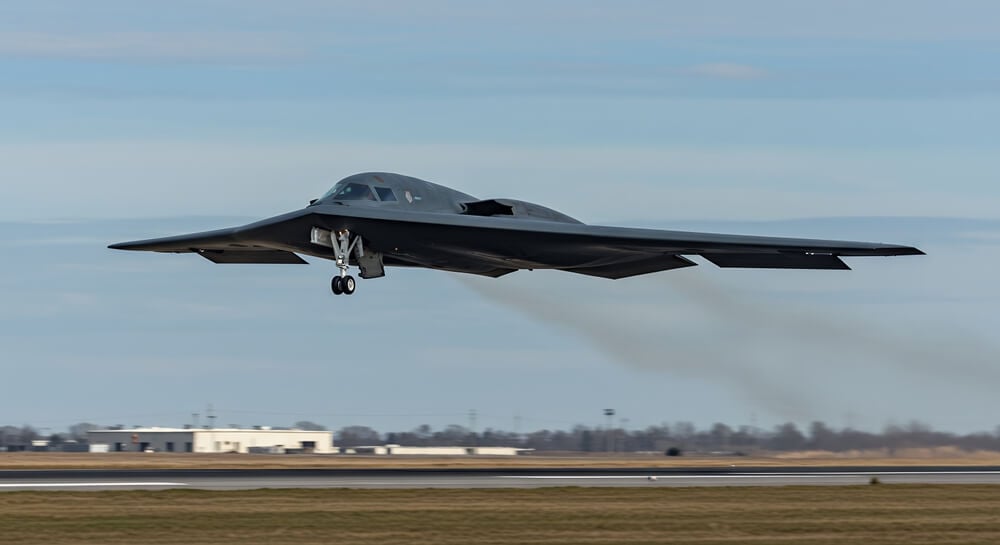 The war began as an example of total alignment. It continues as a test of how long two sides can fight the same conflict with different expectations
If, on the other hand, operations continue at a pace aligned with Israel's assessment, the US administration will face increasing political costs and diminishing ability to explain the objective and its timeline.
The most likely development at present does not point to a quick resolution. The conflict increasingly resembles a prolonged standoff without a clear end.
In such an environment, any difference in objectives becomes operationally significant, as it affects daily decision-making.
This is not an alliance crisis, but there is a change in its character.
The war began as an example of total alignment. It continues as a test of how long two sides can fight the same conflict with different expectations.
The core issue is no longer whether they share the same opponent, but whether they still share the same goal.
Until that difference is resolved, the war will not have a clear ending, regardless of developments on the ground.
