In the past, the conventional wisdom was that a major conflict in the oil-producing heart of the Middle East could badly destabilize China, the world’s leading oil importer.
Yet so far, China is weathering the US/Israeli war with Iran better than many of its neighbors and treading a cautious path as opportunities to profit from the fallout emerge.
Chinese President Xi Jinping has now watched both Russian President Vladimir Putin and US President Donald Trump launch wars against overmatched opponents, only to face unwelcome surprises.
Meanwhile, he has avoided unnecessary risks in positioning China for long-term strength and stability, acting cautiously in his responses to the COVID-19 pandemic and China’s structural economic weaknesses.
Likewise, Xi proved unwilling to support Russia’s war in Ukraine directly or even to recognize Putin’s territorial claims.
Now he is refraining from openly criticizing the US bombing campaign in Iran. The invitation remains open for Trump to visit Beijing next month.
Nor is China as damaged by this war, and the massing of firepower in and around the strategically vital Strait of Hormuz, as it would have been even a few years ago.
Its oil stockpiles and strong refining capacity limit the risk of near-term fuel shortages.
Its pipeline gas imports and domestic gas production now ease its need for liquefied natural gas.
And if the war drags on, it can get more energy from friendly countries, particularly Russia, as well as from its vast coal reserves and renewables.
America’s loss of firepower
The war has even given China some advantages. Its fully integrated supply chains make it better able than rival exporters to contain production costs, and today’s elevated prices for oil and maritime insurance are boosting demand for China’s clean-tech exports.
This will lift long-term investment in electrification and help more economies diversify away from oil and gas.
These processes were well underway before the war, but the conflict’s destruction of energy infrastructure and fears of more to come will accelerate them.
China also benefits strategically from America’s loss of firepower. The war has depleted US stockpiles of long-range cruise missiles and interceptors, most of which will take years to replenish.
China benefits from America’s loss of reputation as a reliable international actor
These shortages, in turn, will deepen America’s already heavy dependence on Chinese exports of the critical minerals needed to produce new weaponry and ammunition.
While the US could try to find workarounds in the next three to five years, a decade is a more realistic timeframe. In the meantime, Trump will have a weaker hand in negotiating with Xi.
China also benefits from America’s loss of reputation as a reliable international actor, as evidenced by the fact that wealthy and developing countries alike are increasingly hedging their bets geopolitically.
China is not ready to assume more risk
That does not mean China is ready to assume more risk, however. A distracted superpower’s depleted arsenal is not a sufficiently persuasive reason for Xi to invade or blockade Taiwan in the coming months.
Instead, the war in Iran allows Chinese strategists to study the US military’s newest uses of air and naval power, and even to understand how the Americans are deploying AI. Such insights could be useful in the future.
Xi knows that Chinese forces have not been in a shooting war since losing a 27-day border clash with Vietnam 47 years ago, and that China has never fought a naval battle.
Moreover, on April 3, Xi purged yet another senior figure in his government, a Politburo member involved directly in defense spending and procurement.
His moves against Communist heavyweights with direct or indirect ties to the People’s Liberation Army amount to the most extensive purge since the 1980s.
Xi believes the PLA is not ready for an ambitious military undertaking that would surely produce unwelcome surprises of its own
It is another sign that Xi believes the PLA is not ready for an ambitious military undertaking that would surely produce unwelcome surprises of its own. Nor does China feel any need to get involved in the Middle East war.
Its leaders appear increasingly confident in Iran’s ability to raise the costs for an increasingly unpopular superpower, and they can remain confident that Trump will not get the regime change he once expected.
Xi also knows that every country in the Middle East recognizes the importance of maintaining good relations with China, both for reconstruction and for the region’s future stability.
The risks of medium-term economic disruptions
After all, China is expected to play an important role in any multinational policing force to ensure the long-term openness of the post-war Strait of Hormuz. It is still the region’s biggest oil customer.
Trade between China and the Middle East has tripled in the past two decades and will continue to grow.
The region has also become an increasingly important market for Chinese exports, including green tech, and for the deployment of Chinese cloud architecture, AI platforms, and “smart city” systems.
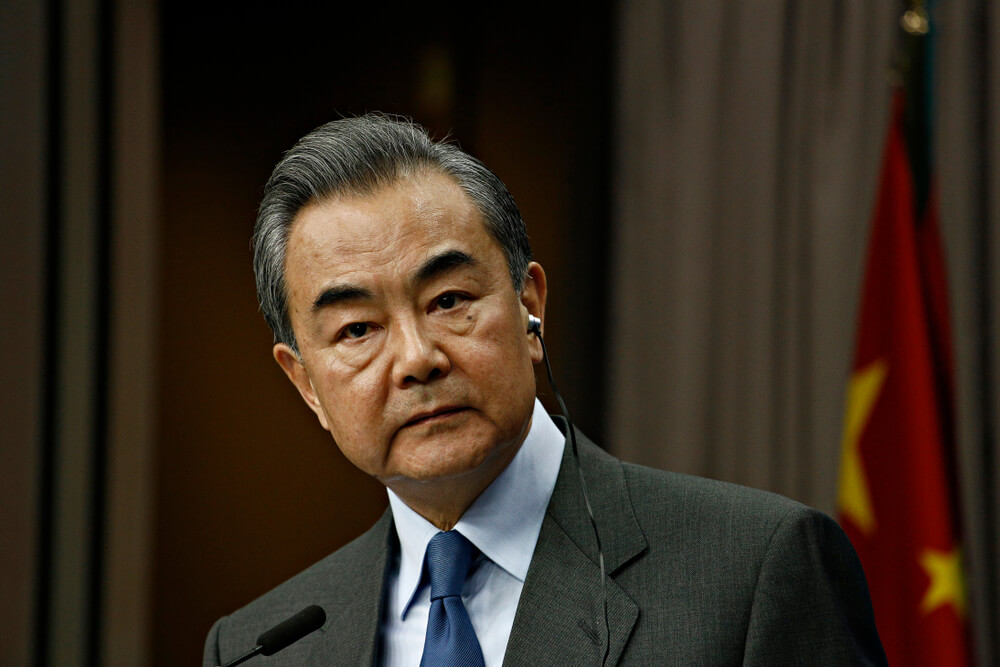 China’s diplomacy will remain nonaligned and carefully balanced to preserve a commercially beneficial image of neutrality - Wang Yi
China’s diplomacy will remain nonaligned and carefully balanced to preserve a commercially beneficial image of neutrality.
All that said, if the current ceasefire ends without a settlement and the war continues longer than a few more weeks, China will become more vulnerable.
Xi is surely nervous about Trump’s willingness to use unilateral military force to get what he wants from governments he sees as unfriendly.
Many Chinese officials previously believed they could make deals with Trump. Now, they must deal with someone who has assumed a far more hawkish posture.
Nor can Chinese policymakers ignore the risks of medium-term economic disruptions from further damage to energy infrastructure in the Middle East, or threats to the physical security of Chinese tech infrastructure.
It will not help China’s flagging economy if markets in Asia and Europe suffer slowdowns and are forced to cut their imports.
In short, China can count itself among the very few winners in this war so far. But even the Chinese are hoping that the fighting ends soon.
Ian Bremmer, Founder and President of Eurasia Group and GZERO Media, is a member of the Executive Committee of the UN High-level Advisory Body on Artificial Intelligence.
