The Organization of the Petroleum Exporting Countries has just lost one of its most visible Arab Gulf members.
The United Arab Emirates (UAE) announced its exit, yet the oil market showed little reaction. Prices neither surged nor collapsed; they moved only marginally.
That limited response is more revealing than the decision itself because it reflects how the market now evaluates power in oil.
It does not price membership. It prices barrels, spare capacity, reserves, infrastructure, and the ability to deliver supply under stress.
The UAE is not an insignificant producer, but its position must be understood in context.
It is OPEC’s third largest producer and ranks approximately seventh or eighth globally by production.
It currently produces around 3.2–3.4 million barrels per day, and prior to the disruption of the Strait of Hormuz it exported roughly 2.6–2.7 million barrels per day, placing it among the top five to seven exporters worldwide depending on market conditions.
Its sustained capacity has already reached 4.5–4.7 million barrels per day, with a defined path towards 5 million barrels per day.
At that level, under normal conditions, exports could rise to 3.7-3.9 million barrels per day.
That higher figure reflects a future scenario rather than current flows, and the gap between the two remains significant.
Saudi Arabia and Kuwait
Saudi Arabia operates on a fundamentally different scale. It currently produces approximately 10–10.1 million barrels per day, with sustained capacity of 12 million barrels per day and a surge capability of 12.3–12.5 million barrels per day.
It is also by far the world’s largest exporter, placing substantially more oil on the market than any other producer. The comparison is not incremental; it is structural.
The difference extends beyond output. Saudi Arabia holds approximately 270 billion barrels of proven reserves, with ongoing discoveries expected to push that figure materially higher over time, potentially beyond 300 billion barrels.
The UAE’s expansion is significant, but it does not place it at the centre of global supply
By comparison, the UAE holds roughly 100–110 billion barrels, while Iraq accounts for around 145 billion barrels, with current production of 4.2–4.5 million barrels per day and a trajectory towards much higher output of 5.5-6 million barrels per day if infrastructure and political conditions align.
Kuwait, with approximately 100 billion barrels of reserves and a sustained production capacity of about 3.2 million barrels per day, remains part of the same ecosystem.
The UAE’s expansion is significant, but it does not place it at the centre of global supply.
The system remained intact
This is why the market did not move. The UAE’s departure did not add or remove barrels, nor did it alter the physical balance of supply.
It did not change Saudi Arabia’s scale, Iraq’s potential, or Kuwait’s position. It did not affect the constraints caused by the disruption of the Strait of Hormuz. The system remained intact.
The current war has reinforced this reality. The conflict between the United States, Israel and Iran has effectively disrupted flows through the Strait of Hormuz, through which roughly 20 percent of global oil shipments normally pass.
The distinction between capacity and deliverability explains the market response
Under these conditions, production capacity is secondary to deliverability.
The UAE is structurally constrained. Its primary bypass route, the Habshan–Fujairah pipeline, can carry approximately 1.5–1.8 million barrels per day.
Even if production rises towards full capacity, a substantial portion of output remains dependent on Hormuz.
Saudi Arabia, by contrast, can reroute up to 7 million barrels per day through its east–west pipeline system to the Red Sea, of which approximately 5–5.5 million barrels per day is currently available for export, with the remainder supplying domestic requirements.
These flows are supported by storage at Yanbu and across a wider international storage network, allowing exports to continue despite disruption in the Gulf.
This distinction between capacity and deliverability explains the market response.
The UAE’s exit does not unlock supply, increase deployable spare capacity, or alter the system’s ability to absorb shocks. The marginal barrel remains where it was.
Under normal conditions, Saudi Arabia typically maintains 2.5-3 million barrels per day of spare capacity, while the UAE, prior to the disruption of Hormuz flows, operated with roughly 1-1.5 million barrels per day.
As the UAE moves towards full utilisation outside OPEC quotas, that cushion narrows. The practical effect is to leave Saudi Arabia as the principal source of immediately deployable supply in the market.
The structural hierarchy
Saudi Arabia remains the only system capable of deploying spare capacity at scale on short notice. As other producers absorb their margins, this reality is reinforced.
That position has been demonstrated repeatedly. In March 2020, when Russia declined to participate in coordinated production cuts, Saudi Arabia sharply increased output, triggering a price war that drove oil prices down rapidly and produced extreme volatility across global markets, including a brief collapse of US crude futures into negative territory.
The pressure forced a Russian reversal and a return to coordinated supply management.
Benchmarks reflect underlying supply and demand conditions; they do not determine them
Earlier episodes within OPEC followed the same pattern, with increases in Saudi production used to counter attempts by other producers, such as Venezuela, to capture market share outside agreed limits.
The UAE is also attempting to expand its role in pricing through the development of the Murban crude benchmark, designed to function as a freely traded regional reference similar to Brent or WTI.
Even if that effort succeeds technically, its impact on market power will be limited.
Benchmarks reflect underlying supply and demand conditions; they do not determine them.
Brent itself is priced by the market rather than by the United Kingdom. In the same way, a Murban benchmark would provide an additional pricing reference, but it would not alter the structural hierarchy that governs supply.
The most influential voice in the market will continue to be the producer with the largest immediately deployable capacity and the ability to sustain exports under all conditions.
Why did the market not react?
Leaving OPEC therefore alters positioning, not hierarchy. It allows the UAE to move towards full production and pursue market share, but it does not shift the underlying balance of power.
Once flows through the Strait of Hormuz normalise, the relative positions remain unchanged: the UAE increases output incrementally as it reaches capacity, while Saudi Arabia retains the ability to adjust supply immediately and at scale.
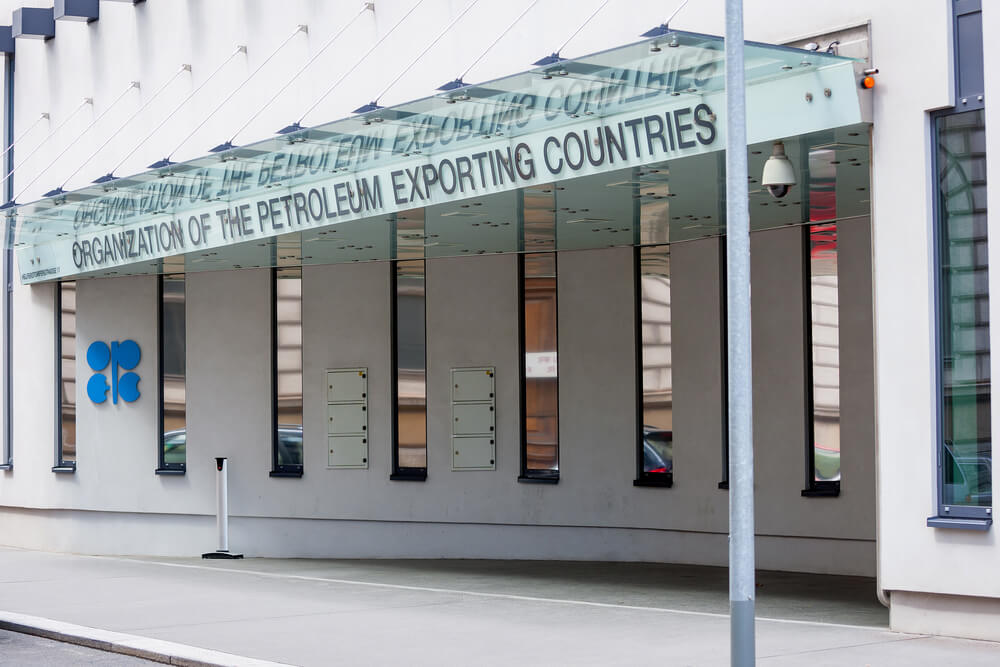 Leaving OPEC alters positioning, not hierarchy. It allows the UAE to move towards full production and pursue market share, but it does not shift the underlying balance of power
That distinction defines influence. It also defines risk. By moving towards full production outside OPEC constraints, the UAE is positioning itself to compete more directly for market share.
In such an environment, competition has historically taken the form of price adjustments and, at times, price wars.
In any scenario where supply becomes contested, the producer with the largest immediately deployable capacity and the greatest ability to sustain exports at scale under pressure determines the outcome.
The UAE does not occupy that position.
This is why the market did not react. The departure did not alter supply, spare capacity, or deliverability. The structure of the market remained the same.
The conclusion is straightforward. The UAE’s exit does not redefine the oil market because the market is no longer structured around formal coordination.
It is structured around physical capability. Within that system, the hierarchy remains unchanged.
Dr Nawaf Obaid is a Senior Research Fellow at the Department of War Studies, King’s College London.
