Russia is undoubtedly one of the few beneficiaries of the disruption in the global energy market caused by the Israel-US attack on Iran.
Russia's income from gas and oil exports in March will statistically be half of what it was a year ago, due to lower prices and a stronger rouble.
However, the benefit will certainly be reflected in the statistics as early as next month, given that, since the start of the war in Iran, oil prices have risen globally by about 40%.
The windfall profits from the war in Iran are far from negligible for Moscow. Until mid-March, that is, during the first two weeks of the war, Russia earned close to USD 8 billion from the export of fossil fuels, or nearly USD 400 million per day from oil exports alone.
This means that, if market disruptions continue at this intensity, Moscow can expect close to USD 500 million every day of the Iran war from the exports of oil, gas, and coal.
Such a development is a godsend for the Russian war economy, exhausted by the four-year invasion of Ukraine and even more so by Western sanctions that have severely affected its energy sector, the largest contributor to the state budget.
The easing of US sanctions against countries that purchase Russian oil further fuels the Kremlin's optimism.
That decision is rightly being interpreted as an indication of the direction the administration could take in the long term as part of its overall thaw with Moscow.
An unexpected opportunity
However, Moscow cannot finally find relief in the new positive circumstances brought about by the war in Iran. It seems that Moscow is aware of this situation, even as it smiles at the unexpected profits from oil and gas that have accumulated since the beginning of March.
For these circumstances to become favourable in the long term, Moscow will have to wait for the outcome not only of the war in Iran but also of many other related processes, in some of which it is a direct actor.
Where it is not an actor, it frantically tries to get involved and steer events as much as possible towards an outcome that would suit its interests.
Moscow sees the war in Iran as a huge, unexpected opportunity to create a rift among the transatlantic partners
Moscow sees the war in Iran as a huge, unexpected opportunity to create a rift among the transatlantic partners.
The sharp line of disagreement between the Europeans and the United States presents an opportunity for Moscow to make a much larger profit than it is currently making from exporting more expensive oil and gas.
One of the main strategic assumptions with which Vladimir Putin launched the invasion of Ukraine four years ago was that, due to disunity, Western powers would not support Kyiv. The opposite happened, despite Moscow's great effort to prop up and deepen all the existing cracks in the Western alliances.
The war in Iran, however, opens the door for a new attempt, which Moscow is trying not to let slip away this time.
Anti-war warmongers
On 17 March, Putin's chief negotiator with the United States, Kirill Dmitriev, responded swiftly to the European rejection of Trump's request for assistance in resolving oil and gas transportation disruptions in the Persian Gulf. Naturally, he sided with Trump, accusing European leaders of being "anti-Trump."
"UK and EU warmongers are showing how deeply anti-Trump they really are. They tried to hide it for a long time, but now everyone can see it," Mr Dmitriev wrote on X.
The statement from Putin's adviser and negotiator accurately reveals the Kremlin's true interests, despite the logical absurdity of accusing Europeans of being "warmongers" for refusing to join the war (against Iran).
Support for Trump is tactical, as it aligns with his emotional hostility towards the Europeans and serves to flatter his ego
Support for Trump in this instance is tactical, as it aligns with his emotional hostility towards the Europeans (he called them "cowards") and serves to flatter his ego.
At the same time, it seems to be a small gesture of gratitude for Trump's decision to ease sanctions on all buyers of Russian oil while the war in Iran continues.
Europe must be the loser in the war in Iran
Moscow is strategically aiming to undermine European policies in the competition with Trump over the war in Iran, thereby pushing Europe to accept the American approach towards Ukraine.
The weakening of the European position in this context makes the parliamentary elections in Hungary on 12 April critically important for Moscow. The Kremlin is assembling a complex puzzle with this perhaps crucial "if" in it.
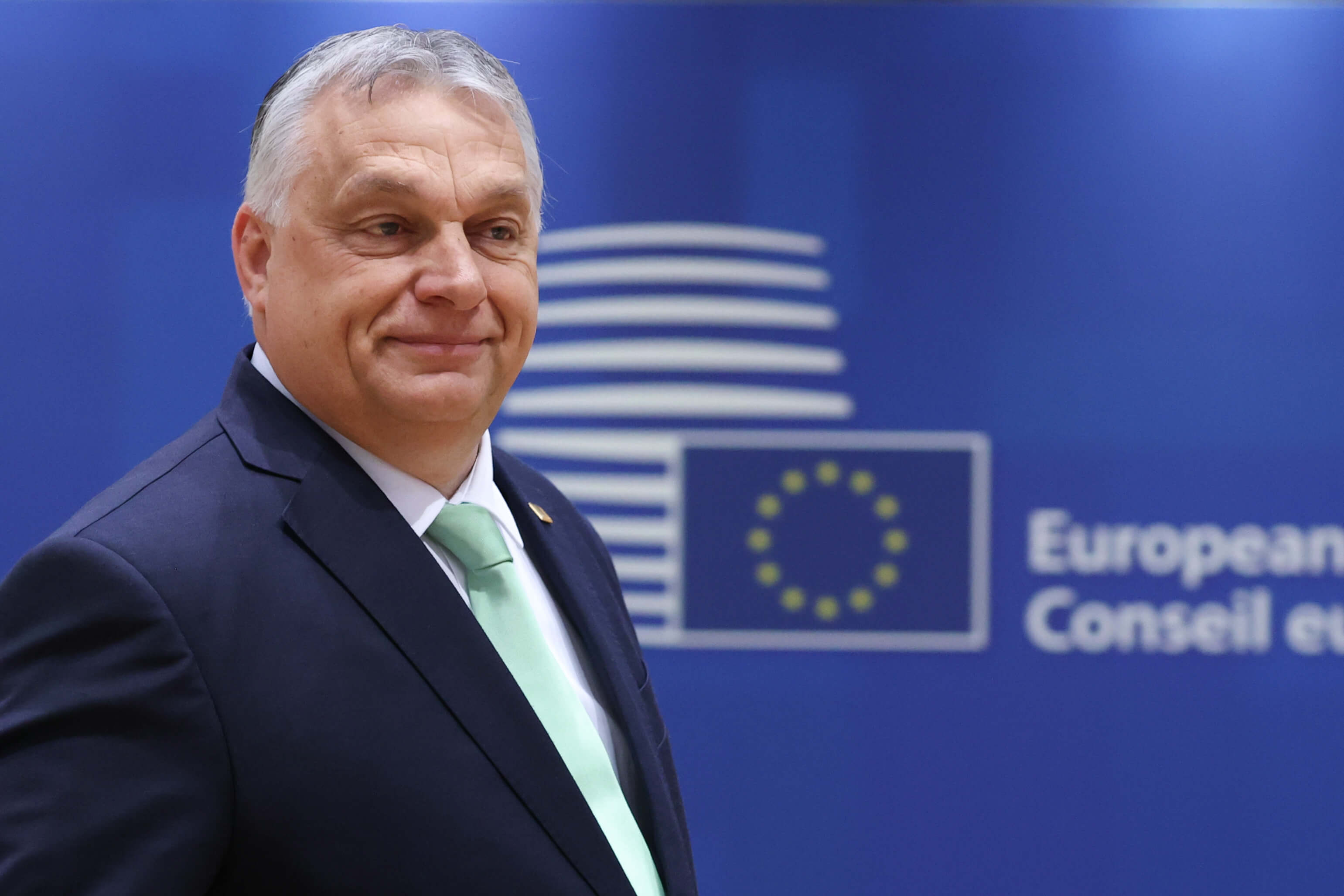 Moscow’s preferred candidate, Viktor Orbán, remaining in power in Budapest would cement Hungary as the main saboteur of European support for Kyiv
Moscow’s preferred candidate, Viktor Orbán, remaining in power in Budapest would cement Hungary as the main saboteur of European support for Kyiv.
This was clearly demonstrated this week at the meeting of European leaders in Brussels, where Hungary blocked the activation of the previously agreed EUR 90 billion aid package to Ukraine.
Russia wants the war in Iran to result in a Europe subservient to Washington and not just to reduce its influence on the war in Ukraine.
Moscow seeks a long-term, subordinate role for Europe in its alliance with the US, as only in this way can it hope to regain access to its largest and wealthiest energy market, from which, if nothing changes, it will be permanently excluded within nine months.
The success of the US operation in Iran and the subsequent lifting of sanctions on Iranian oil and gas exports need not pose a major problem for Moscow. A much greater concern for Russia would be if Europe gains another reliable supplier of oil and gas.
Moscow aims to prevent both outcomes. By providing intelligence to Tehran about American and allied targets in the Gulf region, Russia is actively assisting Iran’s defence. However, this is unlikely to be sufficient to prevent defeat.
To achieve the second, and far more important, goal of cutting Europe off from potential Iranian energy supplies, Russia must also ensure that Europe emerges as a loser. It can only do this if it is sufficiently successful in deepening the transatlantic divide.
