On 7 April, Islamabad became the last barrier between the Middle East and a war that would have rapidly spiralled beyond anyone’s ability to control.
By that point, the United States and Iran had already moved far beyond signalling. Strike packages had been prepared.
Carrier groups, bombers, missile-defence systems, drones and intelligence platforms had all shifted into positions associated with imminent escalation.
Both sides had already made clear what they intended to do.
Washington retained the ability to inflict catastrophic destruction on Iran’s military infrastructure, energy sector, missile bases, air defences, transport networks and command-and-control architecture.
Iran, in turn, retained the ability to inflict severe damage across Gulf energy infrastructure, desalination plants, ports, offshore facilities, maritime traffic and the Strait of Hormuz itself. That was the reality behind the talks in Islamabad.
Neither side doubted the destructive power of the other. Neither believed it could stop the other from inflicting major damage.
And neither side, ultimately, wanted to cross a threshold that would have produced a prolonged regional conflict with massive global economic consequences.
The Pakistanis forced both sides to confront reality
At the centre of the mediation effort was Pakistan. More specifically, Pakistan’s army chief, supported by the nation’s Inter-Services Intelligence agency (ISI), who created the only channel that still had enough credibility with both Washington and Tehran to prevent the crisis from spiralling.
The Pakistanis succeeded because they forced both sides to confront a reality neither wanted to admit publicly: the Americans could devastate Iran, and the Iranians could devastate global energy markets. That is what finally sank in.
Both sides had agreed to move towards ceasefire talks and to use Islamabad as the basis for a broader de-escalation effort
By approximately 7 p.m. UK time on 7 April, both sides had agreed to move towards ceasefire talks and to use Islamabad as the basis for a broader de-escalation effort.
The Americans arrived with 15 points. The Iranians arrived with 10 of their own.
There was never going to be agreement on everything. But there was enough overlap for both sides to understand that the alternative would be far worse.
The Pakistanis also made it clear to Washington that the United States was moving towards a military campaign whose consequences would be far greater than many in the Trump administration had initially believed.
The CIA’s importance
This was where the CIA played a critical role. The CIA’s importance was not merely technical.
It was central in forcing a more realistic assessment of what a war with Iran would entail: not only the destruction within Iran itself, but also the secondary effects across the Gulf, the Strait of Hormuz, energy markets, desalination capacity, shipping, and the wider global economy.
This remained overwhelmingly a Pakistani mediation effort
That realism was central not only in convincing President Trump to extend the ultimatum period, but also in moving towards a temporary ceasefire arrangement rather than proceeding immediately with a major kinetic campaign.
Pakistan did not manage this effort alone. Turkey’s National Intelligence Organization, MIT, played an important role in helping maintain channels with Tehran and narrowing some of the operational gaps between the two sides.
Egypt’s General Intelligence Directorate played a more limited but still useful role in supporting the broader de-escalation effort. Even so, this remained overwhelmingly a Pakistani mediation effort.
The Saudi dimension
Pakistan also had to manage the Saudi dimension, which remained central throughout the discussions.
Pakistan’s leadership remained in close contact with Crown Prince Mohammed bin Salman, and repeatedly emphasised its appreciation for the restraint shown by the Kingdom.
The Pakistanis made it clear to Tehran that if Iran directly struck a major Saudi oil, desalination, power-generation or other critical infrastructure facility in a way that rendered it inoperable for a prolonged period, Saudi Arabia would respond massively.
They explained that Saudi Arabia possesses by far the region’s largest fleet of advanced 4.5-generation combat aircraft and was prepared to use approximately 250 of its advanced aircraft, along with drones, stand-off munitions, cruise missiles and potentially elements of its strategic missile force, which Riyadh has never used before in combat.
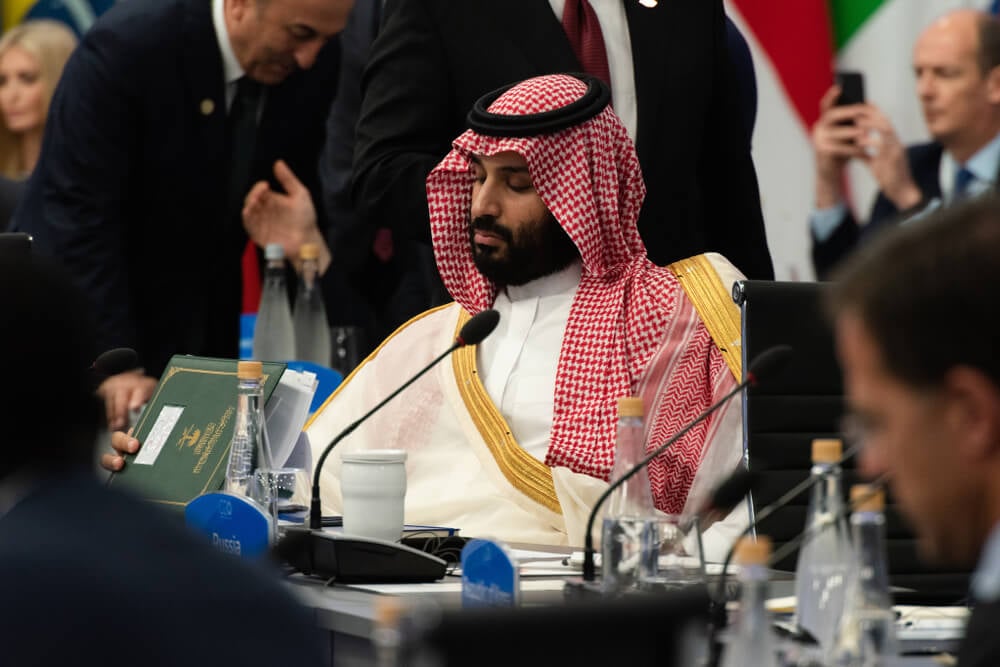 Pakistan’s leadership remained in close contact with Crown Prince Mohammed bin Salman, and repeatedly emphasised its appreciation for the restraint shown by the Kingdom
The objective of such a campaign would not have been symbolic retaliation. It would have been to fundamentally degrade Iran’s ability to produce, refine, transport and export oil.
The Pakistanis made it clear to Tehran that such a Saudi response would have been devastating and would likely have altered Iran’s economic position and its energy-exporting capabilities for years to come.
That message had a major effect. The Iranians gave assurances that none of their top-end ballistic missile forces would be used against Saudi Arabia. So far, that assurance has held.
A moment of tension
There was, however, a moment of tension during the discussions when debris from a drone and missile landed in a peripheral area of the Saudi industrial city of Jubail, creating a fire. The Pakistanis moved quickly to intervene.
The Iranians replied that the incident did not originate from the command structure controlling their higher-end strategic missile forces, but rather from a more decentralised and dispersed operational element.
This distinction matters because one of the clearest realities to emerge from the last few days is that not all Iranian attacks are coming from a single centralised command structure.
Many of the drone attacks and lower-end missile launches come from more fragmented Revolutionary Guard-linked structures
The higher-end strategic missile forces remain tightly controlled. Many of the drone attacks and lower-end missile launches come from more fragmented Revolutionary Guard-linked structures.
This is why some attacks continued overnight and into today even as broader de-escalation discussions were underway.
Most of these attacks caused limited damage. But the danger remains that one direct strike on a major energy installation, desalination plant or other strategic target could immediately collapse the political space that Islamabad has managed to create. That is why Islamabad matters.
The crisis is not over
Pakistan created a narrow diplomatic bridge at the exact moment when the region was approaching the point of no return.
It did so not only through its own mediation efforts, but also by keeping both the Chinese president and the Saudi crown prince continuously informed throughout the process.
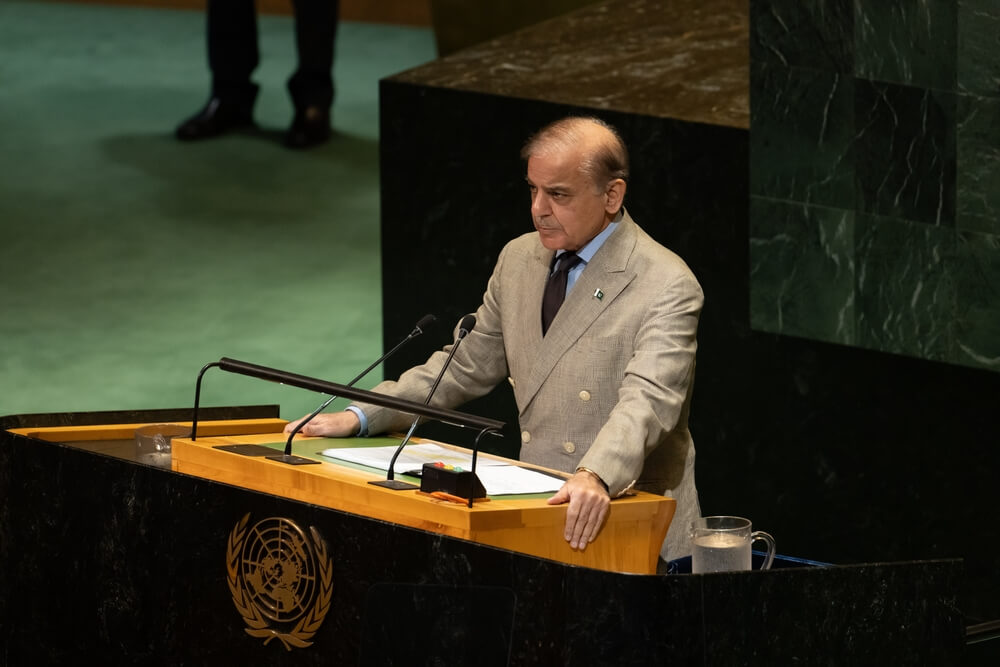 Pakistan created a narrow diplomatic bridge at the exact moment when the region was approaching the point of no return - PM Shahbaz Sharif
China also became increasingly important throughout the discussions. It was Pakistan that asked Beijing to directly encourage
Tehran to accept the initial terms and agree to attend the Islamabad talks. The Chinese did so successfully.
There is now a strong possibility that China will emerge as one of the guarantors of any final agreement reached in Islamabad, particularly on the Iranian side.
None of this means the crisis is over. Military preparations remain in place. Strike plans still exist. The retaliatory architecture on all sides remains active.
But Islamabad demonstrated one critical reality: at the last possible moment, all sides understood that once this war began, nobody would be able to control where it ended.
Dr Nawaf Obaid is a Senior Research Fellow at the Department of War Studies, King’s College London.
