The US and Israel’s spectacular series of miscalculations in their confrontation with Iran has created a situation in which there is no clear route to a new equilibrium, let alone a resolution.
Instead, the world can look forward to a prolonged stalemate, a highly volatile and unstable smouldering conflict zone at the heart of the global energy supply, across vital trade routes and in a region already riven with rivalries.
Exactly what form the stand-off will take is as yet unclear. But sustained lower-level military action against Iranian capabilities, and possibly more aggressively against its proxies, is likely to be one of the features.
While all cards remain on the table, including the possibility of some grand bargain or the other extreme – military escalation and a ground invasion of Iran – neither would settle the issue either, and these also involve extreme costs and trade-offs.
In the face of their inability to achieve their goals in Iran, the US and its allies, such as they are in this, are most likely to attempt to restore the fallback position of containment.
Yet, the situation they have created gives Iran a lever, in terms of its newly demonstrated ability to affect energy flows not only in the Strait of Hormuz but also the Red Sea, to extract an extortionate price even for a relatively low-level wrangle.
The problem with both containment and a grand bargain, or any agreement short of that, would be that Iran could at any point resort to this lever when it feels it, or its proxies, are threatened or even thwarted in some way.
Given the sensitivity of the energy markets and the world’s dependence on them, this would not even need to involve an actual attack – a mere threat could do the job at this point.
Survival means victory?
One of the tactics the US has tried to deploy to counter this is the massive use of force and the threat of worse to come.
But this has failed to convince the Iranian leadership to give in. On the contrary, for now it appears only to have convinced it that it is on the right track.
After having survived the first shock of the Israel and American decapitation strikes, Iran’s leaders apparently calculate that any subsequent military action that fails to stop them only makes the US look more impotent.
Yet, it would be too easy to say that mere survival means victory for Iran’s regime or that the US being unable to achieve its goals means it ‘lost’.
Even under the Islamic Republic, in conflict with much of the West and under sanctions, Iran kept seeing itself as an ambitious country in terms of its domestic and international agendas.
Ongoing military pressure might divide rather than unite it, and peace and stability could well strengthen it
The widespread destruction and disruption, coupled with a long-term, ongoing attritional war, will sit well with neither the leaders nor the population.
The country has in the past shown that it can endure such situations, as during the Iran-Iraq war from 1980 to 1988. Yet, the scope and the circumstances this time around would be vastly different.
Ongoing hostilities would, according to some analyses, empower the regime to the detriment of vaguely defined democratic forces. On the other hand, peace and engagement are said to allow for these forces to grow stronger.
There is no evidence, right now, for any of these theories of the internal workings specific to the Iranian regime. Ongoing military pressure might divide rather than unite it, and peace and stability could well strengthen it.
All in all, such considerations appear to provide a very shaky basis for formulating policy vis-à-vis Iran, witness the overblown expectations attached to the decapitation strikes.
The muddled stalemate and attrition scenario
Long-term attritional warfare against Iran, to ensure that at least a trickle of oil and gas would keep coming through the Strait of Hormuz, would also involve much more intense action against Iran’s proxies, especially Yemen’s Houthis, to ensure flows through the Red Sea.
This would require a costly continuing military commitment from the US and its regional partners, for which Washington will in all likelihood also seek to mobilise its European allies.
It would be a continuous drain on the world’s economy and Western treasuries as well as a constant source of instability.
Yet, it would also allow the US to keep taking action against Iran’s potential nuclear moves.
Smaller interim deals would leave many of the sources of potential tension and conflict in place
Costly, unstable and unwelcome as it is, the muddled stalemate and attrition scenario, essentially an indefinite prolongation of the current situation, is at this moment one of the likeliest outcomes.
Set against one possible alternative – a full-blown invasion of Iran with the attendant costs and unforeseen consequences – it might seem at least slightly better.
Clearly, a diplomatic way out would be preferable. However, there are several problems with that scenario as well.
First of all, there seems to be no basis for agreement. The parties are simply too far apart on almost every issue, from the nuclear file, to the Strait of Hormuz, to Iran’s proxies and more, to reach a grand bargain.
Smaller interim deals would leave many of the sources of potential tension and conflict in place.
Momentous geopolitical consequences
Either a grand bargain or partial deals would suffer from the same lack of trust and the same continuation of adversarial practices and policies on both sides that led to this situation in the first place and that also blew up the MoU reached in June.
Certainly, for now, any deal would also require the US and its allies to maintain a military presence in the region, while affording Iran the pause it needs to replenish its stocks and re-establish production lines for its weapons.
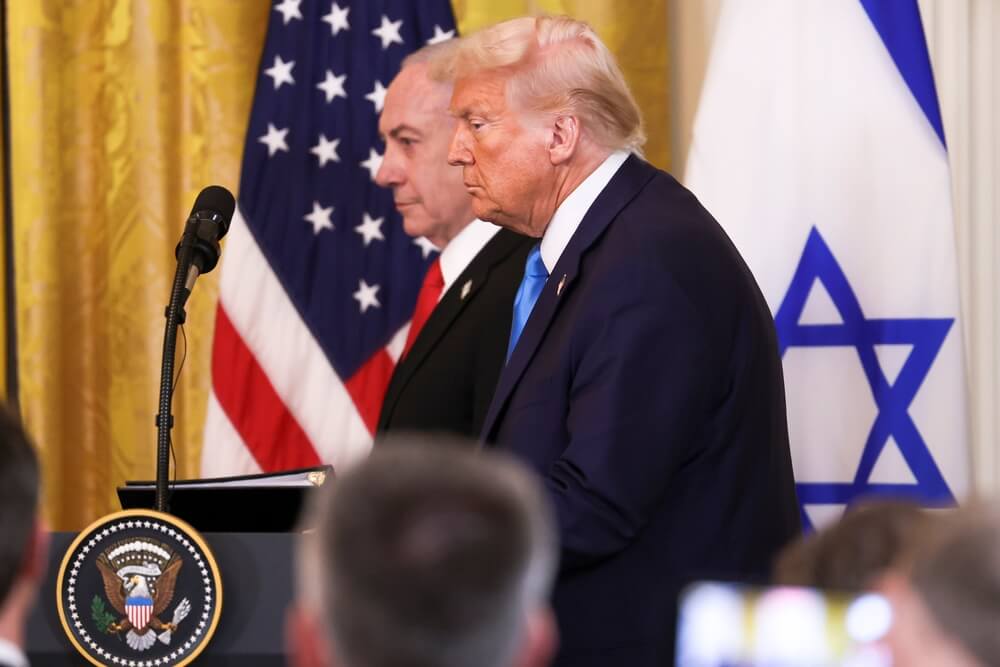 For now, any deal would require the US and its allies to maintain a military presence in the region
Even a seemingly small infraction on either side could lead to renewed hostilities. The likelihood of in effect ending up anyway back at the same stand-off and attrition scenario would remain high.
Under the stalemate scenario, securing at least a trickle of supply through the Strait of Hormuz and the Red Sea, could help buy the world some time to more rapidly reduce its dependence on Middle Eastern energy.
At the same time, the Gulf countries might just be able to ship enough oil and gas not to face immediate financial catastrophe.
It would have momentous geopolitical consequences, dealing different hands again to China and Russia.
As with the Iraq containment in the 1990s, this even more volatile impasse could well become a regional and global recruiting tool for anti-Western sentiments and forces.
Nothing would be resolved either, and the potential for a more disastrous conflagration would also remain.
It is an utterly grim prospect for the world to be saddled with for the foreseeable future, yet, given the problems with the other options, very likely to come about.
