After thirteen consecutive nights of bombing, the US military did not carry out any new attacks on Iran over the weekend. Tehran has suspended strikes on US bases and neighbouring countries, saying it will refrain as long as the United States does. The cessation of the direct exchange of fire has not calmed the region.
On Monday, Saudi Arabia said it had shot down drones aimed at oil facilities and Riyadh, Jordan shot down two more aircraft, and the camps of Iran's Kurdish opponents in northern Iraq were also attacked. The Houthis continued to attack Saudi oil infrastructure in the Red Sea.
On 27 July, Netanyahu left for Washington, where he was due to meet Trump the following day and attend the funeral of Senator Lindsey Graham. Iran will be the main topic of the meeting, but behind the discussion of military objectives there will also be a discussion about who sets the pace of the war.
Israel did not take part in the latest US campaign, and US military leadership explained to the president that further attacks in their current form would bring diminishing benefits and waste resources needed to protect US bases and allies.
Netanyahu is therefore not coming to confirm a joint plan, but to persuade Trump to replace the extended pause with a new phase of the war, in which Israel would once again play a major role.
Two weeks without a White House appointment
Netanyahu requested the meeting in early July, shortly after Trump's return from the NATO summit in Ankara. The Israeli side prepared a government aircraft, and protocol and security teams were sent to Washington, even though the date had not been confirmed.
The trip was then cancelled, with the explanation that Graham's funeral had been postponed, while White House officials created the impression that the Israeli prime minister was trying to arrange a reception that had not yet been approved.
Such a delay is unusual for Netanyahu. Since Trump’s return to the White House, he has enjoyed access unlike that granted to any other foreign leader, and his visits were previously arranged quickly.
This time, the meeting was only confirmed on 24 July, when Trump announced that he would receive the Israeli prime minister if he attended Graham's funeral.
The change in protocol reflects a deeper shift in relations. Netanyahu has lost the support of a large part of the Democrats, is increasingly provoking resistance within Trump's inner circle, and part of the Republican voting base rejects the war, which it sees as an Israeli demand paid for with American money and lives.
His opposition to the US sale of fighter jets to Türkiye has further angered Trump, while disagreements over Iran, Lebanon and Gaza have already led to open conflict between the two leaders.
Netanyahy needs a video from the Oval Office to show the domestic public that the relationship with Israel’s most important ally has been preserved
Just before Netanyahu's trip, Israel adopted two decisions that Washington had long sought. He authorised the deployment of international security forces in parts of Gaza and withdrew some of his troops from southern Lebanon, in line with agreements backed by the United States.
Those decisions can be presented as independent Israeli moves, but their timing shows how important it was for Netanyahu to arrive at the White House with evidence that he is still useful to Trump.
Before the elections scheduled for 27 October, the Israeli prime minister needs a video from the Oval Office to show the domestic public that the relationship with Israel’s most important ally has been preserved.
His coalition is lagging in the polls, the wars have not produced the lasting results he promised, and the US administration has taken key decisions in recent weeks without his direct involvement.
Why Trump stopped the bombing
The White House presents the pause as an opening for diplomacy, but the decision was also taken for far more concrete military reasons. After thirteen nights of attacks, US commanders judged that the predetermined targets had been largely exhausted.
General Dan Caine, Chairman of the Joint Chiefs of Staff, also warned against using missiles intended to defend US bases and partners against Iranian missiles and drones. Admiral Brad Cooper, commander of US forces in the Middle East, believed the campaign had reached the limits of its effectiveness.
Trump had to choose between three bad options. Continuing the bombing at the same pace would consume expensive missiles and weaken the defences of US bases, while each subsequent wave of strikes would have a diminishing military effect.
Expanding attacks to political centres, the energy grid and other key infrastructure would mean the goal was no longer simply to limit Iran's military capabilities, but to directly weaken Tehran's authority, leading to far greater civilian casualties and increasing the risk of a protracted war.
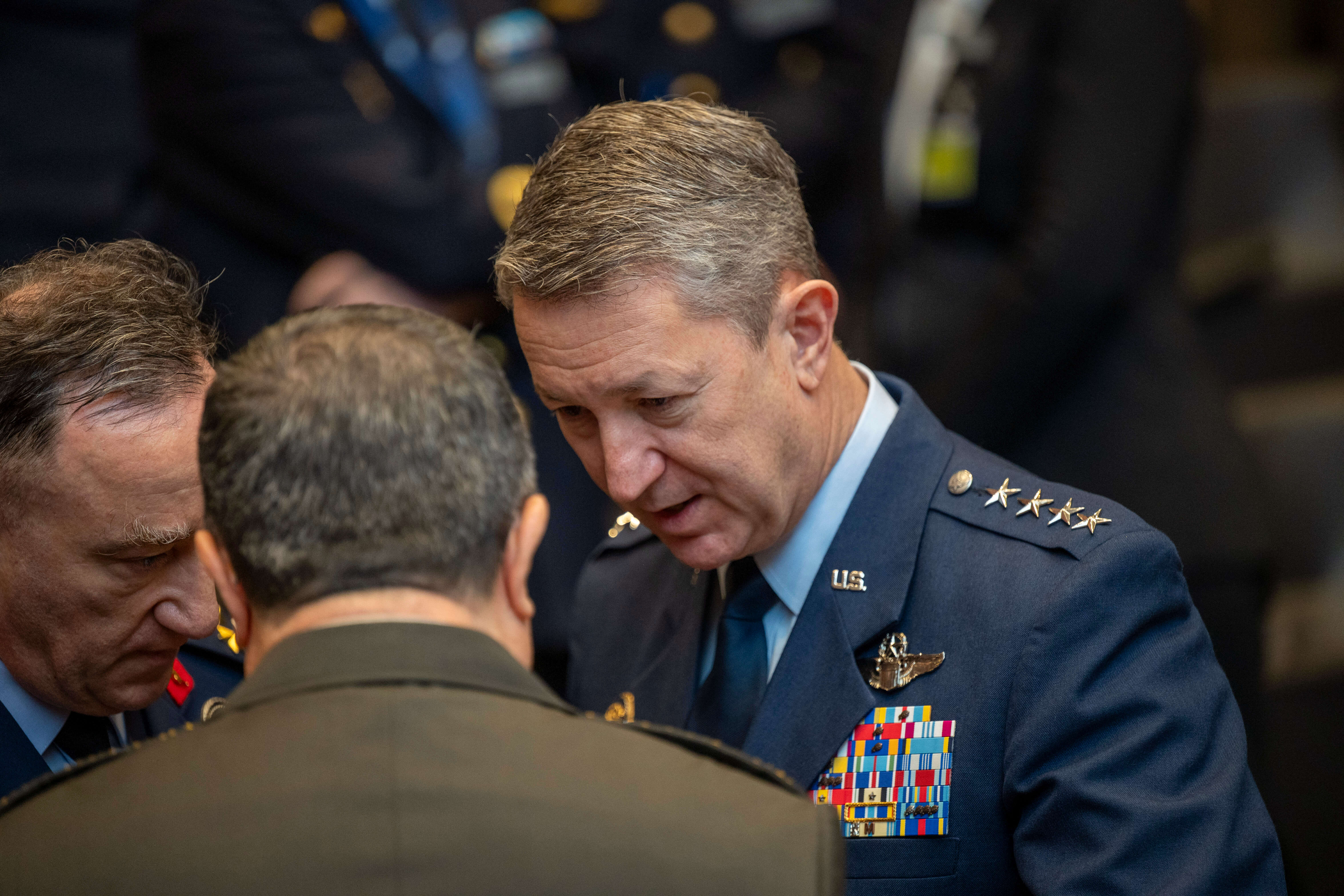 General Dan Caine warned against using missiles intended to defend US bases and partners against Iranian missiles and drones
Israeli involvement would further widen the conflict, as Iran could respond with strikes on Israeli cities, US bases and shipping lanes, while also mobilising its allies in Lebanon, Iraq and Yemen.
The war began on 28 February with joint US–Israeli strikes against targets including Iran's ballistic missiles, navy, military industry, support for armed allies, and its nuclear programme.
The latest American campaign had a much narrower immediate cause. Washington was trying to punish Iran for attacking ships in the Strait of Hormuz and to force it to accept freer navigation along the route closer to the coast of Oman.
Israel did not participate in that campaign. Its absence gave Trump the opportunity to keep the conflict confined to the US–Iran dispute over Hormuz, without reopening all the issues that had triggered the war.
Netanyahu will try to push that limit. For him, including Israel would allow a return to broader targets and strikes intended to prevent Iran from rebuilding its missile, nuclear and military infrastructure.
For Trump, such a decision would mean a return to a joint war at a time when his own commanders have already told him that the current way of conducting the campaign is no longer sufficiently effective.
Hormuz is now more important than the grand peace plan
The United States and Iran signed a memorandum in mid-June intended to pave the way to ending the war and restoring navigation through the Strait of Hormuz. The agreement collapsed because the two sides never accepted the same interpretation of its provisions.
Washington claims that Iran agreed to the free passage of ships. Tehran believes it has secured the right to monitor traffic through the strait closer to Iran’s coast and to charge for associated services. The United States has been directing ships along a more southerly route via Oman, which Iran does not accept as a permanent solution.
After Iran attacked ships using the southern route off the coast of Oman, the United States responded by striking Iranian coastal defence positions. US attacks then expanded to include bridges, tunnels and other infrastructure in southern Iran.
Over the weekend, Iranian and Omani delegations met in Tehran to discuss the future shipping regime, and the Iranian foreign ministry stated that the talks were successful.
On Monday, the same spokesperson rejected US claims that Iran had requested renewed talks with Washington. Messages are still being exchanged through intermediaries, but Tehran refuses to present the pause as a retreat.
Tehran is using the respite to consolidate control over navigation through Hormuz
Iran said on Monday that it had turned back six ships that had tried to pass without its permission. Traffic through the Strait of Hormuz remained reduced to fewer than ten commercial vessels a day, although US and Iranian strikes had not resumed.
Tehran is using the respite to consolidate control over navigation through Hormuz, while Trump, by suspending the bombing, is trying to secure Iranian consent to the free passage of commercial ships without attack, detention, or passage charges.
At the same time, pressure in the Red Sea is increasing. Following Houthi attacks on Saudi facilities in Yanbu and Jizan, only eleven commercial ships passed through Bab el Mandeb on Sunday, the lowest number in months.
The Houthis have not closed the strait, but they have already slowed shipping and increased transport costs. The United States is now trying to secure one route, while the other, used by ships travelling between Asia, Suez and Europe, is once again becoming a high-risk zone.
Iran is negotiating without a visible supreme leader
An additional complication is the state of Iran’s leadership. Mojtaba Khamenei was elected supreme leader on 8 March, a week after his father, Ali Khamenei, was killed in a US-Israeli attack. He has not been seen in public since his election, and neither his voice nor any new recordings have been released.
Iranian President Masoud Pezeshkian has said only that communication with him is gradually improving, but has not explained why it was difficult or what Khamenei’s state of health is. The Revolutionary Guard backed his election and has meanwhile further consolidated its position within the regime.
Iran can suspend direct strikes on US bases while its regional allies continue to exert pressure on oil infrastructure and shipping lanes
The Ministry of Foreign Affairs can talk to Oman and exchange messages with Washington, but any final agreement must be approved by the top leadership, which has not yet appeared publicly before the people.
The US administration therefore has no reliable confirmation that the concessions offered by the diplomats would be binding on the Revolutionary Guard, the Iranian army, or armed groups associated with Tehran.
Drone attacks in Saudi Arabia, Jordan and Iraq illustrate how important this distinction is. Iran can suspend direct strikes on US bases while its regional allies continue to exert pressure on oil infrastructure and shipping lanes. Such an arrangement allows Tehran to keep negotiating channels open while simultaneously maintaining the cost of the US presence in the region.
War is already shaping the US election
Trump’s timeframe for decision-making has been shortened by the November congressional elections. On 23 July, the House of Representatives, by a vote of 214 to 208, adopted a resolution demanding an end to unauthorised military operations against Iran. Four Republicans joined the Democrats.
A few hours later, the Senate blocked the adoption of a similar measure by a vote of 49 to 47. The resolutions alone cannot stop the war, but they show that opposition is no longer confined to the Democratic party.
Before the latest revision to Pentagon records, US sources cited 18 dead US soldiers and more than 500 wounded, while the war had cost at least $37.5 billion by 21 July.
Brent crude briefly exceeded one hundred dollars per barrel last week
Each new strike on a US base increases the pressure on the president, who has portrayed the war as a fast track to weakening Iran militarily.
A still more immediate political problem is oil. Brent crude briefly exceeded one hundred dollars per barrel last week, for the first time since May, and after the suspension of US strikes it fell by more than six per cent.
Within a few days, Trump obtained what the previous weeks of bombing had not: lower oil prices and the chance to claim that he is using military force alongside negotiations. Netanyahu will have to offer him a very compelling reason to give that up.
Netanyahu seeks wider war, Trump buys time
The most likely outcome of the meeting will not be the announcement of a permanent truce or the immediate launch of a joint offensive.
Trump will wait long enough to see whether Iran–Oman negotiations can produce an acceptable regime for passage through Hormuz, while leaving Netanyahu the option of Israeli involvement if Iran attacks Israel or rejects the deal.
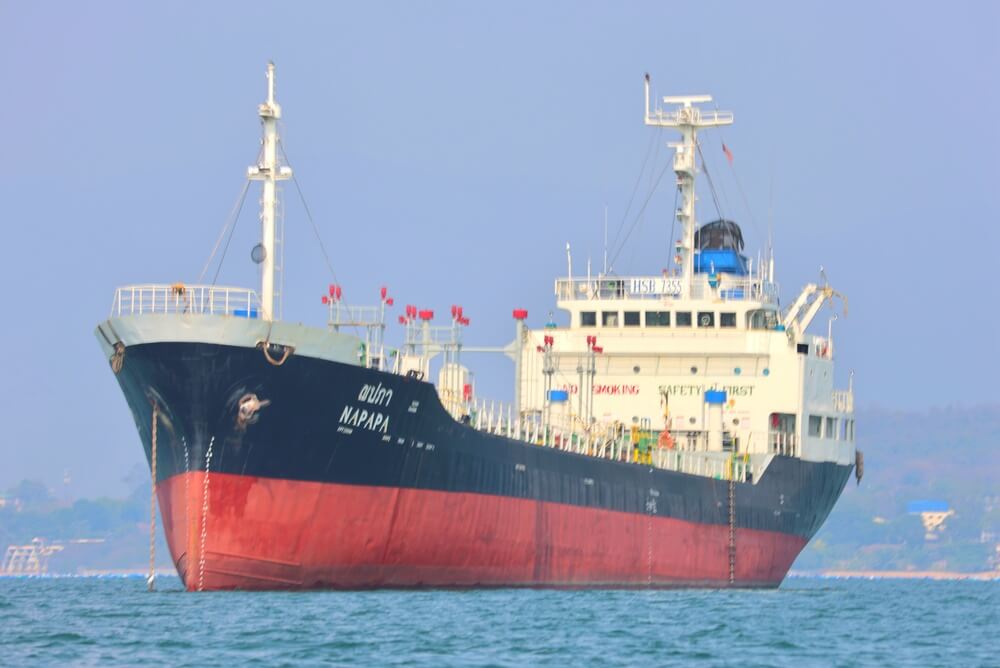 Trump will wait long enough to see whether Iran–Oman negotiations can produce an acceptable regime for passage through Hormuz
Netanyahu will demand much more specific conditions for continuing the strikes, as well as a guarantee that any future agreement will not amount to passage through the strait.
Israel needs a deal that will restrict the renewal of Iran’s missile and nuclear programmes, while Trump is currently more interested in getting ships back through Hormuz, lowering oil prices and preventing US military losses.
The outcome of the meeting will therefore show whether Netanyahu has accepted that Washington is now determining the timing, scope and objectives of the war.
The photo from the Oval Office may help him before the Israeli elections, but it will not restore the position he held in February, when he presented the joint operation as the realisation of a multi-year strategy towards Iran.
If he succeeds in persuading Trump to turn the dispute over shipping back into an open campaign against the entire Iranian regime, Washington will enter a wider war just as its list of suitable targets, supplies and political time has already narrowed.
Iran and its allies could then raise the cost of any US move by choking off traffic through the Strait of Hormuz, launching attacks in the Red Sea and striking US bases across the region.
Netanyahu would then get the war he wants, and Trump a war from which he would no longer be able to withdraw when it suited him politically.
