The official cycle of funeral ceremonies for Ayatollah Ali Khamenei begins today in Tehran. The body of the former supreme leader lies in the Grand Mosalla, a large prayer complex in the Iranian capital, alongside the coffins of family members who died in the same attack, and the first funeral ceremonies are attended by senior Iranian officials and foreign delegations.
Funeral ceremonies are scheduled to continue until 9 July, with ceremonies in Qom, Iran's most important centre for Shia clerics, followed by Najaf and Karbala, Iraq's holy cities that hold a special place in Shia tradition, before the final burial in Mashhad.
The regime is preparing this event as the largest state funeral in the history of the Islamic Republic. Strict security measures are planned, including the closure of parts of the capital and special protocols for pilgrims.
Khamenei was killed on 28 February at his residence in Tehran, in a US-Israeli strike that started the war. Members of his family also died in the attack.
The war was halted by a fragile truce, and the succession issue was formally resolved on 8 March, when Mojtaba Khamenei was elected as the new Supreme Leader. This is why the July funeral has a significance that goes beyond the ritual itself.
It comes after months of delay and represents the first major public test of the government, which has already taken over the institutions but must now show that it can control the streets, the religious apparatus and the security system, as the channel of negotiations with Washington reopens.
The scale and symbolism of the event
The scale of the preparations shows that the authorities regard the funeral as a major state and security undertaking. Millions of people from Iran and the wider region are expected to attend, with Iranian officials speaking of a possible 15 to 20 million participants over the entire cycle of commemorations.
The organisation involves state authorities, security services and religious institutions, with mosques, schools, temporary accommodation, transport and food distribution all brought into operation for the multi-day event.
The regime wants to demonstrate that the system can mobilise the masses even after the loss of a long-standing leader
Tehran is partially paralysed. Businesses and the Grand Bazaar are closed, while road traffic and airspace are subject to special measures. The official motto, “We must rise”, shows that the government wants to transform mourning into a public demonstration of resistance and unity.
Parliament Speaker Mohammad Bagher Ghalibaf called for participation and insisted that the nation’s demand for revenge against the United States and Israel must echo in the ears of the whole world.
This tone reflects the broader political use of the funeral. The regime wants to demonstrate that the system can mobilise the masses even after the loss of a long-standing leader and a military conflict with the world’s most powerful country.
The international dimension and message to the Axis of Resistance
The presence of foreign delegations gives the ceremony particular significance. Iranian officials report the participation of representatives from more than thirty countries and religious leaders from over ninety countries.
Among the confirmed or announced delegations are Pakistani Prime Minister Shehbaz Sharif, Russian representative Dmitry Medvedev, senior Chinese representatives, Georgian President Mikheil Kavelashvili, an Indian delegation, Iraqi President Nizar Amidi, Iraqi Kurdistan President Nechirvan Barzani, and representatives of Iraqi political and security institutions.
Western countries are excluded from the ceremonial circle, further emphasising that Tehran is shaping the funeral as a gathering of allies, partners and politically close actors.
The Iranian system wants to show that it is not coming to the negotiating table alone
The most important regional impact comes from representatives of the Axis of Resistance. Lebanese, Iraqi, Yemeni and Palestinian groups are travelling to Tehran, and representatives of Hezbollah, Iran’s most important ally in Lebanon, hold a special place among them.
The presence of the families of Hassan Nasrallah, the long-time leader of Hezbollah, and Imad Mughniyeh, one of the organisation’s most renowned military commanders, lends the ceremony additional symbolic weight.
For Tehran, this is not only an expression of condolence but also a confirmation that the network Iran has built in the region over decades remains intact, even after the war.
At a time when talks with Washington are ongoing, such an image has clear political value: the Iranian system wants to show that it is not coming to the negotiating table alone.
A test for the new government and internal consolidation
Mojtaba Khamenei has formally led the system since March, but the July funeral is his first opportunity to demonstrate his authority to the domestic public, regional allies and foreign delegations.
President Masoud Pezeshkian, Parliament Speaker Mohammad Bagher Ghalibaf and Foreign Minister Abbas Araghchi have prominent roles in the ceremonies, while the IRGC, the Revolutionary Guards, has taken charge of key logistics and security.
Iran's top military leadership has already warned the United States and Israel not to attempt any action during the funeral ceremonies.
The funeral also shows how power has been distributed after Khamenei's death. Formal authority rests with Mojtaba Khamenei, but the stability of the new order depends on the inner circle around the supreme leader's office, the Supreme National Security Council, and the Revolutionary Guards' top command.
Mass participation is intended to demonstrate that the new supreme leader is capable of maintaining the unity
This means that negotiations with Washington are not conducted solely through the diplomatic channel represented by Araghchi. Any serious concession passes through the security apparatus, which decides on Hormuz, the nuclear file and the limits of Iranian withdrawal.
Within that structure, Ghalibaf maintains the link between the political leadership and the more hardline security wing, while the IRGC remains a key actor in everything related to the pace of negotiations and any possible response to American pressure.
The funeral also serves as a means of internal consolidation. Mass participation is intended to demonstrate that the new supreme leader is capable of maintaining the unity and mobilisation his father built over decades.
For Mojtaba Khamenei, this is particularly important because the succession depends not only on a formal decision of the Assembly of Experts, but also on his ability to present the military, religious and political centres of power as parts of the same order.
Time context: negotiations with the US on pause
The funeral comes just as indirect US-Iranian talks in Doha, which ended on 1 July, showed limited but important progress on technical issues.
The talks focused primarily on shipping through Hormuz and the release of frozen Iranian assets, while the nuclear file was not yet at the centre of the negotiations.
Qatar has announced that the next round will be held after the funeral. The truce is fragile, but it is holding.
Shipping traffic through Hormuz has partially returned to normal
Shipping traffic through Hormuz has partially returned to normal, although it remains unpredictable and under constant political pressure, and oil prices have fallen to their lowest level in four months after the latest statements from Washington.
For Tehran, this is a favourable tactical situation. The funeral allows attention to focus on internal and regional solidarity before negotiations resume under pressure.
For Washington, it is a reminder that the Iranian system, although weakened by the war, still has significant leverage, and that any further escalation carries high costs.
Limited room for manoeuvre
The continuation of the talks in Doha will therefore not depend solely on the willingness of Tehran and Washington to compromise.
For Iran, it will be crucial that the limited deal does not appear to be a post-war retreat, while the US administration will have to demonstrate that pressure on Tehran is producing concrete results.
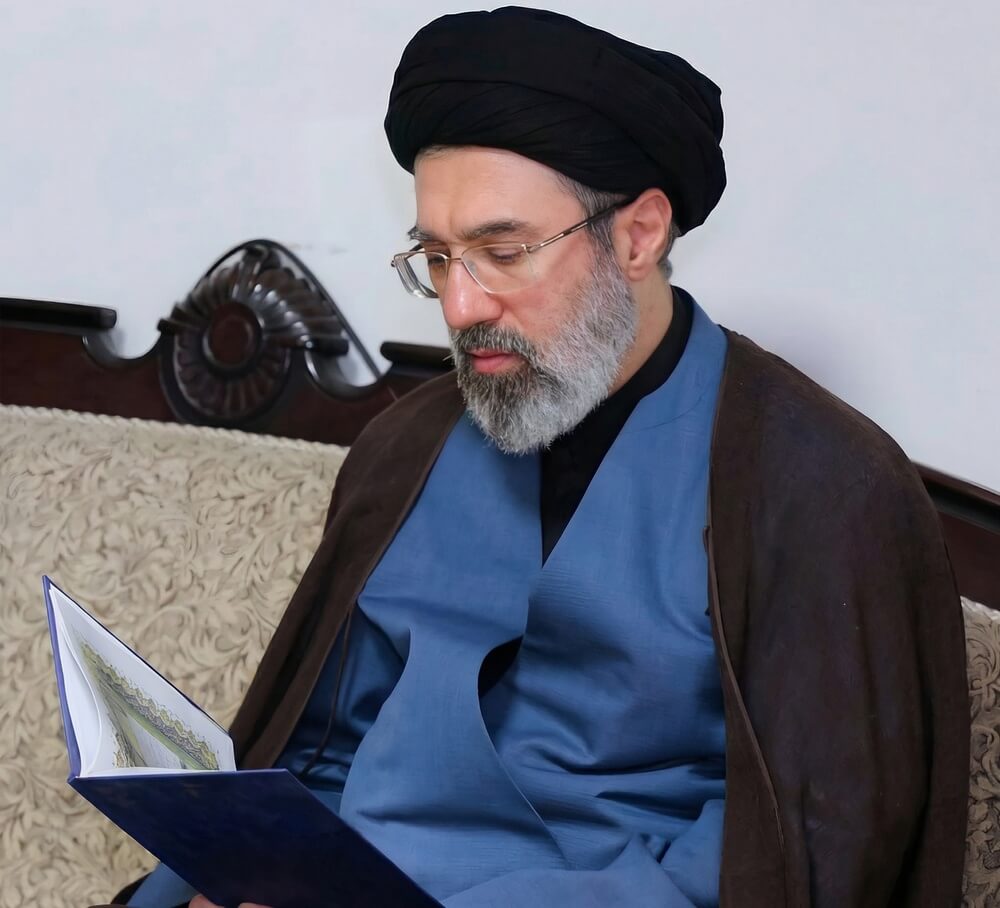 It will become clear how far Mojtaba Khamenei can genuinely lead the system through limited adjustments without provoking resistance from the structures that ensured his succession
Iran needs stability in the Strait of Hormuz, access to some of its frozen assets, and room to ease economic pressure. Washington needs proof that the truce is not becoming a respite that Iran is using to rebuild its capacity and strengthen its regional network.
That is why, first of all, measures that can quickly have an impact and limit the risks will be negotiated: safer navigation through Hormuz, access to part of Iran's frozen assets, technical guarantees, and the prevention of incidents that could turn the truce into a new escalation.
That may reduce pressure on markets and buy time for diplomacy, but it does not address the causes of the crisis.
The nuclear file, Iran's network of regional allies and US sanctions remain issues too significant for a quick deal, especially now that the new government in Tehran has yet to show how much it really controls the apparatus that made its succession possible.
Khamenei's funeral therefore becomes the last major act before the new government returns to negotiations with Washington.
Afterwards, it will become clear how far Mojtaba Khamenei can genuinely lead the system through limited adjustments without provoking resistance from the structures that ensured his succession.
Iran will most likely enter the next phase with a tough public stance, but with a need to buy time, secure funds and ensure a quieter Hormuz behind closed doors.
The real test of the new government will begin when the ceremonies are over, because then the same structures that now display unity will have to enter negotiations in which every concession must appear as strength, not as the result of pressure.
