Jihadist groups fighting the government in Burkina Faso also obtain money and equipment through Ghana.
Cattle stolen in Burkina Faso are sold via middlemen in markets in northern Ghana, and the proceeds flow back to the armed groups.
Explosives intended for Ghanaian mines and quarries are smuggled across the border and end up with the same groups, the most powerful of which is JNIM, an alliance linked to al-Qaeda.
There is no war in Ghana, but its north already serves as a backdrop to the war these groups are waging in the Sahel, the belt south of the Sahara.
Representatives of the European Union discussed these threats on 22 October with the authorities of Ghana’s Northern Region.
Ghanaian officials requested additional logistical support and a faster exchange of security information between agencies.
In March, Ghana and the EU signed a security and defence partnership providing European assistance to Ghana’s agencies in border control, conflict prevention and the fight against organised crime.
Ghana’s special envoy, Larry Gbevlo-Lartey, told his European interlocutors that his country continues to cooperate with the Sahel Alliance, which brings together Burkina Faso, Mali and Niger.
The military authorities of these three countries have withdrawn from the Economic Community of West African States (ECOWAS), but they remain essential partners for Ghana, as the threats it faces come from the Sahel, primarily across the border with Burkina Faso.
The European Union is funding equipment for Ghana’s security services, while the government in Accra is simultaneously making deals with the military authorities in Burkina Faso, Mali and Niger.
Those three countries expelled French forces after military coups and now rely on Russian military aid.
Ghanaian President John Dramani Mahama said on 21 October at the Financial Times Africa Summit in London that he is not concerned about Russian security assistance to the Sahel and that anyone fighting terrorism is welcome in the region.
This stance diverges from that of the European Union, whose then head of diplomacy, Josep Borrell, refused to cooperate with the Russian Africa Corps in 2024 and warned of the expansion of Russian influence in the Sahel.
Without cooperation with the Sahel military authorities, Accra can scarcely cut off the flow of money and explosives to the jihadists without destroying the cross-border trade on which people in the north of the country depend.
Jihadists are supplied and rest in Ghana
In a report from February this year, the International Crisis Group states that northern Ghana has not yet been affected by jihadist violence, but that JNIM fighters, primarily from Burkina Faso, use it as an area for retreat and recovery. According to the report, part of the JNIM leadership wants Ghana and Côte d’Ivoire to remain a safe haven for herders, including the families of combatants.
The central leadership has at times restrained lower-level commanders who sought to intensify their attacks.
The most detailed public record of the organisation’s activities in Ghana is held by the Dutch Clingendael Institute.
Of the 40 suspected cases it recorded between 2015 and 2024, only two involved violence; the rest concerned fighter movements, procurement, rest and recruitment.
The Global Initiative against Transnational Organised Crime (GI-TOC), a research organisation based in Geneva, has described this trade in considerable detail.
According to its July 2025 research, Ghana is the primary location, by headcount, where cattle stolen in Burkina Faso and Côte d’Ivoire are given the appearance of legal origin.
The animals are moved across the border, sold in informal markets in north-western Ghana, and then transported to major markets in the south, where their origin is no longer traceable
The animals are moved across the border, sold in informal markets in north-western Ghana, and then transported to major markets in the south, where their origin is no longer traceable.
Members of the volunteer units that fight alongside the Burkina Faso army also participate in this trade.
Jihadists and individuals connected to the government, with which Accra cooperates, profit from the same cattle.
Such trade cannot simply be stopped at border crossings, because intermediaries dealing in stolen herds can also obtain official transport permits.
GI-TOC recommends uniform rules for marking livestock and tracing their origin, as well as data exchange between local and national authorities on both sides of the border. Boards that manage markets in north-western Ghana have already restricted the number of markets and traders permitted to sell livestock.
In the opposite direction, from Ghana to Burkina Faso, explosives are transported from Ghanaian mines and quarries.
Ghanaian citizens are already dying in the war across the border
Another GI-TOC study, conducted in December 2025, shows that a significant portion of these explosives ends up in artisanal gold mines in Burkina Faso, from where they reach JNIM and other extremist groups.
The danger of such smuggling was illustrated by the incident at the Tambolo checkpoint in Burkina Faso in December 2024.
Customs officers fired on a vehicle carrying explosives from Ghana that failed to stop, and the resulting explosion killed at least five people.
The Ghanaian authorities are aware of it. Senior officials told Clingendael 2024 researchers that the country serves as JNIM’s supply line and that cutting those networks could spark violence. “That’s why we don’t interfere with them too much,” said one senior security officer.
In Oc 2024, the government rejected claims of a non-aggression policy and tacit agreements with militants, stating that the security services were preventing fighters from crossing the border.
Ghanaian citizens are already dying in the war across the border. In an attack on the town of Titao in northern Burkina Faso on 14 February, members of the association of Ghanaian traders and tomato transporters were killed.
The number of Ghanaian casualties rose to eight after one of the wounded later died, a development the government confirmed on 17 February.
Bawku opens space for the spread of violence
In north-eastern Ghana, in the border trading town of Bawku, the Mamprusi and Kusasi communities have been fighting for decades over who has the right to appoint a chief.
Before the British administration, the Kusasi entrusted the land to tendanas, traditional earth priests who also held spiritual authority.
After their arrival in 1901, the British introduced chiefs to replace that system, and the Kusasi argue that the Mamprusi presented themselves to the colonial authorities as the leaders of Kusasi communities.
In 1957, the Kusasi elected their own chief in Bawku. The current chief, Zug-Raan Naba Asigri Abugrago Azoka II, has held the position since 1984, and the Supreme Court of Ghana has confirmed his legitimacy.
However, the Nayiri, the paramount chief of the Mamprusi in the Mamprugu kingdom, whose seat is in Nalerigu, the capital of the North East Region, has appointed Seidu Abagre as a rival chief in Bawku and demands that the town fall under his traditional authority.
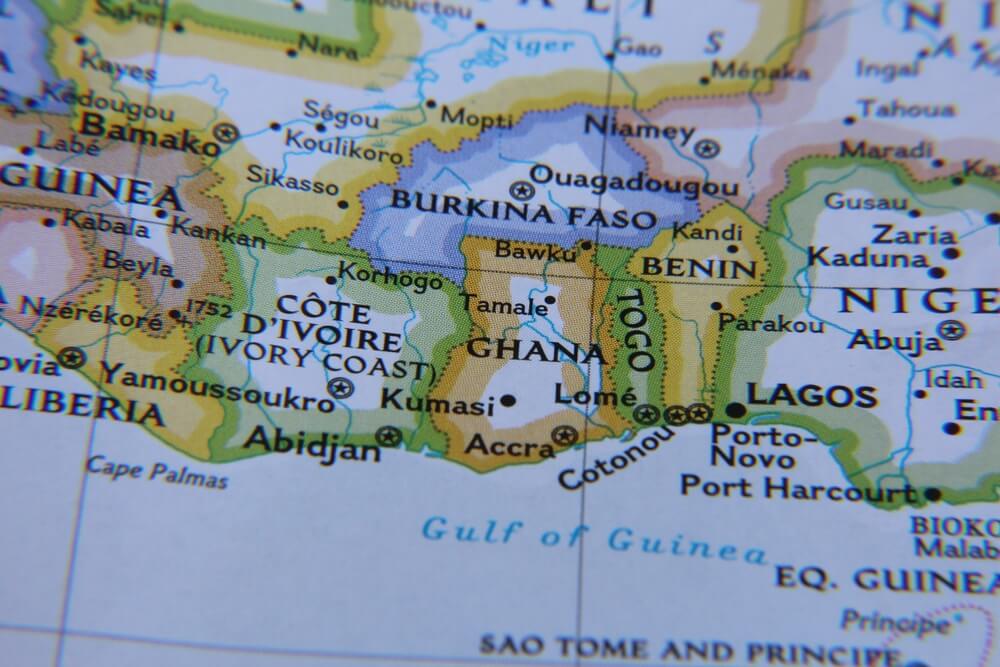 In north-eastern Ghana, in the border trading town of Bawku, communities have been fighting for decades over who has the right to appoint a chief
Since 2021, more than 300 people have been killed or wounded in this dispute, and the violence has spread to neighbouring Binduri.
On 17 December 2025, the government accepted the mediation findings of the Asantehene, Otumfuo Osei Tutu II, who recognised Azoka as the lawful chief of Bawku, and ordered Abagre to return to Nalerigu.
The government also announced a fund of one billion cedis (around £68 million) to help rebuild the area between 2026 and 2028.
The Nayiri rejected the findings as procedurally flawed and biased. A curfew imposed in Binduri in March 2025 was lifted in February this year as conditions improved.
Two months later, on 27 April, gunmen near Binduri opened fire on a military convoy escorting 140 civilians travelling from Bawku to Bolgatanga, the capital of the Upper East Region.
Three civilians were killed, and the military stated that it had killed seven unidentified assailants.
An August 2025 report by the Clingendael Institute and the Cross-Border Conflict Evidence, Policy and Trends research programme (XCEPT) notes that militants have been sighted in the nearby border towns of Pusiga, Paga, Pulmakom and Kulungugu, and that ethnic divisions and competition for resources are creating fractures that JNIM could exploit.
The study notes, however, that there is currently no clear evidence of JNIM infiltration in Bawku itself, which it describes as a centre of illicit arms trafficking from the Sahel.
The risk increases when local factions seek weapons, funding and alliances across the border.
JNIM can then offer logistical support and access to smuggling networks to groups already fighting for local reasons.
The Ghanaian military in Bawku protects civilians from communal violence, and its conduct towards the rival factions will determine how easily jihadist networks are able to recruit supporters there.
Accra is negotiating directly with the military authorities
On 21 January 2025, the President of Ghana, John Dramani Mahama, appointed Larry Gbevlo-Lartey as Special Envoy for the Sahelian Alliance.
Eight days later, Burkina Faso, Mali and Niger formally left ECOWAS. Accra thereby secured a permanent link with the military authorities of the three Sahel countries at the very moment they left the regional organisation.
The most tangible result of this policy was achieved with Burkina Faso, the only one of the three countries with which Ghana shares a border.
Ghana and Burkina Faso agreed to develop a stronger framework for their joint efforts to combat terrorism
In February this year, the Minister for Foreign Affairs, Samuel Okudzeto Ablakwa, travelled to Ouagadougou, the capital of Burkina Faso, to revive the work of the joint commission of the two countries, which had not met for six years.
Seven agreements were signed, covering road transport, cross-border cooperation, regular meetings of border authorities and the fight against drug trafficking.
The two governments also agreed to develop a stronger framework for their joint efforts to combat terrorism.
Cooperation benefits both parties. Ghana needs intelligence from Burkina Faso on armed groups, as well as an agreement on the security of roads used by Ghanaian traders, which has become urgent after the killing of eight Ghanaian nationals in Titao.
It is also in the interests of the authorities in Burkina Faso for Ghana to suppress the smuggling of explosives and livestock, from which the jihadist groups they are fighting benefit.
European aid also addresses disputes in the north
The drones, anti-drone systems and motorcycles that the EU handed over to Ghanaian forces during the signing of the partnership on 24 March in Accra are part of a €50 million package delivered since 2023.
The text of the partnership also provides for cooperation in resolving ethnic and land disputes as well as conflicts over chieftaincies, directly linking European aid to tensions such as those in Bawku.
Brussels is not asking Ghana to cut off contact with the military authorities of the Sahel as a condition for receiving European equipment and training
Birgitte Nygaard Markussen, the EU Special Representative for the Sahel, told a meeting of special envoys in Accra on 20 October, that differences between partners should be resolved through continued dialogue and the pursuit of common interests.
This position implies that Brussels is not asking Ghana to cut off contact with the military authorities of the Sahel as a condition for receiving European equipment and training.
Protecting refugees is integral to north’s security
Ghana has already faced criticism over its treatment of people fleeing Burkina Faso. UNHCR, the UN refugee agency, urged Ghana in July 2023 to halt the forced return of hundreds of Burkinabé citizens, mostly women and children.
It concluded that such deportations breach the principle of non-refoulement, which prohibits sending individuals to places where their life or freedom would be at risk.
In February 2025, the agency welcomed Ghana’s decision to grant refugee status to displaced people from Burkina Faso.
The International Crisis Group warned that forces fighting the jihadists often suspect migrants and nomadic herdsmen of collaborating with the militants
In a report published in February this year, the International Crisis Group warned that forces fighting the jihadists often suspect migrants and nomadic herdsmen of collaborating with the militants.
This collective suspicion leads to arbitrary arrests and mistreatment, and jihadists exploit herdsmen’s resentment to recruit new fighters. Similar patterns have been documented in Ghana.
According to a GI-TOC study conducted in December, the Fulani – a traditionally herdsmen group spread across several West African countries – face far heavier scrutiny from police and border officials than other travellers because of assumptions that they are linked to JNIM.
Cooperation with Sahelian armed forces carries a similar risk. On 22 October, Human Rights Watch published findings on civilian casualties and torture in Mali, which it attributed to the Malian military and the Russian mercenary formation Africa Corps.
Risks arise if Ghanaian authorities accept intelligence from such partners without independent verification and treat community affiliation as a substitute for evidence.
Doing so would fuel mistrust of the state and make it easier for JNIM to recruit along the Ghanaian border.
Ghana continues on two tracks
A common regional military response is still lacking. In London, Mahama said that the deployment of a joint West African standby force had been delayed because there was no UN resolution to fund it.
Ghana will most likely continue to receive European aid while simultaneously cooperating with the Sahel’s military authorities.
The more difficult question is how it will respond to the resale of stolen livestock and the smuggling of explosives across its northern regions.
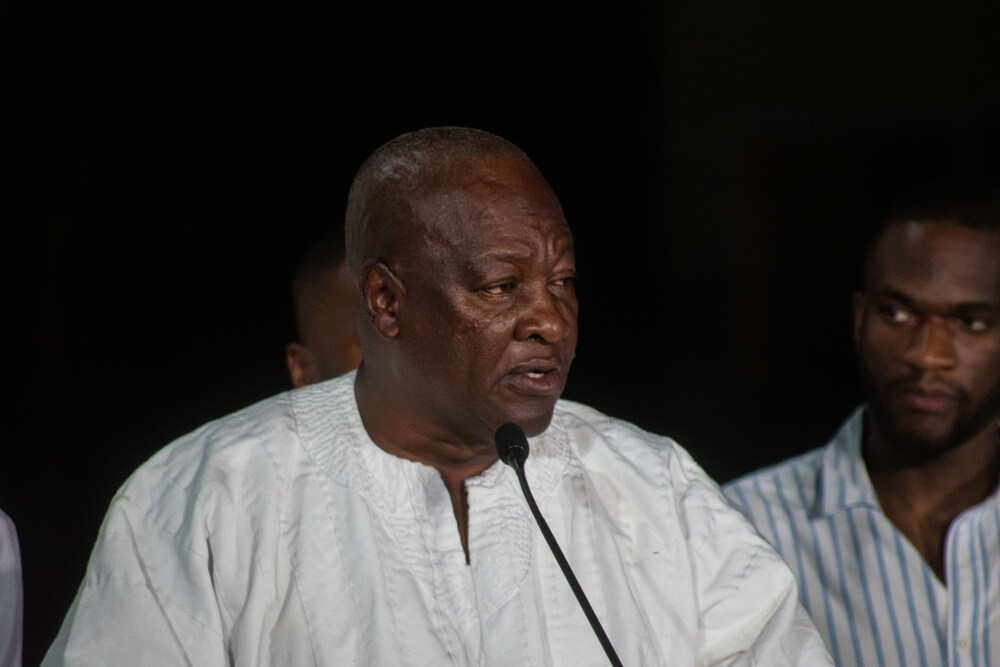 Ghana will most likely continue to receive European aid while simultaneously cooperating with the Sahel’s military authorities - President John Mahama
While JNIM uses northern Ghana for rest and resupply, major attacks on Ghanaian territory are unlikely.
The risk will grow if Accra begins seriously disrupting those flows, as Benin and Togo served as rear bases for the same groups for years before becoming targets of attacks in late 2021 and 2022 that killed their own soldiers.
If these networks remain intact, JNIM will entrench itself more deeply along the border and more easily find allies among the warring parties in Bawku.
In 2024, the Clingendael Institute warned that relying on the absence of attacks could mislead Ghana into a false sense of security.
The next dry season will be the first real test. Ghanaian immigration officials at the Hamile border crossing say that during this period “every road becomes a possible crossing”, and that their service has neither adequate surveillance systems nor basic equipment to monitor movement across the border.
It will then become clear whether Accra can crack down on cattle theft and resale, and the smuggling of explosives, without treating all Fulani people as suspects, since collective suspicion of that herdsmen community would bring JNIM new recruits on the Ghanaian side of the border.
The European strategy in the region also depends on this, as Brussels has less and less common ground with the military authorities of Mali, Burkina Faso and Niger.
Without Ghana as a reliable partner, northern Ghana would become a permanent economic rear base for the Sahelian war, with Bawku as the point through which violence would most easily spill over into Ghanaian territory.
