On 13 July, Donald Trump announced that the United States is renewing the naval blockade of Iran and will seek compensation amounting to 20 per cent of cargo value to protect shipments passing through the Strait of Hormuz.
The US Central Command announced that from 14 July at 4 pm Washington time, US forces will stop ships entering or leaving Iranian ports, while other commercial traffic will not be affected.
The White House has not announced the method of payment, the legal basis, the criteria for determining the cargo value, or the consequences for ships that accept American protection but refuse to pay.
Markets reacted before the administration offered those explanations, with Brent surging above $83 a barrel, US bond yields rising and stock indices falling.
The market response was intensified by the fact that Trump, alongside renewing the blockade, opened the possibility for one country to turn military control of an international waterway into a service whose price it sets itself.
Passage through Hormuz is therefore no longer assessed solely in terms of the risk of an Iranian attack, because shippers now have to take into account American protection conditions, possible compensation, higher war insurance premiums and uncertainty about who really controls the route they should take.
Two controls over the same passage
An interim deal in June paved the way for a more permanent cessation of hostilities and a gradual normalisation of shipping, but fresh attacks on commercial vessels, Iran’s renewed declaration that the strait is closed, and US strikes over the previous weekend ended that respite before a more stable passage regime could take hold.
The conflict now extends to the question of which route ships should take, as Iran demands use of the northern corridor, closer to its coast and under the control of the Revolutionary Guard, while US forces maintain a southern route along Oman and claim they can secure international traffic.
Shippers are thus forced to choose between two corridors protected by parties in open conflict, each contesting the other’s right to determine the rules of passage and each able to interpret ship movements as political alignment.
Trump’s decision entrenches the division of the strait into US and Iranian zones of control
The number of vessels that dare to cross the strait shows how limited this choice is. Before the war, about 130 ships passed through daily, whereas only fourteen were registered by the automatic tracking system on Sunday, although the actual number was probably slightly higher, as some tankers had switched off their devices to make it difficult to track their position.
No LNG tankers have passed since Saturday, so the claim that the corridor is formally open means little to shipowners, who must weigh the risk of Iranian missiles, US interception, loss of insurance and multimillion-dollar cargo damage.
Trump’s decision entrenches the division of the strait into US and Iranian zones of control, and this arrangement could seriously disrupt trade without closing it completely.
For the world market, it is enough that the passage remains unpredictable, slow and expensive, because a ship that waits several days for permission, changes course or requires a military escort already incurs additional costs that eventually feed into the price of oil, gas and every other commodity it carries.
Billing without rules
The International Maritime Organization has announced that imposing charges for passage through straits used for international navigation has no legal basis, since the transit passage regime rests on the right of ships to move through such corridors continuously and without unilaterally imposed conditions.
For years, the United States defended precisely this interpretation when Iran tried to restrict traffic, so the current decision puts Washington at odds with the very principle on which it relied during previous crises in Hormuz.
The change in the American position occurred within a few weeks. At the end of June in Bahrain, Marco Rubio rejected the possibility of any country charging for the use of international waters, while Trump is now demanding twenty per cent of the value of the cargo, explaining that this covers the costs of American protection.
His announcement does not specify whether payment would take the form of customs duties, military escort fees, insurance premiums or payments to the US Treasury, nor does it specify who would assess the value of the cargo, at what point the obligation would arise or how a ship using the US corridor but refusing to pay would be treated.
Central Command has assumed responsibility for implementing the blockade, while referring questions about payment back to the White House, thereby confirming that the military aspect of the decision can proceed before its financial aspect has been clearly defined.
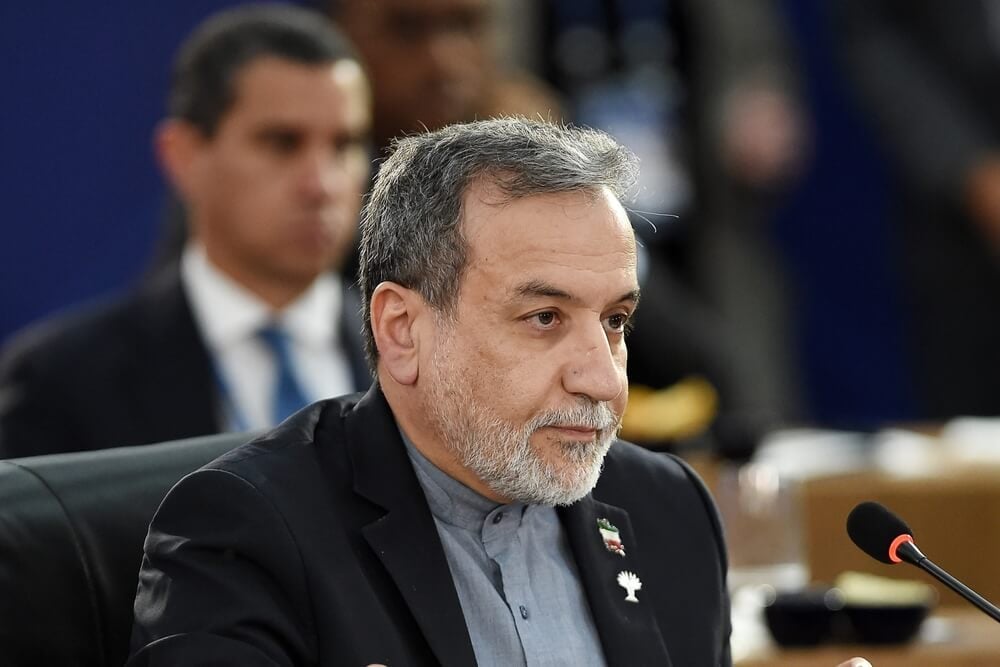 Abbas Araghchi, Iran's foreign minister, has already accepted the principle of compensation, disputing only the level of the US demand
Such a gap does not delay the economic consequences, as shippers, banks and insurers do not wait for completed regulation when assessing risk.
They base price on the most expensive possible outcome, so a legally incomplete decision will increase premiums, freight and financing costs even if not a single dollar of formal fees has yet been collected.
At the same time, the American move gives Iran an argument it has so far struggled to defend. If military protection creates a right to revenue, Tehran can argue that control of the northern route grants the Iranian authorities the same right, and Abbas Araghchi, Iran's foreign minister, has already accepted the principle of compensation, disputing only the level of the US demand.
The conflict could thus evolve into a situation in which two sides offer or impose their own version of safe passage, while ships pay whichever side currently controls the waters they must cross.
The implications for the US position extend beyond Hormuz itself, as Washington's freedom of navigation operations around the world rely on the assertion that great powers cannot use their own military force to change the rules governing international waterways.
A charge not approved by an international regulator will weaken that argument in future disputes, including those in the South China Sea, where states seeking to condition passage on protection, registration or payment will be able to invoke US precedent.
Hormuz cannot be easily bypassed
For years, the Gulf states have been building infrastructure to reduce their dependence on the strait. Saudi Arabia can divert some of its oil to the Red Sea via the East–West pipeline, while the United Arab Emirates uses a connection from Abu Dhabi to the port of Fujairah, outside Hormuz.
These routes can mitigate short-term disruption and protect some exports, but their capacity is insufficient to replace the volumes that passed through the strait each day before the war.
The limitation is not confined to pipeline capacity, as oil can only be diverted up to the limits of storage and terminal capabilities on the other coast. Beyond that point, tankers enter the Red Sea or Arabian Sea, where further risk zones and longer routes to Asian buyers await.
Liquefied gas is even more vulnerable, as Qatar has no sea route that bypasses Hormuz
Shifting Saudi exports to the Red Sea increases the importance of the Bab el-Mandeb, a corridor that has itself been exposed to attacks, so attempts to reduce dependence on one bottleneck may simply increase reliance on another.
Liquefied gas is even more vulnerable, as Qatar has no sea route that bypasses Hormuz. Some crude oil can be diverted through pipelines, but Qatari LNG is transported by tanker through the strait, so a prolonged interruption of navigation directly reduces supplies to Europe and Asia and drives up gas prices.
Saudi Arabia, the Emirates and Iraq are likely to accelerate investment in new pipelines and the expansion of existing routes after this crisis, but such projects require years, billions of dollars and politically stable export ports.
Over time, Hormuz may lose some of its former absolute importance, but Trump’s decision does not address today’s lack of alternative capacity and instead gives producers another reason to build infrastructure to try to avoid both Iranian and American constraints in future.
Asia bears the brunt
Most of the oil that passes through Hormuz ends up in Asia, which is why China, India, Japan and South Korea bear the brunt of the consequences of higher transport and insurance costs.
China and India may increase purchases from other suppliers, but such a shift would raise the price of oil from Russia, Africa and Latin America, while Japan and South Korea have less scope to change their import structures quickly and a greater need for reliable shipping routes.
A charge of 20 per cent, if calculated on the full value of the cargo, would be a surcharge that large buyers would not accept without attempting to pass it on to producers.
These measures raise costs long before more expensive goods reach the petrol station, factory or household
At an oil price of $80 per barrel, the US fee alone would be equivalent to $16 before insurance, freight and other costs, so buyers would seek to recoup that amount through lower contract prices, while exporters would try to factor it into the selling price.
Such competition over the allocation of costs would ultimately increase prices for consumers, even if producers and retailers temporarily shouldered some of the burden.
The disruption extends beyond energy, as the Gulf exports petrochemical products, fertiliser and industrial raw materials, while high-value goods pass through the strait and would be particularly expensive to transport under Trump’s formula.
Insurers are raising premiums based on the value of the ship and cargo, banks are tightening financing conditions for shipments through the war zone, and importers are stockpiling more to protect against another shutdown.
Each of these measures raises costs long before more expensive goods reach the petrol station, factory or household.
The price of energy passes through to the cost of borrowing
The monetary consequences are central to this analysis, as the ultimate economic effect of the disruption in Hormuz is that higher oil prices increase the cost of fuel, transport, aviation and industrial production, making it harder to reduce inflation.
The Federal Reserve is keeping the interest rate in the range of 3.50 to 3.75 per cent, while some of its officials expect at least one increase in 2026. The new energy shock reduces the scope for easing monetary policy and increases the likelihood that high rates will persist for longer.
The costs of fuel, debt servicing and defending the domestic currency are rising simultaneously
The consequences will be felt most quickly by countries that both import energy and borrow in dollars, because the costs of fuel, debt servicing and defending the domestic currency are rising simultaneously.
The more important monetary effect of Hormuz is therefore not speculation about a single decision by the Fed, but that volatile energy prices keep global borrowing more expensive and leave less room for central banks to support already slowing economies.
Enforcement will determine the actual reach of the blockade
How the US Navy treats the first ship heading towards an Iranian port will show how far Washington is willing to go in intercepting, diverting or seizing it, while the treatment of the first vessel that requests protection and refuses compensation will show whether Trump has announced a genuine financial commitment or merely a negotiating threat without administrative preparation.
Those decisions will determine whether the blockade remains confined to Iranian trade or expands into a broader US transit management regime.
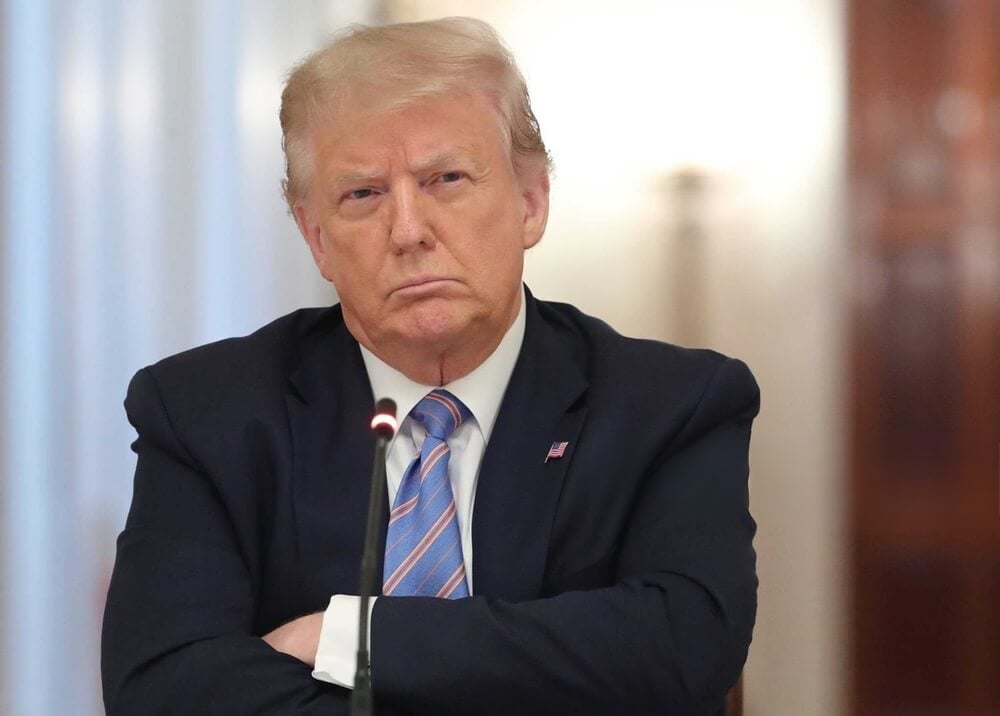 Donald Trump may not collect the revenue he has announced, but his decision will increase what shippers, insurers, banks and importers pay each other
A formal charge of 20 per cent can hardly become a stable system without the consent of allies, the maritime industry and the countries whose ships use the corridor.
This is why the more likely outcome is US military protection of part of the passage, with a permanently higher war premium that the market will price in independently.
Trump may not collect the revenue he has announced, but his decision will increase what shippers, insurers, banks and importers pay each other, turning a political threat into a real economic cost even without a formal charge.
The most dangerous part of the decision, however, will play out at sea, where US warships and unmanned vessels, Iranian submarines, missile units and commercial tankers move through a narrow area whose rules are contested amid ongoing conflict.
A ship that takes a wrong turn, responds late to a call, or is misidentified could trigger a conflict that neither side had planned, and any such incident would raise the price of oil and open up the prospect of a wider military response in the Gulf.
Trump has tried to turn US military superiority in the Strait of Hormuz into revenue, but a far more likely outcome is a permanently more expensive and divided corridor in which Iran and the United States set rival terms of passage.
If the blockade continues, most of the bill will be paid not by Tehran, but by Asian importers, European gas buyers, shipping companies, dollar‑debt countries and consumers thousands of kilometres away from the strait.
