On February 24, 2027, it will have been five years since Russia launched its full-scale invasion of Ukraine, in flagrant violation of international law.
Russian President Vladimir Putin’s neo-imperialist adventure—his “special military operation”—was supposed to be a brief and decisive war of conquest. But it soon became apparent that he had underestimated his victim.
The Ukrainians have been determined to defend themselves, whatever it takes, and for a while, they could count on a united West, with the United States and Europe standing together in providing military and civilian support.
But much has happened over the past five years, with developments in the political theater proving to be more significant than those on the battlefield. The most important, obviously, was the change of leadership in the White House, with Donald Trump succeeding Joe Biden in early 2025.
Trump has not only betrayed Ukraine and America’s European NATO allies, but increasingly sided with Putin.
At this point, it would hardly be surprising if the current US administration openly switched sides and formally joined Putin’s camp.
Europe’s democracies understand what is at stake
Developments in the European Union have been no less consequential. A bloc that is otherwise perpetually at loggerheads has demonstrated an unusual degree of unity and resolve in supporting Ukraine, while also working more closely with non-EU countries such as the United Kingdom, Norway, and Canada.
This united front shows that Europe’s democracies understand what is at stake.
By supporting Ukraine, they can serve their own security interests despite being abandoned by their former protector.
The real danger to Europe now comes from within
So far, the mounting external pressure on Europe—which finds itself in a vise, with Putin to the east and Trump to the west—has only strengthened its sense of unity.
In rapidly maneuvering to provide for its own defense, Europe is also demonstrating its resolve to become a global power in its own right.
Although there is still a long and (financially) costly road ahead, the first major step has been taken.
The real danger to Europe now comes from within. Despite its unity in supporting Ukraine, it must contend with historically rooted differences in outlook and a resurgence of its most self-destructive hereditary disease: egocentric nationalism.
Exponents of this ideology regard political integration with neighboring countries as an evil, rather than a source of strength.
If given the chance, they would squander Europe’s historic opportunity to establish an independent role for itself, free from dependence on, or domination by, one of the world’s other major powers.
Europe’s greatest danger
The return of national chauvinism is therefore Europe’s greatest danger. Such a politics threatens to revive the historical conflicts and hostilities that several generations of Europeans thought they had finally overcome.
The great irony is that if the nationalists prevail, Europe’s subjugation to outside powers will become inevitable.
Franco-German relations will be the clearest signal of this risk in 2027. France will elect its next president in April-May, followed soon thereafter by parliamentary elections.
These contests will determine not only the distribution of political power in France; if Marine Le Pen of the far-right National Rally wins the presidency, we may see the start of a systemic transformation with dire implications for Europe.
An EU divided against itself would unite the Kremlin and MAGA in celebration
An EU divided against itself would unite the Kremlin and MAGA in celebration.
Worse, chronic fiscal deficits have left France facing a debt crisis.
Absent major budget cuts and painful social reforms, any French government will remain in breach of the eurozone’s fiscal rules, heightening tensions with Germany.
2027 could be an ill-fated year for Europe
But Germany, too, faces the prospect of political chaos, owing to a weak federal government, a chancellor who is unpopular even with his own party’s voters, and a difficult economic situation.
The result could be a radical transformation of Germany’s party system, accompanied by the rise of the far-right, neo-nationalist Alternative für Deutschland.
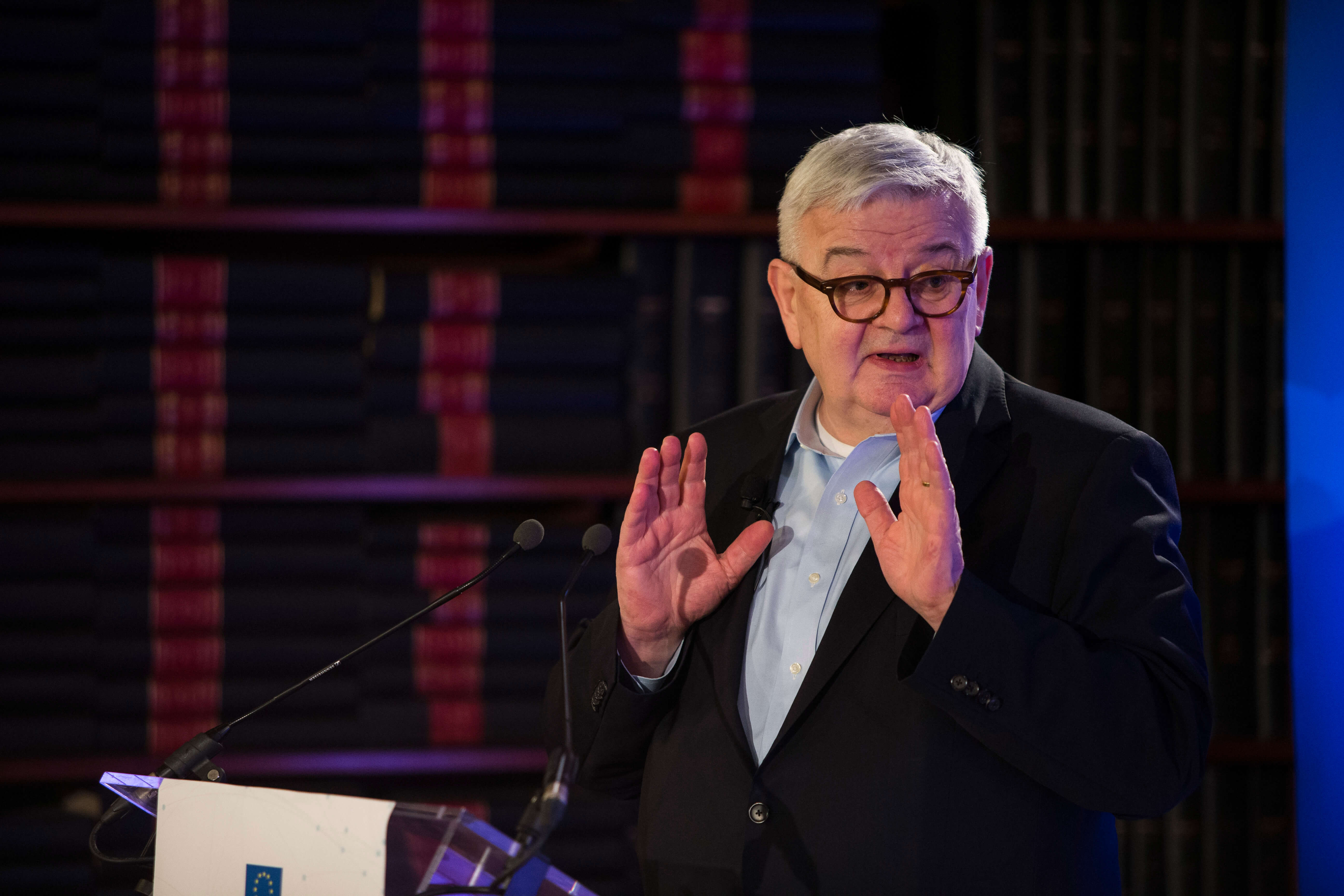 America may withdraw from the continent for good, having first defected to Putin’s side, and the Franco-German engine may break down completely - Joschka Fischer
In the worst-case scenario, 2027 could be an ill-fated year for Europe. America may withdraw from the continent for good, having first defected to Putin’s side, and the Franco-German engine at the EU’s heart may break down completely amid chaotic domestic political developments.
Putin and Trump, with China’s support, would then try to impose a “peace” on Ukraine, requiring its near-capitulation, extensive territorial losses, and severe restrictions on its sovereignty.
Trump has already announced that he wants to negotiate an end to the war at a three-way meeting with Putin and Chinese President Xi Jinping, without Ukraine or Europe at the table.
If that is what passes for great-power leadership in the new world order, Europeans must wake up. This may be our last chance to choose sovereignty over submission.
Joschka Fischer, Germany’s foreign minister and vice chancellor from 1998 to 2005, was a leader of the German Green Party for almost 20 years.
