Health professionals were appalled last week when a Danish ethics committee gave the go-ahead to a US-funded hepatitis B vaccine trial on newborns in the impoverished African country of Guinea-Bissau.
The vaccine is deemed safe by most scientists but some discredited Danish researchers want to investigate what they call its “nonspecific” outcomes. In the trial, some 7,000 babies would receive the vaccine but it would be withheld from another 7,000 newborns for their first six weeks of life.
Such a trial is deemed unethical by most health experts because it could put this second group of babies at high risk of hepatitis B – which can lead to liver cancer and cirrhosis – in a country with some of the highest rates of the disease.
Robert F Kennedy Jr, US health secretary, backs the trial. But Guinea-Bissau has pushed back even though it is dependent on external assistance and foreign aid for about 50% of its national budget and is heavily reliant on a single cash crop – cashew nuts.
Guinea-Bissau’s health minister, Quinhin Nantote, denied this week it had approved the trial. “Any scientific research initiative involving human beings, particularly children, must strictly comply with applicable national legislation, international ethical principles, competent evaluation and approval mechanisms,” he said.
Bilateral health agreements
The controversy may be a taste of things to come as the Trump administration pursues bilateral health agreements with many African countries that are meant in part to replace the work of the US Agency for International Development, which was the world’s largest humanitarian group until it was shut down last year.
The new health agreements commit African countries to sign over patient health data and to share specimen samples in return for aid but no guarantee they would benefit from any medical treatments developed from them.
African countries are showing resistance when confronted by Washington’s financial clout
But African countries are showing resistance when confronted by Washington’s financial clout, with Zambia, Zimbabwe, Namibia and Ghana all raising objections.
Zambia did agree a five-year, $3.6 billion deal with Washington on 7 October that includes funding for its health system but does not include sharing of health data or specimens. The deal is considerably different to that originally proposed by the US.
“I want to announce here that the [agreement] as it stands now... has no reference to any specimen sharing conditions,” said Roma Chilengi, Zambia’s health minister. Clauses committing Zambia to share individual health data had also been “completely removed.”
African pushback comes with a price
Washington also appears to have failed in its attempts to link aid to better access to Zambia’s mineral resources, with the African country apparently able to decouple the issues and health assistance no longer conditional on such access.
“An inspiring, co-ordinated campaign of advocacy, pressure and outcry from Washington to Lusaka secured meaningful changes in this deal,” said Asia Russell of Health GAP, which advocates for global access to medicines.
“These negotiations stalled for many reasons, most notably the Trump administration’s relentless campaign to make Zambia’s health funding from the US [government] contingent on unfettered access to Zambia’s mineral wealth,” said Russell.
The US ended all health assistance to Zimbabwe after it rejected a US health agreement
Her group also made public the text of the deal, which both Washington and Lusaka had failed to publish. As of last month, only 16 of the 35 bilateral US health deals had been publicly released, many of them leaked.
“Governments negotiating health assistance agreements with the United States face difficult choices,” said Julia Bleckner, senior health researcher at Human Rights Watch. “They should be wary of terms asking them to sign away their populations’ rights and push for the inclusion of civil society representative and multilateral global health organisations like the Global Fund in deliberations.”
African pushback comes with a price. The US ended all health assistance to Zimbabwe after it rejected a US health agreement partly because of the data and specimen requirements. “In essence, our nation would provide the raw materials for scientific discovery without any assurance that the end products would be accessible to our people should a future health crisis emerge,” said Zimbabwe government spokesperson Nick Mangwana.
The US is also phasing out funding for HIV treatment in Namibia.
Make America Healthy Again, undeterred by outbreaks
In Guinea-Bissau, the proposed hepatitis B vaccine trial raised comparisons with unethical HIV trials conducted in Africa in the 1990s and raised the risk that “local populations will be unjustly denied a proven standard of care that would not be withheld from citizens of privileged nations,” said a paper in The Lancet last month.
Despite the international outcry, the ethics committee at the University of Southern Denmark approved the trial run by Danish researchers at the Bandim Health Project last week, believing it had been given the go ahead by Guinea-Bissau.
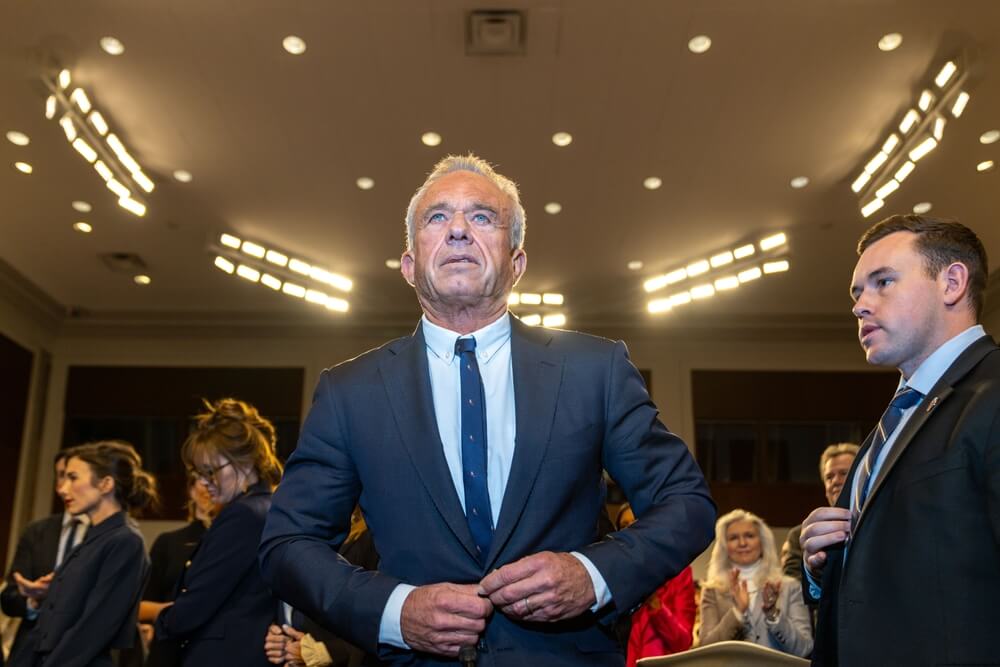 RFK Jr continues to pursue his anti-vax agenda and last week announced the funding of research into vaccine injuries at a new clinic at the US National Institutes of Health
It remained unclear whether the US Centers for Disease Control and Prevention would still try to make the trial happen, having budgeted $1.6 million to be matched by private funding from the Pershing Square Foundation and the Bluebell Foundation.
Regardless, RFK Jr continues to pursue his anti-vax agenda and last week announced the funding of research into vaccine injuries at a new clinic at the US National Institutes of Health.
Research may also investigate aluminium-containing vaccines even though they have repeatedly been proven safe.
There are also plans to reimburse physicians for reporting suspected vaccine-related injuries, raising the issue of incentivising doctors for raising risks that do not exist.
Few might expect the so-called Make America Healthy Again movement to be worried about the health of Africans but it remains undeterred even by a crisis of measles outbreaks in the US.
“We’ve had several deaths,” Jesse Goodman of Georgetown University told NPR. “I think it's great to strengthen vaccine safety but where is the advocacy for the safety of these children and several adults who've died?”
