In 2023, US President Joe Biden ordered US intelligence agencies to share evidence of Russian war crimes with the International Criminal Court, with the goal of indicting Russian President Vladimir Putin.
This marked a sharp break from precedent, as the United States had long insisted that the ICC could not exercise jurisdiction over citizens from countries that had not ratified the Rome Statute establishing the Court—a group that includes Russia and the US.
But Biden changed his tune in November 2024, when the ICC issued arrest warrants for Israeli Prime Minister Benjamin Netanyahu and his former defense minister, Yoav Gallant. According to Biden, the decision was “outrageous,” and the US would always stand by its ally Israel, which is also not a signatory of the Rome Statute.
Donald Trump, Biden’s successor, went a step further by imposing sanctions on ICC officials, including freezing their assets.
In August 2025, US Secretary of State Marco Rubio accused the Court of being “an instrument of lawfare.”
By December, 11 ICC judges and prosecutors had been placed under US sanctions. Then, in mid-July, the State Department launched a campaign to dismantle the Court.
The ICC’s goal
Recent US behavior—acting as if the ICC can be trusted against an enemy, but never against a friend—ignores that the Rome Statute rests on complementarity.
The ICC is a court of last resort that steps in only when a national government fails to investigate war crimes and crimes against humanity in good faith.
Israel’s jurisdictional objection that Palestine is not a state obscures the sensible way out: a genuine investigation into the crimes alleged by the ICC prosecutor.
Instead, Israel and the US took aim at ICC officials. But contempt is not particularly effective.
Putin cannot enter any of the 125 countries that have ratified the Rome Statute without risking detention
The ICC’s goal in issuing warrants is not detention—it lacks the police power to make arrests. Rather, its influence lies in making it costly for indictees to be seen with certain figures.
Putin, for example, cannot enter any of the 125 countries that have ratified the Rome Statute without risking detention, which is why he chose to attend the 2023 BRICS summit in South Africa by video.
Netanyahu’s arrest warrant similarly forces him to consider whether other governments might feel compelled to act were he to visit. US sanctions have not alleviated this concern.
Power is transient
Some may argue that law simply reflects political power: the ICC targets Putin rather than US officials because Russia, unlike America, lacks allies. Seen from this perspective, consequences are for the weak.
In fact, power is transient. Despite being granted legal immunity as a former president of Chile, General Augusto Pinochet, who presided over a 17-year reign of terror, was arrested in 1998 at a London hospital while recovering from surgery.
A Spanish judge had invoked the United Nations Convention against Torture to pursue Pinochet’s extradition.
Although Pinochet avoided trial and died in 2006, his arrest set a legal precedent. In 2016, a Senegalese court used the same principles to sentence former Chadian dictator Hissène Habré to imprisonment for life.
A leader falls first, and then the trial follows. The protection provided by power merely delays accountability
Likewise, Serbian dictator Slobodan Milošević ultimately faced justice, dying in custody at The Hague during his trial for war crimes.
The law caught up with these men only after they were out of office. Pinochet had retired; Habré was in exile; Milošević had been forced out.
A leader falls first, and then the trial follows. The protection provided by power merely delays accountability.
The US cannot veto ICC decisions
The importance of pending ICC cases is secondary to the pattern they reveal.
After 1945, the US established a global order in which disputes have been largely adjudicated by institutions over which the US holds sway.
Accountability mechanisms, such as the ICC and the International Court of Justice (ICJ), were later introduced to challenge this dominance.
Now a magistrate in a less influential state can oppose a powerful government without its permission.
For example, in December 2023, South Africa brought genocide charges against Israel at the ICJ for its conduct in Gaza; a month later, the ICJ issued provisional measures.
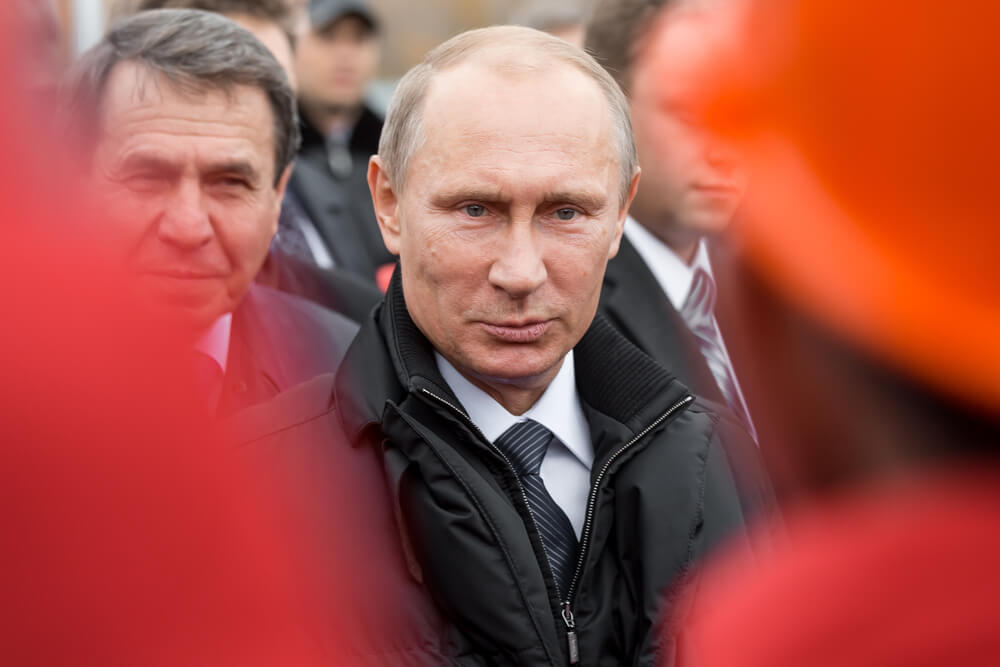 To bring Putin to justice, the US needed the clout of a globally respected court that was not under its control
The US cannot veto ICC or ICJ decisions the way it can a UN Security Council resolution.
That leaves America with two choices: join the system and influence it from within or boycott these courts and relinquish any say.
The US has chosen the latter, which does not halt international law’s progress, but rather hands the pen to other countries.
To bring Putin to justice, the US needed the clout of a globally respected court that was not under its control.
Now it is attempting to tarnish the same court’s reputation in the name of protecting an ally, renouncing international law on principle even as the world divides into competing blocs and the question of who writes the rules is, for the first time, wide open.
Pinochet believed he was beyond the reach of the law in London. He was mistaken. The US is making the same bet on a far larger scale: that the international laws it helped write can never be used against it.
Eric Alter is Dean of the Anwar Gargash Diplomatic Academy in Abu Dhabi and a member of the Council on Foreign Relations.
