In the lead-up to the American midterm elections, we are likely to hear the phrase, “Our institutions have failed us.”
The phrase is usually followed by a demand for radical disruption, as if the only honest response to an imperfect system is to burn it down. Politicians know that anger and blame attract votes.
But that fashionable diagnosis gets something basic wrong. In the United States, the deeper problem is usually not that our institutions are incapable of functioning. It is that our politicians are increasingly incapable of seriousness.
For years now, voters have been told that a sinister “deep state” is thwarting the will of the people.
Bureaucrats, analysts, diplomats, military officers, public health officials, regulators, and civil servants are cast as the true obstacle to progress.
It is an emotionally satisfying story, especially for politicians who need someone else to blame.
It transforms complexity into conspiracy. It excuses failure. And, perhaps most importantly for those seeking office, it redirects public anger away from the people actually asking for power.
Serious people doing serious work
I spent most of my career inside a national security institution. I saw its frustrations, its blind spots, and its mistakes. Any honest person who has worked in government knows they exist.
But I also saw something else, something our political rhetoric now strains to deny – serious people doing serious work.
I saw professionals wrestling with hard problems, often under enormous pressure, often without public praise, and often with far more competence and dedication than the political class that casually disparages them. And always in strict accordance with law and regulation.
Our institutions are not the primary reason our politics feels broken
That experience left me with a conviction that runs against much of our current rhetoric.
Our institutions are not perfect. But they are also not the primary reason our politics feels broken.
More often, the real failure lies with leaders who cannot match slogans to strategy, outrage to governing, or ambition to actual responsibility.
Shallow political leadership
You can see that disconnect clearly every day in the Iran War. Our military and intelligence professionals are showing tactical expertise and carrying out difficult, dangerous missions.
But tactical competence inside institutions cannot compensate for shallow political leadership.
When an administration cannot articulate its goals, cannot explain tradeoffs, cannot sustain public trust, and cannot tie strategy to execution, even brilliant professionals are left carrying weight they were never designed to bear alone.
If we want to know whether a society’s institutions work, we should begin with outcomes, not slogans
Following Vietnam, Iraq, and Afghanistan, one might have thought we had learned by now that tactical brilliance without a serious and achievable policy goes wanting.
And yet the record of those institutions is far better than our politics admits.
If we want to know whether a society’s institutions work, we should begin with outcomes, not slogans.
Americans live longer
Over the past several decades, despite real failures and undeniable setbacks, the American institutional ecosystem has produced substantial gains in health, safety, prosperity, and stability.
Americans live longer than they did a generation ago. Infant mortality has fallen sharply. Heart disease has become far less deadly over time.
Cancer death rates have declined. Smoking, once woven into daily life, has dropped dramatically.
Childhood vaccination programs have prevented staggering amounts of illness, hospitalization, and death.
None of that happened because a politician sneered on television about national decline.
Violent crime is far below the levels that defined the early 1990s
It happened because researchers, doctors, regulators, nurses, and public agencies did the slow, cumulative work that institutions are meant to do.
The same is true in other areas. Violent crime is far below the levels that defined the early 1990s.
Roads are safer in per-mile terms than they once were. Workplace safety has improved.
On environmental protection, the story is not simple, and climate change remains the great unresolved challenge of our time.
But the claim that institutions never deliver collapses when measured against the cleaner air most Americans now breathe.
The country grew wealthier even as major air pollutants dropped dramatically. Lead exposure, once a quiet and devastating public health disaster, was reduced on a massive scale. I can remember as a kid when our lakes and rivers caught fire due to pollution.
The language of total institutional failure is misleading
Even abroad, where Americans are often taught to view their government only through the lens of blunder, the record is more complicated and more humane than the rhetoric suggests.
Institutions like USAID helped save millions of lives through health and development programs.
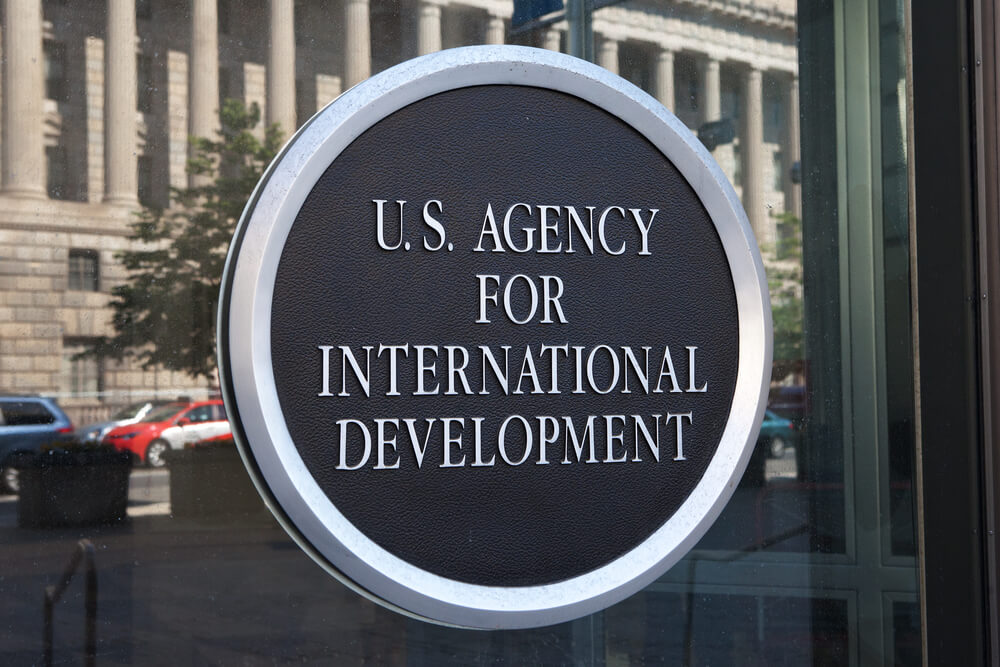 Institutions like USAID helped save millions of lives through health and development programs
Our diplomats and intelligence officers developed relationships that have saved lives and help avoid catastrophe.
That does not erase strategic mistakes or justify every intervention. But it does remind us that the American state, so often caricatured as uniformly incompetent or malevolent, has also been capable of extraordinary good.
This is why the language of total institutional failure is so misleading. It confuses “often imperfect” with “fundamentally broken.”
It asks citizens to ignore measurable progress because collapse makes for better television.
Entertainment dressed up as conviction
As we move deeper into election season, Americans should be wary of candidates who offer simple villains and simpler fixes.
Too many people running for office are not really trying to govern a vast, complicated republic.
They are trying to build a brand. They want the viral clip, the righteous performance, and the applause line that confirms the other side is evil and everything would work if only a few enemies were purged from the system.
That is not leadership. It is entertainment dressed up as conviction.
Capable institutions are not the enemy of democratic accountability but one of the conditions that make it possible
A serious politician would level with the country. He would admit that the United States faces large, stubborn challenges – a more dangerous international environment, rising competition from China, technological disruption, fiscal strain, social fragmentation, and a political culture that rewards theatrical certainty over practical judgment.
He would not pretend that a nation of 330 million people, with a continental economy and global commitments, can be steered by bumper-sticker ideology.
He would understand that capable institutions are not the enemy of democratic accountability; they are one of the conditions that make it possible.
What we need, then, is not more contempt for the people who keep the machinery running.
Thank God for the deep state
We do not need more conspiracy theories about a “deep state.” We do not need more performative assaults on the professionals asked to manage intelligence, defense, health, law, diplomacy, and regulation. Instead, we need better political leadership over the institutions we already have.
The false narrative of a “deep state,” and efforts like DOGE to enfeeble the institutions on which democratic government depends, send us looking in exactly the wrong direction.
That means putting responsibility where it belongs. If a candidate wants power, he should be expected to offer more than rage, more than blame-shifting, and more than a promise to humiliate the right set of enemies on cable news.
He should be expected to show discipline, seriousness, and the ability to convert public frustration into public purpose. Governing a continental nation requires seriousness and compromise.
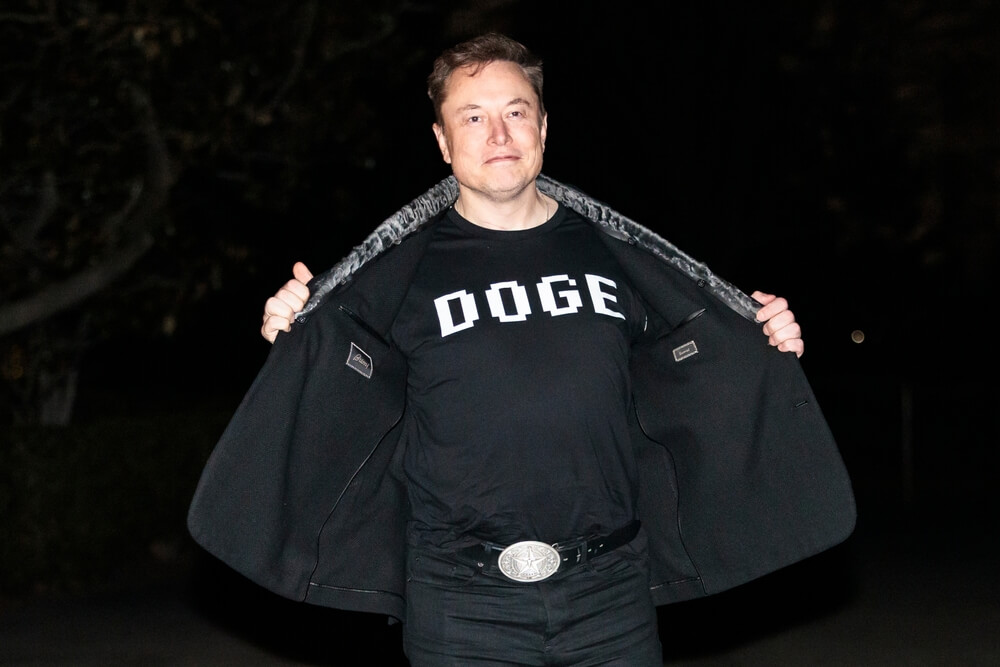 The false narrative of a “deep state,” and efforts like DOGE to enfeeble the institutions on which democratic government depends, send us looking in exactly the wrong direction
Our institutions have flaws. Some need reform, and others need renewal. But the broad American story is not one of a country sabotaged by faceless professionals lurking in the shadows.
It is the story of a country whose institutions, under difficult conditions, have often worked better than its politics.
As former CIA Director Michael Hayden once put it, when he hears the term “deep state,” he thinks of “a professional public servant carrying out the policies of the elected leadership. Thank God for the deep state.”
As elections approach, that is the distinction voters should keep in mind. The easiest move in American life is to sneer at the “system.”
The harder, more honest move is to ask whether the people seeking office are prepared to lead it.
Right now, too many of them are not.
John Sipher ( @johnsipher.bsky.social ) is a non-resident senior fellow at the Atlantic Council and co-founder of Spycraft Entertainment. He worked for the CIA’s Clandestine Service for 28 years and is the recipient of the Agency’s Distinguished Career Intelligence medal. He is also a host and producer of the "Mission Implausible" podcast, exploring conspiracy theories.
