Many elements of Ukrainian President Volodymyr Zelensky’s recent meeting with Donald Trump at Mar-a-Lago were disconcerting, if not depressing.
For starters, no American official met the Ukrainian head of state upon his arrival in Miami, which stands in stark contrast to the pomp and circumstance lavished on Russian President Vladimir Putin in Anchorage, Alaska, last August.
But even more disturbing was the complete absence of trained and experienced diplomats on the American side of the negotiating table.
Instead, there were White House Chief of Staff Susie Wiles and her deputy, Steve Witkoff, a real-estate developer with long-standing connections to Russia, and President Donald Trump’s son-in-law, Jared Kushner.
Amid all the damage Trump has done in the first year of his second term, the destruction of America’s diplomatic capacity has received relatively little attention.
But alongside the gutting of the public-health system and the wanton abandonment of clean energy, it may prove to be the most consequential.
Of course, US presidents are entitled to appoint ambassadors to their liking, and many have chosen generous campaign donors.
But these postings are always to less important capitals, where appointees perhaps can get away with a ludicrous lack of knowledge about their brief (something that Senator John McCain memorably exposed during Barack Obama’s presidency).
Unqualified figures
But, as is so often the case, Trump’s conduct is in a category of its own. The nepotism on display during his second presidency is shameless.
Hence, he appointed Kushner’s father, a convicted felon, as ambassador to France; and he named his son’s former girlfriend as ambassador to Greece (whose citizens she once derided as “freeloaders”).
Then there is the designation of completely unqualified figures to pursue missions that are not just sensitive but outright offensive.
Trump’s effort to “acquire” Greenland, a self-governing territory within the Kingdom of Denmark, is being led by the governor of Louisiana, adding insult to injury against a NATO ally.
The gutting of US diplomatic capacity is partly the result of a misguided drive for efficiency
Other important posts have been left vacant, the size of the National Security Council has been halved, and the apparent lack of preparation for the day after the capture of Venezuelan President Nicolás Maduro attests to the absence of a deliberative process, poor coordination, and a shortage of qualified personnel.
The gutting of US diplomatic capacity is partly the result of a misguided drive for efficiency (reprising the failed effort by Trump’s first-term secretary of state, the hapless former Exxon executive Rex Tillerson).
But it is also a consequence of sheer inattention, which has resulted in a lack of coordination and chaos reminiscent of the first Trump administration.
Relying on fresh faces and an unorthodox approach
This has not been lost on US adversaries. They are taking advantage of the situation, with some even de facto determining the composition of US diplomatic teams.
As a Wall Street Journal investigation showed, the Trump administration has allowed its own special envoy for Ukraine and Russia to be completely sidelined in favor of Witkoff. (Moreover, Saudi Crown Prince Mohammed bin Salman, eager to assert a larger international role for the Kingdom, apparently played an instrumental role in arranging Putin’s preferred outcome.)
In theory, relying on fresh faces and an unorthodox approach could be defensible.
Those unencumbered by conventional wisdom may be able to find compromises by “thinking outside the box.”
Trump himself clearly believes that knowing nothing about a conflict is the easiest way to solve it
Trump himself clearly believes that knowing nothing about a conflict is the easiest way to solve it. But this ignorance-is-strength strategy has yet to yield stable results.
Any hope that the US itself would derive benefits from becoming more unpredictable has been dashed, not least because Trump and the loyalists he sends out into the world are utterly predictable.
They have openly declared a desire to pursue financially advantageous “deals,” which implies that geopolitical or strategic concerns have been deprioritized.
In every possible way, starting with “pausing” the enforcement of the Foreign Corrupt Practices Act, the Trump administration has signaled that the US is not only open for business but happy to accept bribes.
The war on diplomats
From this perspective, the road to lasting peace is paved with mutually beneficial business opportunities.
While ostensibly committed to “illiberalism,” the Trumpists actually exhibit a naive, canonically liberal belief in what eighteenth-century thinkers called doux commerce (“gentle commerce”).
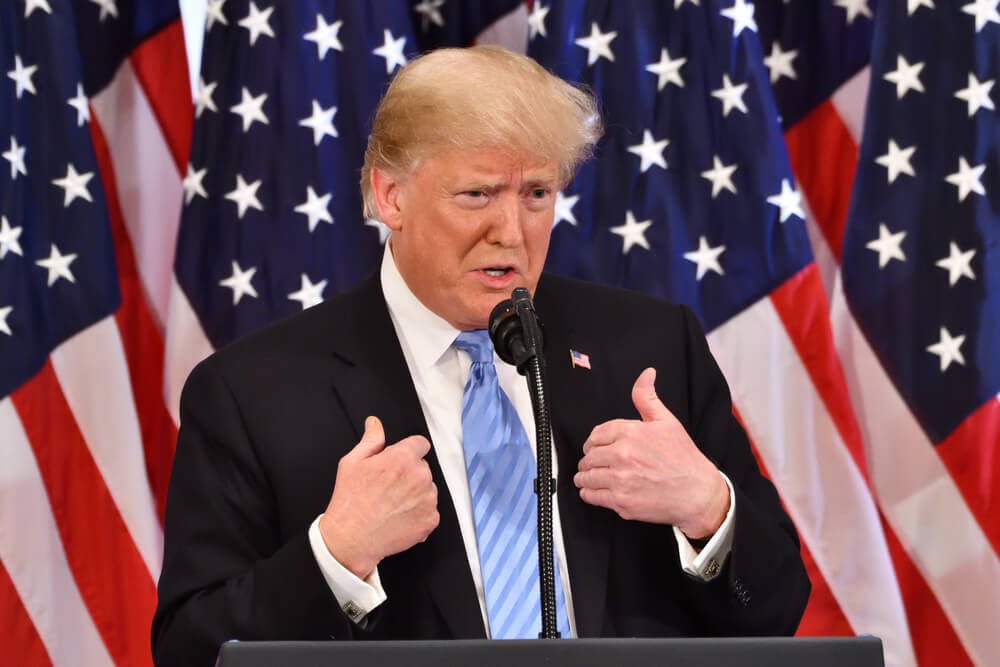 Trump is making the United States poorer, weaker, and more manipulable on the world stage
But as Germany learned the hard way when it relied on trade ties to transform Russia for the better, the supposed benefits of interdependence will not materialize if one party has other priorities.
The war on diplomats is part of a long-standing campaign against professionalism.
While Trump’s MAGA movement stokes resentment against “the elite,” not everyone who is powerful is included under that label.
MAGA supporters have no problem with billionaires dominating Trump’s cabinet – only with those who claim authority on the basis of specialized training and education. In short: unelected bureaucrats bad; unelected real-estate developers good.
By creating the impression that professionals look down on ordinary folks and fail to see solutions that anyone with common sense could figure out, MAGA channels America’s long-standing tradition of anti-intellectualism.
In the process, Trump is making the United States poorer, weaker, and more manipulable on the world stage. While one can certainly find grounds to criticize the vaunted “liberal international order,” at least it recognized that there is real global demand for common rules and stability.
Trump, now engaged in a brazenly neo-imperialist project in Venezuela, has handed China a golden opportunity to portray itself as the guarantor of such stability.
China can also present itself as offering the kind of expertise that Trump has wantonly destroyed (even if its soft power is not anywhere close to that of the US).
As with many other hallmarks of Trump 2.0, the gutting of American diplomacy will lead future historians to ask why the US decided to throw so much away, so swiftly and so senselessly.
Jan-Werner Mueller is a Professor of Politics at Princeton University.
