One of the biggest gripes of voters in a wide swathe of Western democracies appears to be the utter fecklessness of politicians – the perception that mainstream parties are too invested in a rotten system and that nothing will ever change.
Enter the UK and the EU and another round of post-Brexit will-they-won’t-they? It’s impossible by now to keep count of how many times British Prime Minister Keir Starmer has trumpeted a reset of the relationship with the EU.
His latest sally was in response to the for-now-suspended Iran war. The new geopolitical situation should give an impetus to closer ties, he said.
The same, more or less, had been said regarding Russia’s invasion of Ukraine, and the UK and the EU are still struggling to enhance even defence and security cooperation.
Apart from the agreed but not yet implemented slightly smoother movement of food and agricultural products and a temporary and partial fisheries agreement, not much has changed in the almost two years since Sir Keir took over. But even that is enough to cause a ruckus in Britain’s pro-Brexit media.
‘Brexit Betrayal’ headlines once more make news, and even that most reliable of old chestnuts has been revived: EU bureaucrats riding roughshod over good old British traditional staples.
The mooted food deal includes some British alignment with EU standards, and Starmer found himself in a short-lived pickle over marmalade, a “quintessential British preserve”, per the BBC.
It culminated in the government reassuring the nation that EU rules will not mean the product will have to be renamed ‘citrus marmalade’ after all. Disaster averted.
Meanwhile, the world is on fire, and Starmer and his EU counterparts, while not quite fiddling, are not quite living up to the crisis either.
Ineffectiveness of politics in general
Some of this appears self-inflicted, at least on the UK’s and Starmer’s side. While signalling the wish for closer EU ties might serve to ‘roll the pitch’ among a British public still traumatised by the Brexit wars, the lack of significant progress only feeds the narrative of ineffective leadership and absence of change.
The Iran war has not just shown the utter emptiness of Europe’s role on the world stage. It has made clear how helpless the continent, including Britain, is to defend its own interests and how reliant it is on energy and trade flows that it doesn’t control and on a US military that is not wielded by an ally.
It’s stating the obvious to say that Europe was at least slightly more significant when the UK was still part of the EU. The bloc had more coordinated heft in terms of the economy and even on defence.
Short of rejoining, nothing will fix the geopolitical damage that has been done by Brexit
Short of rejoining, nothing will fix the geopolitical damage that has been done by Brexit. Highlighting very partial ‘reset’ deals that sometimes amount to the UK cherry-picking what it wants from the EU, might, in fact, only make things worse.
This is not just a matter of expectation management and the danger that over-promising will lead either to inevitable disappointment or to a renewal of the Brexit wars, or both.
It also, on both sides of the Channel, reinforces the aforementioned idea of the ineffectiveness of politics in general and the perception that politicians are more interested in spin than in actual change.
Domestic politics over international strategy
While it’s convenient to take Starmer on his word and attribute his current drive towards closer alignment with the EU to the geopolitical situation, it might actually be more driven by a set of domestic considerations.
Labour’s strategy of trying to appeal to the pro-Brexit, potential Reform UK vote has been shown to be deficient.
The recent by-election in Manchester has shown that he might have to worry more about losing votes to the pro-rejoin Greens left and the Lib Dem centre in the upcoming local elections in England, in May, than previously expected.
He will also keep a wary eye on the Scottish and Welsh elections, where Labour might struggle even to retain second place.
The Speech will take place shortly after the May elections, but its contents will already be widely discussed beforehand
On top of that, the government, in the King’s Speech, is slated to introduce legislation that allows for the wholesale adoption of EU regulations in some areas as a result of the deals that are now on the table and some that are to come.
The Speech will take place shortly after the May elections, but its contents will already be widely discussed beforehand.
The issue of closer ‘alignment’ with EU regulations that will be set out in the King’s Speech tallies with Starmer’s EU-alignment remarks last week during a press conference in Number 10.
This makes it hard not to see it as a coordinated domestic push, rather than a serious international, geopolitical realignment.
Quiet cooperation over empty promises
EU leaders, too, are of course guilty of playing domestic politics with major international crises, witness the excessive price tag, rumoured mostly to have been imposed by the French, on the UK participating in the SAFE arms procurement instrument.
One major problem with sounding justified warnings about the dire international situation and the need for more European cooperation in the face of diverse threats from Russia, China and the US is that these issues then need to be acted upon.
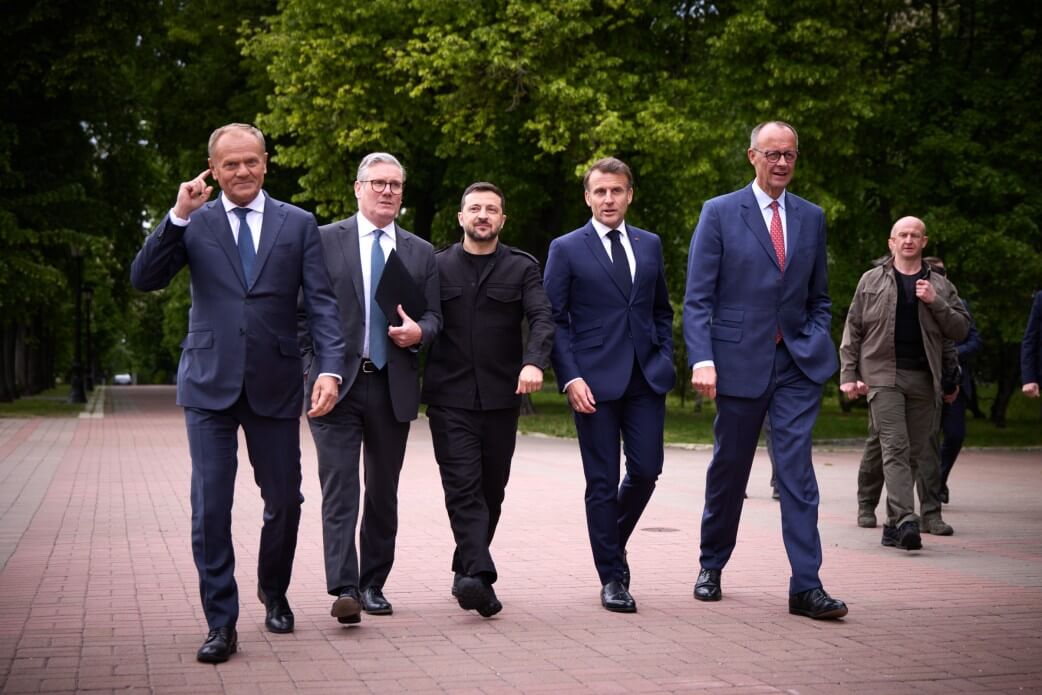 'Coalition of the Willing’ is basically in a holding pattern and not doing much beyond procurement and logistics
While Europe does a lot of chest-thumping about how it stepped up to the challenge of aiding Ukraine, the reality after four years of full-on war there is quite mixed.
Even the vaunted ‘Coalition of the Willing’ is basically in a holding pattern and not doing much beyond procurement and logistics. Trump even tried to co-opt the idea for opening the Strait of Hormuz.
With the EU’s geopolitical position still clipped after Brexit and alternatives such as the Coalition of the Willing either being in their infancy or not showing much promise, there should be a genuine debate in London and Brussels on how to proceed.
Yet, this debate is most often hampered by the UK’s domestic situation. How can other Europeans take Starmer seriously when on the one hand, he’s being lambasted and ridiculed by Trump, while on the other, still maintaining that, “I’m not going to choose [between the EU and the US, ed.] because I think it is in our interest to have a strong relationship with the US and with Europe.”
There is little sense in other European capitals of what exactly the UK actually is willing and able to do in terms of getting closer.
Even a firm commitment to re-join, which is not on the cards, would be met with demands for a longer period of British soul-searching to make sure nothing like this ever happens again and also to prevent the constant carve-outs the UK demanded previously.
In the meantime, quietly cooperating towards genuinely shoring up the common European position and only showcasing actual achievements, rather than grand empty promises that will not be met, should be the focus both in London and Brussels.
