Donald Trump's request to postpone the summit with Xi Jinping, scheduled for late March and early April, signals Washington's weakness.
Beijing has not yet issued a detailed statement about the request, but they have reason to interpret it this way.
Other global actors, who are also closely watching the outcome of the summit between the two largest economic powers, may not interpret Trump's request to Beijing as weakness but certainly as a sign of disorder in his foreign policy.
For technocrats in the American and Western establishments, a request to postpone a prearranged meeting is not a big deal.
Postponements of already agreed talks occur every day, so even at such a high state level, matters do not necessarily appear alarming.
However, in Beijing's rigid state structure, such manoeuvres are neither common nor welcome, and they will seek a hidden message.
Trump instinctively recognised that the Chinese would look for deeper reasons behind his request, so he hurried to prevent this: "There's no tricks to it either. It's very simple. We've got a war going on. I think it's important that I be here."
Indeed, his message and the reasons he gave seemed convincing. But will it be enough to persuade the leaders in Beijing that the postponement is only a matter of short-term priorities (Iran) and that the planned summit will still take place in "a month or so", as he said?
The damage is done
Even if the Chinese leadership responds favourably to Trump's request, damage to the US has already been done.
This is the result of the proverbial unpredictability of Trump's foreign policy moves, which, once again, stem from superficial planning in addressing priorities.
There is no doubt that waging war against Iran is currently the top priority for Trump and his administration, and there is also no doubt that this operation requires the supreme commander's full commitment, including his presence in the country, as he told Beijing.
However, it has been known for months that the summit with Xi was scheduled from 31 March to 2 April. It is also known that rivalry with China and curbing its influence is the top priority for Trump's second term.
Should these factors have been considered when the decision to attack Iran was made?
Certainly they should, and it is possible that the planners of the Iranian operation included them in their assessment as an important factor when deciding whether and when to attack.
But even if they considered the timing of the summit with China, their suggestion was apparently rejected.
It is possible that even on 28 February, it was clear in both Washington and Beijing that the summit would not take place a month later
The sense of supremacy and success of the model applied in Venezuela prevailed, along with Israeli intelligence indicating that the Iranian state leadership was gathering in one location, which presented an ideal opportunity for the decapitation of the regime in Tehran.
It is possible that even on 28 February, it was clear in both Washington and Beijing that the summit would not take place a month later. Even worse, the White House and the Pentagon may have been convinced that the operation in Iran would be completed in a few days, allowing them to focus on preparations for the meeting with the Chinese.
Who dictates the global agenda?
Altogether, this led to Trump begging Beijing to postpone the meeting. When Donald Trump begs anyone, even China, for anything, it inevitably undermines his reputation with everyone he is in conflict with, including supporters at home.
More serious is that his request to postpone the summit raises the question: who dictates the global agenda on issues of universal interest, especially economic, technological, and security matters? Trump is no longer that figure, or at least he is no longer the only one, as he likes to see himself.
After the Supreme Court's ruling on the illegality of Trump’s previous tariffs on imports into the US, the administration is on the defensive
Estimates suggest that the postponement of the US-China summit won't disrupt the dynamics of relations between the two largest economies, which have calmed down following last year's tariff war.
It is believed that the delay will, in fact, benefit both sides by allowing better preparation for the complicated trade talks and the decisions the two leaders must reach.
If these estimates are correct, then the winner will be Beijing, not Washington. After the Supreme Court's ruling on the illegality of Trump’s previous tariffs on imports into the US, the administration is on the defensive.
It is seeking a legal way to maintain its tariff policy, despite the Supreme Court decision, because that policy is the foundation of Trump’s second-term agenda.
Taiwan faces new risks
Beijing is aware of the predicament facing Trump's team and sees it as a negotiating weakness for Washington, which it will undoubtedly exploit when the opportunity arises.
Beijing also recognises the difficulties the Trump administration faces regarding the war in Iran, primarily because there is no strategy in sight for ending it. Furthermore, there is no clear plan to address the global economic disruption caused by the conflict.
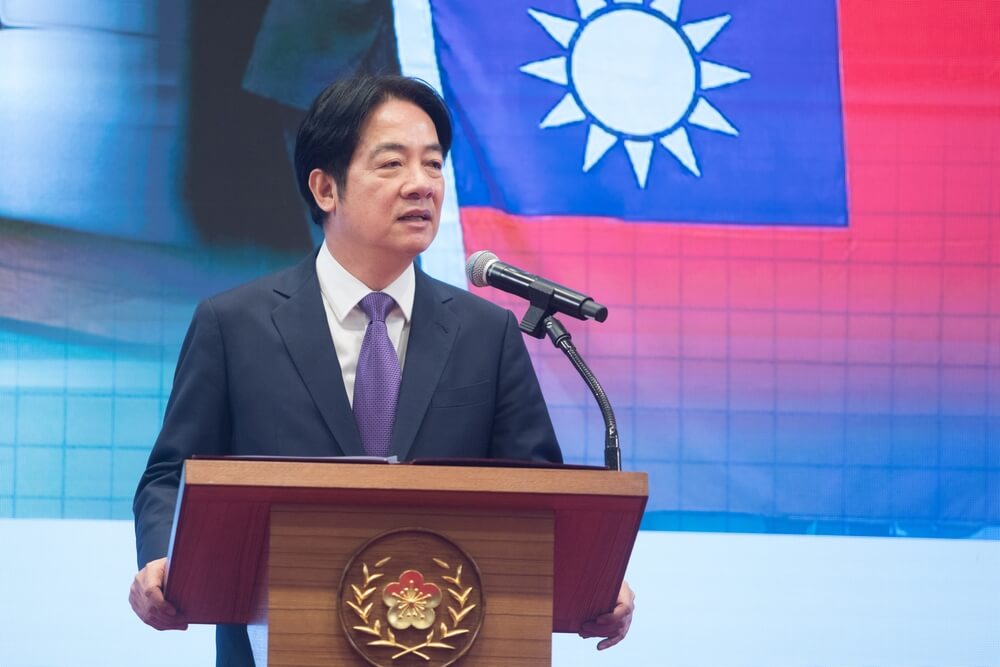 With an administration increasingly defensive of China, despite it being its biggest and most dangerous rival, Taiwan has much more to worry about than it did just a year ago - President Lai Ching-te
Trump's appeal to some of his allies to help normalise navigation in the Persian Gulf ended unsuccessfully. The invitation to China to join the American military engagement in the Gulf, given its status as a major user of that maritime route, was not only surprising but also clearly illustrated the confusion prevailing in Washington's plans to resolve the crisis.
One of the more serious consequences likely to emerge after the US-China summit, whenever it is held, will concern Taiwan. While bringing the island under its own administration remains an absolute priority for Chinese policy, for the US under Trump, the issue of Taiwan is rapidly falling down the list of priorities.
American operations in Venezuela and Iran, and potentially in Cuba, give Beijing confidence that unilateral military operations have become acceptable in international relations.
With an administration increasingly defensive of China, despite it being its biggest and most dangerous rival, Taiwan has much more to worry about than it did just a year ago.
Whenever the Trump-Xi summit takes place, and whatever its outcome, it is unlikely to bring significant political benefit to the US president domestically. If it is postponed for more than "a month or so," it will be closer to the November midterm elections, which in many respects are decisive for the second half of Trump's presidential term.
The outcome of that summit will be far from the aggressive tariff policy with which he sought to bring justice to the American economy and which enjoyed strong support from his voters throughout the previous year.
