On June 26, 1963, President John F. Kennedy stood before hundreds of thousands of West Berliners and delivered one of the most memorable declarations of solidarity in modern history: “Two thousand years ago the proudest boast was civis Romanus sum. Today, in the world of freedom, the proudest boast is Ich bin ein Berliner.”
Kennedy understood something that too many Western leaders seem to have forgotten: freedom is not defended by words alone. It requires conviction, sacrifice, and the willingness to confront tyranny. He showed that during the Cuban Missile Crisis, and again in Berlin.
Twenty years later, President Ronald Reagan demonstrated the same type of leadership to confront an “evil empire” that was the USSR, challenging Gorbachev to “tear down this wall.”
More than six decades later, as Russian missiles and drones rain down on Ukrainian cities, we should remember – and offer a new declaration: Today, in the free world, the proudest boast should be, “I am a Ukrainian.”
Kennedy’s Berlin stood on the front lines of the Cold War, surrounded by Soviet power, divided by a wall, and threatened by an adversary determined to crush its freedom.
But Berlin has never endured what Kyiv, Kharkiv, Odesa, and countless other Ukrainian communities have suffered since Russia’s full-scale invasion in 2022.
Air raid sirens and explosions did not routinely awaken its children. Its hospitals, apartment buildings, and power stations were not subjected to years of relentless missile and drone attacks.
Its people did not face a grinding war of occupation, mass displacement, and systematic destruction.
Ukraine is enduring a human tragedy on a scale that Cold War West Berlin never experienced.
Western response
Yet Ukrainians continue fighting – not only for their territory, but for the principle Kennedy understood so well: that free people have the right to determine their own destiny.
And what has been the Western response?
Too often, hesitation, half-measures, political bargaining, and endless debates over what might provoke Vladimir Putin.
Too often we continue to allow Moscow to establish the boundaries of our response
After two-plus decades serving in the CIA, including as a Station Chief, I find this deeply troubling.
We know the nature of the adversary confronting us. We understand the tactics of Russian coercion, intimidation, subversion, and escalation (I detail it in my own book: Tradecraft, Tactics, and Dirty Tricks: Russian Intelligence and Putin’s Secret War). The Russians have been at this a long time.
Too often we continue to allow Moscow to establish the boundaries of our response, while Europe and America quarrel and quibble and neither side shows the necessary leadership.
Intelligence must never become a bargaining chip
American battlefield intelligence remains indispensable to Ukraine's survival. It saves soldiers' lives, protects civilians, and enables Ukrainian forces to identify and strike Russian military targets.
That intelligence must never become a political bargaining chip. Nor should satellite communications and other critical capabilities be switched on and off as though this were some geopolitical video game.
Intelligence and words alone cannot stop Putin's war machine
The United States must lead better. We should aspire to be the arsenal of democracy, not a casino for political deals at Ukraine's expense.
No amount of real estate deals over claimed Siberian riches will end the war in Ukraine. Only if Putin is forced to realize he can’t win and can’t extort any longer.
But intelligence and words alone cannot stop Putin's war machine.
Europe must demonstrate courage equal to its rhetoric
Ukraine needs substantially greater long-range strike capabilities, including German TAURUS missiles, American ERAM weapons, and potentially Tomahawk cruise missiles if viable containerized launch systems are an option.
Europe and the U.S. could also provide other systems to target Russia where it matters.
The objective should be unmistakable: make the economic and military costs of Russian aggression greater than Putin's regime can sustain.
This is where Europe must demonstrate courage equal to its rhetoric.
The legal complexities are real. But so are the consequences of perpetual Western indecision
The burden is not on the United States alone. European governments should move to seize an initial $50 billion in frozen Russian sovereign assets for Ukraine, under an appropriate legal framework, and warn Moscow that further confiscations will follow continued aggression and escalation.
The legal complexities are real. But so are the consequences of perpetual Western indecision.
Such action would serve two purposes: helping Ukraine defend and rebuild itself, while demonstrating that Russian aggression carries a direct and escalating financial price.
Russia's hybrid campaign
Moscow understands military power. But it also understands money and wealth for the siloviki who support Russia’s corrupt regime.
Ukraine's strikes against Russian energy infrastructure strike at the revenues financing Putin's war and sustaining the corrupt siloviki surrounding him.
Western policy should reinforce that pressure, not undermine it and not threaten to end it.
That is foolish nonsense; it emboldens a dictator hell-bent on further territorial grievances, potentially next on the Baltics or other European territory.
Deterrence cannot consist of endlessly condemning Russian escalation while allowing Moscow to dictate the next move
And Europeans should abandon the illusion that this war is confined to Ukraine. Russia's hybrid campaign increasingly reaches into NATO territory through sabotage, cyberattacks, espionage, and dangerous drone operations.
The explosive-laden drone discovered at Leipzig/Halle Airport in Germany should have been a wake-up call. But it was not.
European authorities have identified it as part of a Russian-linked hybrid threat. It demonstrated how quickly Moscow's shadow war could produce mass casualties on NATO soil. But what was the response – really? Closing consulates and cultural centers.
That won't scare Putin or his henchmen into ending escalation. He couldn't care less about cultural centers or embassies.
Deterrence cannot consist of endlessly condemning Russian escalation while allowing Moscow to dictate the next move.
Freedom has a price
Kennedy understood that the defense of Berlin was inseparable from the defense of the free world.
Today, the defense of Ukraine is inseparable from the security of Europe and the credibility of American leadership.
Kennedy and Reagan also warned – one a Democrat and one a Republican, both presidents who showed leadership when it was most needed – that freedom was indivisible. That principle has not aged a day.
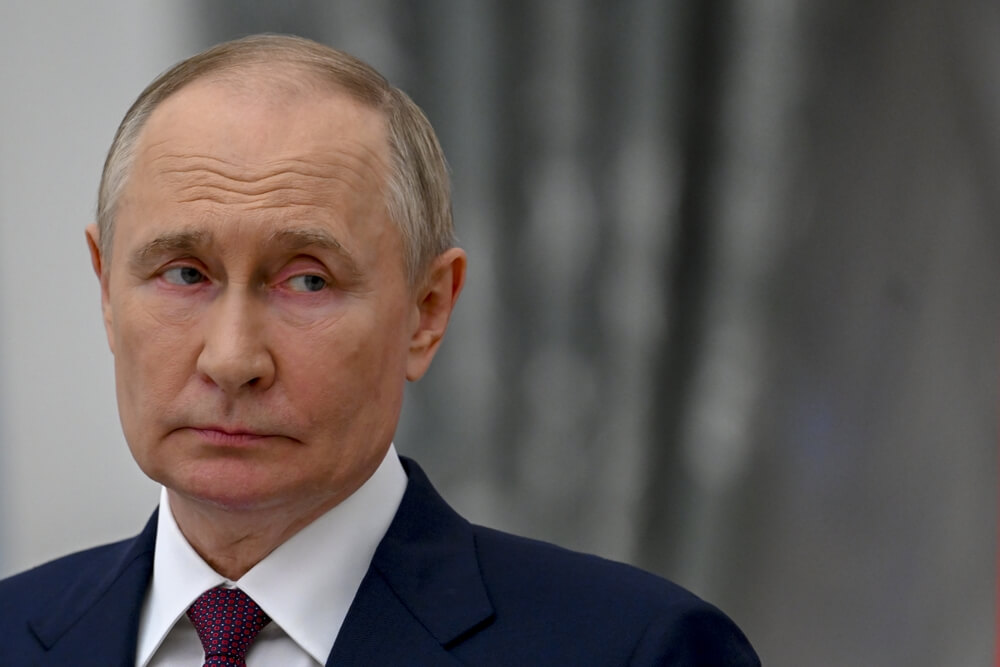 If Ukraine is abandoned or pressured into submission, Putin will conclude that aggression works
If Ukraine is abandoned or pressured into submission, Putin will not conclude that the West is being reasonable.
He will conclude that aggression works, that threats succeed, and that democracies eventually tire of defending their principles.
The consequences will extend far beyond Ukraine's borders.
In 1963, Kennedy challenged those who doubted the meaning of the struggle for freedom to come to Berlin.
To those who question Ukraine's resistance, go to Kyiv, go to the occupied territories, or at least read the credible and relentless reporting on what is being done by Russia there – are these not war crimes? Has there not been enough evidence?
See the shattered neighborhoods, the grieving families, and the extraordinary courage of people who refuse to surrender their freedom.
And to those who still believe accommodation will satisfy Putin, remember the lessons of the last century, the most horrendous century of war, conflict and suffering the world has ever known.
Freedom has a price. But the price of failing to defend it is invariably greater.
Ich bin ein Berliner. It was a declaration that defined a generation. Today, the free world needs the courage to make another: I am a Ukrainian.
Sean Wiswesser is a former CIA Senior Operations Officer and an expert on Russian Intelligence, Espionage, and Defense Issues.
