The drone discovered at Germany’s Leipzig Airport this past week should finally end any illusions in the West that Russia’s hybrid war campaign remains confined to espionage, cyberattacks, or information warfare.
If reports are confirmed, an explosive-laden drone was positioned near a Ukrainian Antonov cargo aircraft operating from one of NATO’s most important logistics hubs.
Whether the operation ultimately failed is almost beside the point. The strategic message succeeded.
Russia has been bringing war – from the grey zone of cyber operations to actual kinetic effects like cable cuts – to NATO’s doorstep; now they’re stepping through the door.
For years, Moscow has steadily expanded the boundaries of what it believes it can get away with in Europe.
They call it “new generation warfare,” what the West now calls hybrid war. Assassinations, sabotage, arson, cyberattacks, undersea cable cuts and disinformation campaigns have been the hallmarks.
These and recruitment of criminal proxies to carry them out have all become familiar features of Russia’s hybrid war against the West.
Each operation tests not only Western defenses, but Western political resolve. The Kremlin is not merely measuring operational success; it is gauging our willingness to respond and testing our deterrence. So far, we have largely failed as an alliance to counter it effectively.
Similarities to previous Russian intelligence plots
The Leipzig incident represents another dangerous rung on the escalation ladder. If investigators ultimately conclude that Russian complicity, this would not simply be another act of sabotage.
It would represent an attempt to place an explosive device inside one of Europe’s busiest cargo airports, a facility central to Ukrainian logistics and NATO support operations.
That should alarm every Western security service, our militaries, and political leaders.
The operation bears striking similarities to previous Russian intelligence plots directed against European targets.
Last year’s GRU-directed parcel bomb campaign, which included an incendiary device at Leipzig and other European cargo hubs, demonstrated Moscow’s willingness to attack aviation infrastructure using expendable operatives.
European intelligence services previously exposed a GRU-backed plot targeting the CEO of Rheinmetall, Germany’s largest defense manufacturer
It did not get enough focus and attention in the West.
How would President Ronald Reagan have responded if Soviet intelligence services were found to be behind a plot to put exploding devices on planes, bound for America and our NATO allies?
That was the other part of that very plot, reported on by The New York Times and other outlets. And the response from the United States? Nothing – a strategic deterrence epic fail.
Likewise, European intelligence services previously exposed a GRU-backed plot targeting the CEO of Rheinmetall, Germany’s largest defense manufacturer.
That operation, reportedly intended to eliminate a key figure supporting Ukraine’s defense industry, illustrated Russia’s willingness to move from espionage to outright political assassination on NATO soil.
The response from Germany and NATO – again, largely nothing. The EU decided not to seize hundreds of billions in Russian assets, because that was and would be “too much”, too escalatory.
Deterrence cannot exist in an empty space. Escalatory actions from one side must be met with a forceful response.
Integrated Russian intelligence campaign
Viewed together, these incidents are not isolated episodes. They are components of an integrated Russian intelligence campaign designed to intimidate, disrupt, coerce and push boundaries, just as they no doubt frame it all as pushback against Europe for its support to Ukraine.
The Kremlin’s objective extends beyond physical damage. Hybrid warfare is psychological warfare.
By placing an explosive drone inside a major German airport – even one that never detonated – Russia demonstrates capability, exposes vulnerabilities, and forces Western governments to ask uncomfortable questions about what they cannot protect.
Assassination attempts – even when thwarted – demonstrate the same, and seek to intimidate other companies and their leaders from helping Ukraine (the Ukrainians are doing the same in Russia, but against legitimate military targets, not civilians).
Russia has long portrayed Article 5 and Western deterrence as political slogans rather than any real operational reality
With Russia’s latest action, airport workers, airline executives, defense contractors, and government officials receive the same message: “We can reach you.”
Equally important is the signal directed at NATO itself.
Russia has long portrayed Article 5 and Western deterrence as political slogans rather than any real operational reality.
By repeatedly conducting increasingly aggressive actions below the threshold of conventional war, Moscow seeks to demonstrate that NATO’s red lines are negotiable – or perhaps nonexistent.
They have no meaning, in Russia’s calculus, one they continually want to verify.
Every successful act of sabotage, drone or missile incursion (like that in Poland last week) that produces little more than diplomatic protests reinforces Moscow’s perception they can win at this.
The true lesson from Leipzig
The danger lies not only in today’s attack but also in tomorrow’s. Once a state concludes there are few consequences for incremental escalation, the incentive is to escalate further.
The progression from cyberattacks to arson, from arson to assassination plots, and now potentially to explosive drones targeting critical infrastructure follows a recognizable pattern.
History suggests it rarely stops voluntarily.
The West therefore faces a strategic choice. It can continue to absorb these attacks individually, treating each as a criminal investigation or isolated security incident.
Or it can recognize them for what they are: coordinated elements of an undeclared campaign, “Putin’s Secret War,”(twenty years or more of it now, as I framed it in the subtitle to my book), conducted by Russian intelligence services against NATO nations.
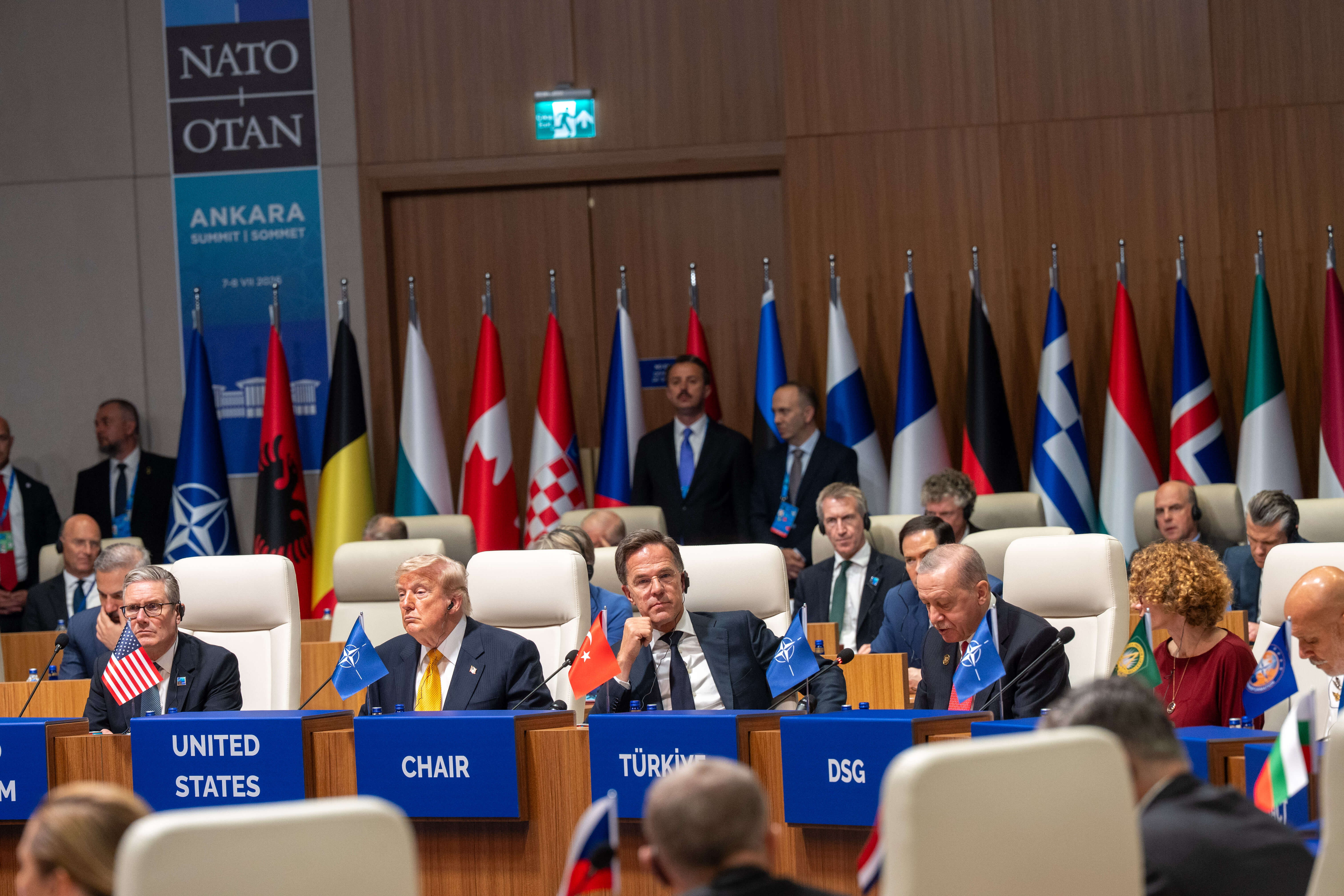 Deterrence does not come from stronger statements alone. It comes from convincing Moscow that every escalation will impose meaningful costs
Deterrence does not come from stronger statements alone. It comes from convincing Moscow that every escalation will impose meaningful costs.
That means exposing Russian intelligence networks more aggressively, disrupting their proxy infrastructure, expanding sanctions against the officials directing these operations, and conducting proportionate responses that impose real operational pain on the architects of Russia’s hybrid war.
What are some options to hit back at Putin? For starters we should give the Ukrainians a first tranche of German Taurus or U.S. Tomahawk missiles (or other long-range assets suggested by recent experts); then see whether Moscow continues to escalate.
If Russia believes it can place an explosive drone in the middle of a major German airport today without paying a significant price, it will undoubtedly ask what it can get away with tomorrow.
That is the true lesson from Leipzig: hybrid war is no longer approaching Europe’s front door. It is already inside the building.
Unless the West begins imposing costs that alter Kremlin decision-making, Moscow will continue climbing the escalation ladder – one supposedly or allegedly deniable operation at a time.
Sean Wiswesser is a former CIA Senior Operations Officer and an expert on Russian Intelligence, Espionage, and Defense Issues.
