Talks in Abu Dhabi on 18 October between Prince Khalid bin Salman, the Saudi defence minister, and Sheikh Mohammed bin Zayed, the UAE president, suggest the possibility of a thaw in Saudi–Emirati relations, which since winter 2025 have been chilled by issues pertaining to Yemen.
The meeting came as Saudi Arabia faces mounting pressure from the escalating war in Yemen, with the US–Israeli confrontation with Iran threatening to intensify further.
Mokha and the Bab al-Mandab: a failure of strength or of command?
The visit followed a serious military setback. In September, the Houthis swiftly captured the port city of Mokha and territory around the Bab al-Mandab strait, exposing the fragility of Yemen’s anti-Houthi camp.
Analysts attributed the speed of the advance less to Houthi military strength than to confusion and fragmentation within government-aligned forces, which withdrew from the city after attempts to reinforce their lines had faltered.
In early October, government forces announced that they had recaptured positions along the coast, although conflicting accounts left the extent of their control in doubt.
To understand this disarray, one must go back to last winter.
The Saudi–Emirati partnership in Yemen suffered a heavy blow in December 2025, when forces loyal to the UAE-backed Southern Transitional Council (STC), which seeks independence for southern Yemen, unexpectedly seized control of the eastern governorates of Hadramaut and al-Mahra.
The move alarmed Riyadh, which considers the two provinces, lying between Saudi Arabia and the Arabian Sea, integral to its national security.
The events exposed overlapping loyalties within the anti-Houthi camp
Saudi Arabia responded with airstrikes and counteroffensives against STC forces, and Yemen’s internationally recognised government, the Riyadh-based Presidential Leadership Council (PLC), cancelled its defence agreement with the UAE.
Within weeks, the UAE had withdrawn its forces from Yemen, and its local allies had pulled out of Hadramaut and al-Mahra.
The events exposed overlapping loyalties within the anti-Houthi camp. Some Yemeni units previously aligned with the UAE came under Saudi-backed arrangements and command structures, though the loyalties of certain commanders appear to have remained with Abu Dhabi.
The Giants Brigades, for instance, had long benefited from Emirati training and money, until Abu Dhabi reportedly suspended its funding after ending its military operations in Yemen in January.
Analysts have put forward two explanations for the unusually rapid withdrawal of anti-Houthi forces from Mokha.
It may have been a deliberate attempt to undermine Saudi Arabia, or a failure of coordination with Riyadh, which appears to have struggled to assume the command and influence the UAE once exercised over these forces.
The rationale for cooperation, and its limits
The latest escalation in Yemen appears to have changed calculations on both sides.
Each holds something the other needs. Saudi Arabia commands the air power, while the UAE, despite its withdrawal, retains considerable sway over some of southern Yemen’s most capable armed forces. Neither can easily turn back the Houthi advance alone.
That mutual dependence, more than anything else, appears to explain why the two have begun to find their way back to each other.
Now that Houthi missiles are reaching Saudi airports and oil facilities, the cost of a divided anti-Houthi camp is being paid on Saudi soil
There are signs that the two may be working together again. A day before the Abu Dhabi meeting, the Guardian reported, citing Yemeni sources, that the UAE had agreed to resume funding several southern forces opposed to the Houthis, most notably the Giants Brigades, in return for Saudi air cover.
If confirmed, this would mark a step towards a preliminary arrangement for joint military action on the ground.
While neither Riyadh nor Abu Dhabi has formally announced an agreement, they share an obvious interest in preventing the Houthis from entrenching themselves along Yemen’s western coast and from holding the Bab al-Mandab, and, with it, international shipping, to ransom.
Now that Houthi missiles are reaching Saudi airports and oil facilities, the cost of a divided anti-Houthi camp is being paid on Saudi soil.
What each country ultimately wants from Yemen?
The deeper obstacle, however, is not how military responsibilities are divided but what each country ultimately wants from Yemen.
Riyadh favours a unified state under a government it can work with, and regards stability in Hadramaut and al-Mahra as inseparable from the security of its own border.
Abu Dhabi has built its influence through southern armed and political groups, above all the Southern Transitional Council, which seeks independence for the south, and its strategic interests lie in Yemen’s ports, islands and shipping lanes.
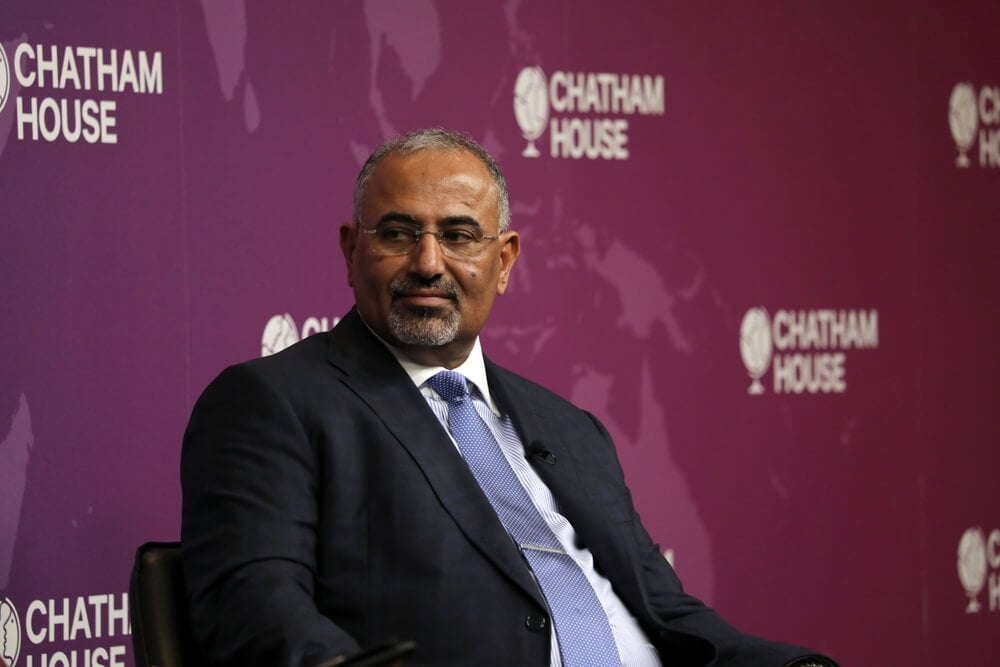 Abu Dhabi has built its influence through southern armed and political groups, above all the Southern Transitional Council - STC President Aidarus Al-Zubaidi
Last winter’s clashes laid these competing visions bare, showing how partners facing a common enemy can at the same time be rivals for territory and power.
Whatever accommodation emerges is therefore likely to be pragmatic but narrow.
It might bring renewed funding for selected southern forces, backed by Saudi air cover and defensive support, while leaving untouched the harder questions of the Southern Transitional Council’s future and the political shape of the Yemeni state.
An arrangement of this kind could well strengthen operations on a particular front.
Without a political agreement that defines the role of southern forces and their place within the state institutions, however, it risks entrenching the very rival loyalties that weakened the anti-Houthi camp in the first place.
The war with Iran: defensive coordination or widening conflict?
The US–Israeli war with Iran has given the rapprochement fresh impetus. The Houthis have increasingly tied their military operations to the wider regional conflict, and, as Reuters has reported, the renewed fighting between Saudi Arabia and the group has opened another front in the US–Israeli war on Iran.
Saudi Arabia now finds itself on the receiving end, facing missile and drone attacks on its territory and critical infrastructure.
All this may push Riyadh and Abu Dhabi towards closer cooperation on air defence, the sharing of intelligence and the backing of Yemeni forces able to halt the Houthis’ advance. Nor would they be acting alone.
Outside help, however, is no guarantee of success on the ground, and it carries risks of its own
Britain has announced that it is sending fighter jets to fly defensive patrols over Saudi Arabia, and Egypt has declared itself ready to support the kingdom’s security, though the form any Egyptian role might take is still under discussion.
Outside help, however, is no guarantee of success on the ground, and it carries risks of its own.
It would allow the Houthis to cast the conflict as a regional intervention in Yemen, a narrative that could serve as a pretext for further attacks on Saudi Arabia or on Red Sea shipping.
Military coordination alone cannot square that circle. Closer defensive cooperation may hold the immediate threats at bay, but, as Britain itself acknowledged when announcing its deployment, there is no military solution to the conflict. Ending the war will ultimately require a political settlement.
Oman: a mediator with security interests of its own
Oman is more than a go-between for Riyadh and the Houthis. It shares a long border with al-Mahra, has security interests of its own, and maintains relations with rival parties to the conflict.
Having declined to join the Saudi-led coalition in 2015, Muscat has kept channels open to the Houthis and has hosted successive rounds of talks.
That role becomes all the more valuable when other lines of communication break down.
Oman is nobody’s instrument, however. It has built its influence through neutrality and mediation, even as it maintains ties with the Houthis.
Oman has long faced allegations, including from the UN, that arms reach the Houthis across its border, which Muscat denies, insisting that its frontier is strictly guarded.
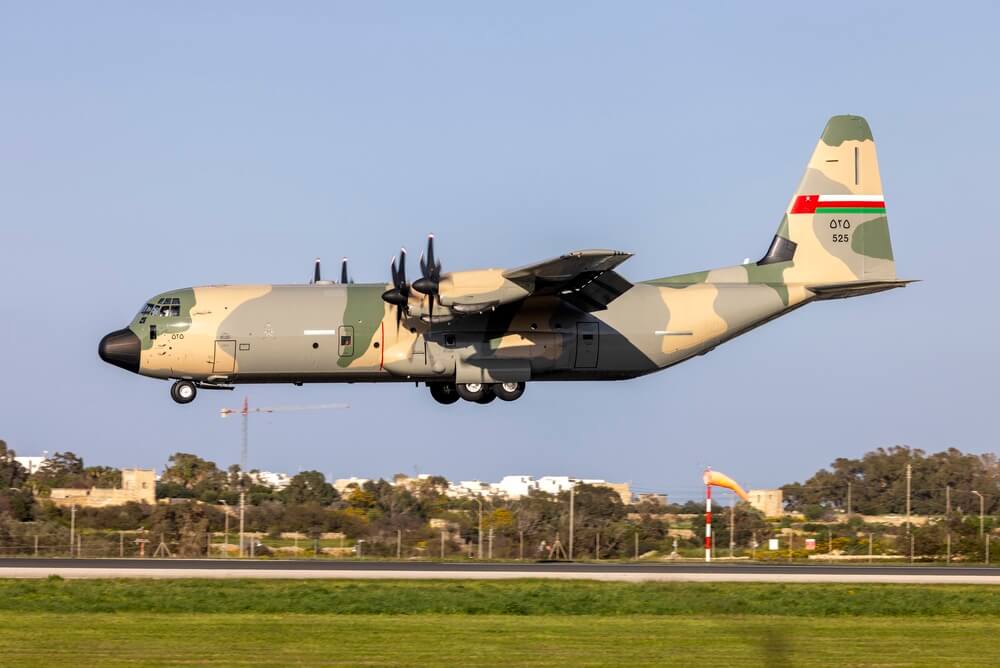 Oman could prove an important partner in preventing escalation and securing Saudi–Houthi negotiations
An analysis by Chatham House suggests that, for all their tensions, Oman and Saudi Arabia share a preference for keeping Yemen united.
The STC’s advance through al-Mahra to Oman’s border, and its ambition to restore an independent South Yemen, may have revived memories in Muscat of the Dhofar insurgency in the 1970s.
Other analyses warn that Saudi – Emirati competition in southern Yemen could threaten stability in western Oman.
Muscat has accordingly sought to stay on good terms with both Gulf powers and to preserve its role as a bridge to the Houthis and Iran, while keeping al-Mahra beyond the reach of outside powers.
Oman could prove an important partner in preventing escalation and securing Saudi–Houthi negotiations.
It may, however, have reservations if the Saudi–Emirati rapprochement turns into a military arrangement that sidelines its interests or extends the reach of Abu Dhabi-aligned southern forces near al-Mahra.
The extent to which Muscat is drawn into managing de-escalation and border security is therefore likely to influence the durability of any Saudi–Emirati arrangement. A purely bilateral military deal, by contrast, could deepen Omani unease.
The real test is whether the rapprochement mends what broke the anti-Houthi front in the first place.
If it does, and Muscat is given a seat at the table, deterrence and diplomacy may at last pull in the same direction.
If the rapprochement proves to be no more than a military bargain of convenience, forced by the Iranian threat and Houthi attacks and silent on the dispute over Yemen’s future and its chain of command, it may simply reactivate the same forces without building a united front.
Positions would then continue to fall and be retaken, while the war widens and its cost mounts for Yemenis and their neighbours alike.
Siba Madwar is a Syrian political commentator and PhD researcher at King’s College London, specialising in conflict resolution in divided societies and post-conflict statebuilding.
