It’s a fascinating moment for international politics and global markets. The world is in turmoil, primarily because the United States, still the dominant superpower, has become a fundamentally unreliable actor.
President Donald Trump is actively pulling apart the international order that the US built and led over the past 80 years.
Yet financial markets are riding high, not just in the US but also in East Asia, South America, and much of Europe.
Are investors wrong, or is the picture more complex than this seeming contradiction suggests?
Though the situation is indeed complicated, three major factors will shape global politics and markets for the next several years.
First, there are virtually no political constraints on the accelerating development of AI, which is the driving force behind the market rally and, for better and for worse, is set to continue virtually unchecked.
The most important technological revolution in history—one that will create both extraordinary opportunities and unprecedented dangers—has arrived during a “geopolitical recession,” when the existing global system is giving way to something new that we can’t yet see.
The accelerating breakdown in relations among major governments will leave AI with virtually no effective regulation.
The companies creating the frontier models are now functioning as sovereign geopolitical players, because their inventions will prove essential to our future security and prosperity.
It is the law of the jungle, applied to cutthroat (and exceptionally well-funded) technology competition.
There is an AI “arms race” not only between the US and China, but also among companies like OpenAI, Anthropic, and their competitors. The incentives for growth over caution are undeniable.
Political tax on globalization
Second, the market effect of go-go AI growth will be offset by a continuing political tax on globalization.
For a half-century, the main driver of global economic growth was the US push for open markets to accelerate cross-border flows of ideas, information, people, goods, services, and, most importantly, capital.
The US is no longer driving globalization
But the US is no longer driving globalization. Instead, it is leading a push to use trade and financial relationships for narrow political gain, forcing other governments to embrace protectionism to shield their own industries and workers. (Although Trump has intensified this trend, it is worth remembering that the Democrats were backing away from free trade before he arrived on the scene.)
The result is a profound shift from positive-sum to zero-sum thinking. True, other countries remain reluctant to scrap globalization, as demonstrated by recent breakthrough trade agreements involving the European Union, India, Mercosur (Argentina, Brazil, Paraguay, and Uruguay), China, Canada, and others.
But the global trend toward politically motivated protectionism represents the new normal, for now.
Hostilities could reignite at any time
Third, the world is producing more and fatter “tail risks”—truly devastating and still unlikely outcomes that are no longer as improbable as they once were.
An unreliable superpower forces its traditional allies to hedge their security and economic bets as rivals test what has become possible.
Greater friction among governments makes international problems more difficult and costly to resolve.
The Middle East is now a more dangerous place, with more space for rogue actors to operate
Consider the US-Israeli war with Iran. Trump’s decision to attack the Islamic Republic was born of overconfidence, but it also reflects the breakdown in America’s relations with its allies—who had no influence on US decision-making. The result was the most severe trade disruption since the COVID-19 pandemic.
True, the war has not yet triggered a global economic recession. But regardless of what happens with the Strait of Hormuz or another potential round of negotiations over Iran’s nuclear program in the near term, there is now a perpetual risk that hostilities could reignite at any time, with even greater global implications.
Moreover, the Middle East is now a more dangerous place, with more space for rogue actors to operate, and with unconstrainted US retaliation likely to radicalize others—be they militant groups like the Houthis in Yemen, terrorist groups like the Islamic State and its descendants, or lone wolves empowered by dangerous new technologies.
Putin will be in an increasingly dangerous state of isolation
Nor are these the only globally consequential, geopolitically induced tail risks. It currently looks like Ukraine has momentum in its war against Russian aggression.
But that means President Vladimir Putin will be in an increasingly dangerous state of isolation.
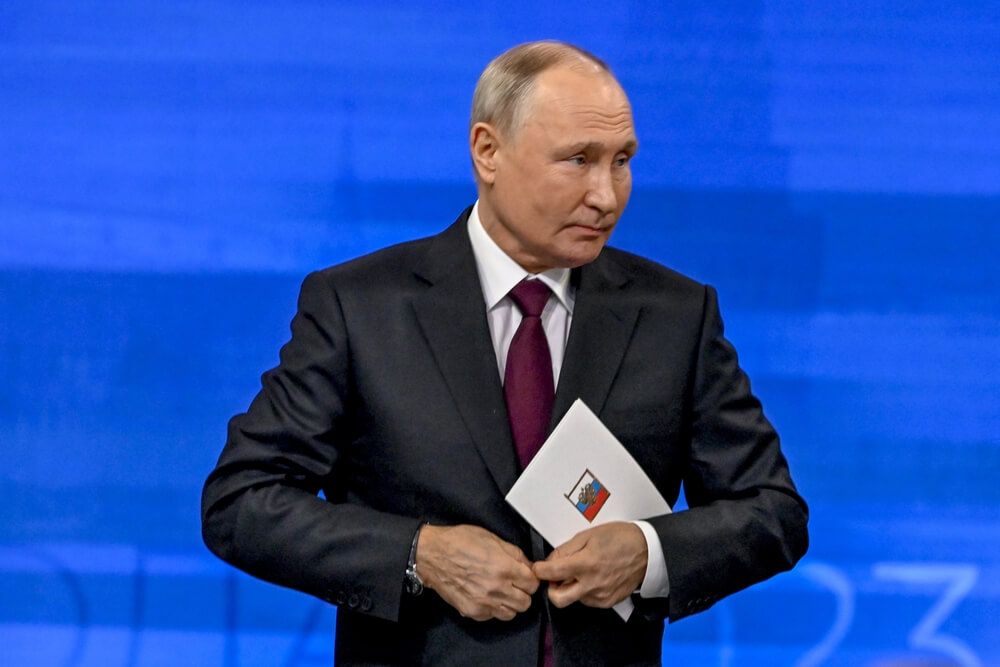 The closer Ukraine comes to humiliating the Kremlin, the greater the risk that Putin might turn in desperation to a tactical nuclear strike
The closer Ukraine comes to humiliating the Kremlin, the greater the risk that Putin might turn in desperation to a tactical nuclear strike or more aggressive and direct attacks on frontline NATO countries to change the game.
These outcomes are made more plausible by the White House’s recent renunciation of any role in brokering an end to the fighting.
None of these dangerous scenarios is likely; but they have become more likely than many are willing to admit. And these are just the risks that are already visible.
A lack of governance on AI and other new weapons of war will make any future conflict less predictable and more dangerous.
The absence of coordination on global health—the US government is less willing to lead, and the World Health Organization has been deprived of resources—makes a future pandemic more likely to develop and less likely to be contained.
In short, the technological breakthroughs that have markets surging are likely to continue, but the risk of large-scale disruption is rising, too. Much could go right, or at least as expected—until it doesn’t.
Ian Bremmer, Founder and President of Eurasia Group and GZERO Media, is a member of the Executive Committee of the UN High-level Advisory Body on Artificial Intelligence.
