At the beginning of June, the Irish government entered the final phase of reforming the so-called "triple lock" mechanism – the rule that government and parliamentary decisions alone are not sufficient to send Irish soldiers on international missions, as approval from the UN Security Council is also required.
The new law, expected to be adopted in the coming weeks, would remove the requirement for mandatory Security Council approval, while retaining parliamentary control and formal compliance with the UN Charter.
However, that debate goes beyond the issue of international missions. It raises a much broader question: why is a country that has built its identity on military neutrality for generations now rapidly investing in defence, acquiring new capabilities, and, for the first time, speaking openly about the Russian threat and the vulnerability of its critical infrastructure?
The answer does not lie in a single decision or incident. The past few years have shown that the security environment around Ireland has changed much faster than its institutions have been willing to admit.
The protection of submarine cables, surveillance of the North Atlantic, activities of Russian military and intelligence structures, and the growing importance of critical infrastructure have become issues that Dublin can no longer regard as the problems of other states.
As a result, Ireland has begun the most ambitious modernisation of its defence forces in decades. What was politically unthinkable just a few years ago is now becoming official state policy.
Russia accelerated the long-delayed process
For years, Ireland had one of the lowest defence budgets in Europe, with spending many times below the European average.
Its security policy was based on the assumption that its geographical location and military neutrality significantly reduced the risks faced by other European states.
The war in Ukraine and the rise in Russian activities in the North Atlantic have gradually undermined this assessment. Movements of Russian ships and submarines near critical infrastructure, along with an increasing number of warnings from European security services about the vulnerability of undersea communication systems, have caused particular concern.
In February 2026, the Irish government published the first National Maritime Security Strategy
In Dublin, it became clear that the state lacks sufficient capacity to monitor its own exclusive economic zone or to protect the infrastructure on which much of European and transatlantic communications depends.
In February 2026, the Irish government published the first National Maritime Security Strategy, which systematically defines threats and risks in the North Atlantic, including the activities of hostile states and risks to undersea infrastructure.
In the political debate following the adoption of the strategy, Russia was, for the first time, openly identified as a security challenge for Ireland.
Submarine cables as a priority
Today, Ireland holds a much more significant position in the European security architecture than the size of its armed forces would suggest.
A substantial portion of the submarine cables connecting Europe and North America pass through or near Irish territorial waters, and both Irish and international sources indicate that most transatlantic cables traverse this corridor.
These systems transfer financial transactions, communications of state institutions, data from technology companies, and a large share of total internet traffic between the two continents.
It is no longer sufficient for Dublin to assume that critical infrastructure will remain secure
Following incidents in the Baltic Sea and increasing concerns about sabotage of critical infrastructure, the protection of submarine cables is no longer merely a technical issue but has become a matter of national security.
This is one reason the Irish government has recently devoted significantly more political attention to maritime surveillance than in previous decades.
It is no longer sufficient for Dublin to assume that critical infrastructure will remain secure; capabilities are required for its protection.
Ireland is no longer on the periphery
One of the most significant changes in European security thinking is that Ireland is no longer seen as a remote periphery of the continent.
Its geographical position gives it particular importance in protecting transatlantic communications, while major technology hubs, data processing centres, and key digital infrastructure are located in Ireland or directly connected to infrastructure passing through its waters.
Ireland's potential vulnerability is no longer solely an Irish concern
As a result, Ireland's potential vulnerability is no longer solely an Irish concern. Any serious disruption could have ripple effects across Europe and North America.
From this perspective, the modernisation of Irish capabilities becomes part of a broader European strategy for protecting critical infrastructure.
What Dublin plans to build
The modernisation programme covers nearly all segments of the defence system. The process of acquiring a new primary radar system is underway, which would, for the first time, enable Ireland to monitor its national airspace comprehensively and independently.
In parallel, the government, following the recommendations of the Commission on Defence Forces, is considering acquiring a squadron of fighter jets – a capability Ireland has lacked for decades.
Expert assessments, based on official development scenarios, indicate the need for at least eight aircraft for continuous duty, while the optimal framework suggests a fleet of twelve or more, along with entirely new infrastructure and training systems.
Strengthening Irish capabilities contributes to the protection of the North Atlantic
The naval component is also undergoing significant changes. An increase in the number of vessels is planned, along with the acquisition of platforms with anti-submarine surveillance capabilities and the ability to protect submarine infrastructure – capabilities the Irish Navy has not yet possessed in full.
These measures share a common goal: gradually reducing the long-standing reliance on British airspace surveillance and creating the capacity to independently monitor and protect the nation’s skies.
This development also benefits London, as strengthening Irish capabilities contributes to the protection of the North Atlantic and enables the UK to redirect some resources to other priorities.
Neutrality takes on a new meaning
The main political debate concerns not radars or ships, but the very definition of neutrality.
Opponents of the reforms warn that removing the “triple lock” mechanism could be the first step towards a gradual departure from the traditional policy of neutrality, while the government insists that the aim is precisely the opposite: to preserve the state’s ability to make independent decisions and protect its own interests.
Neutrality that depends on the capacity of other states can hardly be presented as complete strategic autonomy
This argument gains increasing weight as the security situation in Europe changes. Neutrality that depends on the capacity of other states can hardly be presented as complete strategic autonomy.
For this reason, the view that modern military neutrality does not mean the absence of military capabilities, but rather the ability of the state to control its own territory and decide on its protection, is appearing more frequently in Irish political debate.
The European trend has reached Dublin
Ireland is not the only European country increasing defence spending.
However, it is starting from by far the lowest position in Europe, with spending at around a quarter of a percent of GDP, far below most of its partners.
Ireland’s priorities lie at sea, in the air, and beneath the surface of the Atlantic
While Poland, Finland and the Baltic states focus on deterring conventional military threats, Ireland’s priorities lie at sea, in the air, and beneath the surface of the Atlantic.
Therefore, the success of modernisation will be measured less by the number of new systems and more by the state’s ability to monitor activities in its maritime zone, protect submarine infrastructure, and independently control its airspace.
The shift beyond Ireland
The most important consequence of these changes may not be new ships, radars, or aircraft.
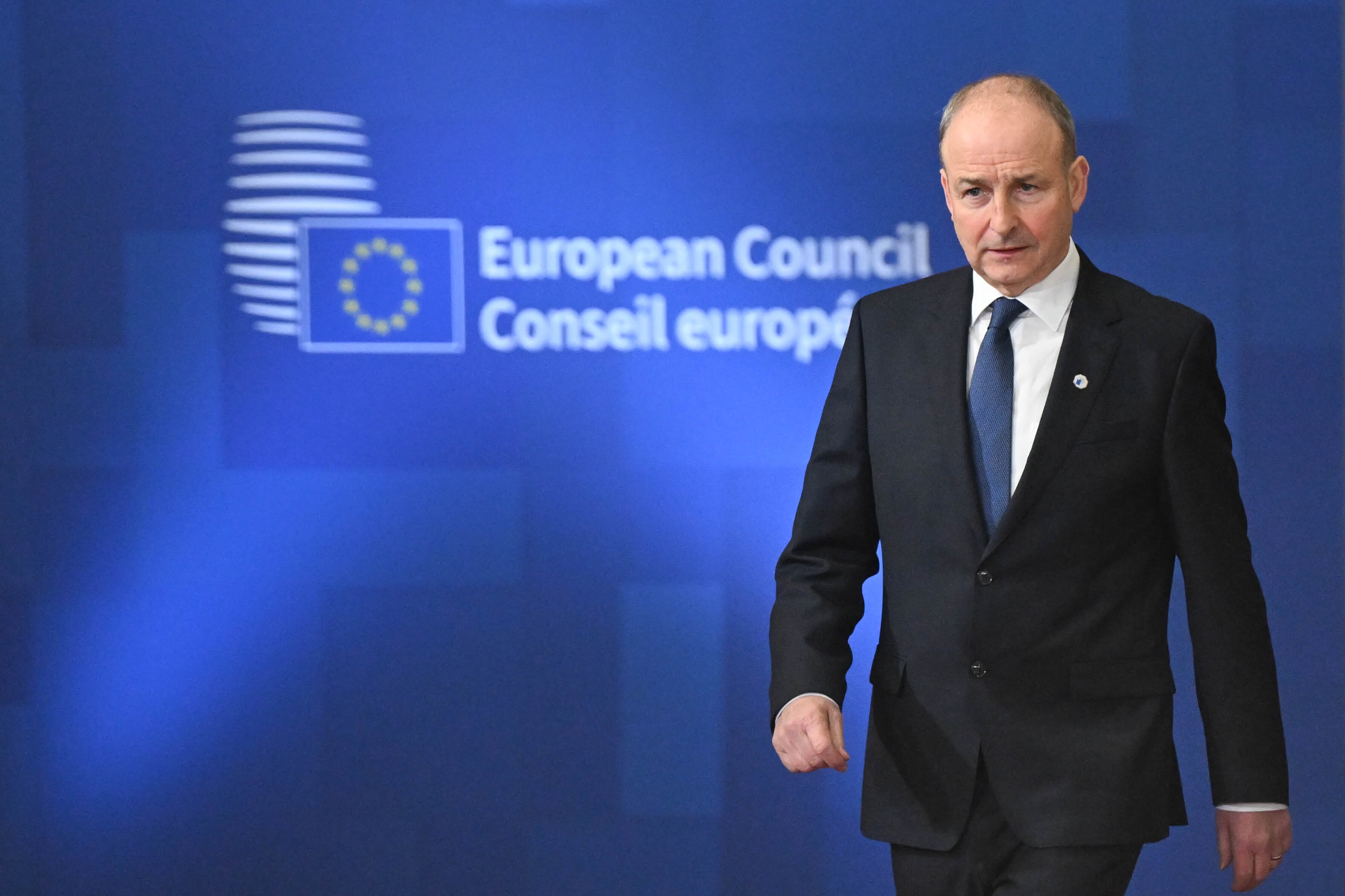 For Ireland, the key question is whether it will succeed in building capabilities that match its true strategic importance - PM Micheál Martin
More significant is the shift in political perception: a country that for decades believed it did not need large military investments is now openly discussing the Russian threat, the protection of submarine cables, and the need to strengthen its own capabilities.
This demonstrates how much the European security environment has changed since the start of the war in Ukraine.
When countries that have long insisted on military restraint begin to increase investment in defence, it signals a change that extends beyond national frameworks.
For Ireland, the key question is whether, for the first time in decades, it will succeed in building capabilities that match its true strategic importance.
Russia’s activities in the North Atlantic and growing concerns about the safety of undersea cables have made this task more urgent than Dublin has long been willing to admit.
