The war in Yemen is entering a decisive phase. Saudi-backed Yemeni forces have withdrawn from Bab al-Mandab to defend Aden, Houthi forces have advanced to within 60 kilometres of the country’s provisional capital, and Taiz, Yemen’s third-largest city, remains under siege.
The Kingdom is finalising a military plan that provides for the commitment of Saudi and coalition ground brigades to Yemen.
Riyadh is preparing to assume direct responsibility for the land and sea campaigns.
Its military objective is to dismantle the Houthi war machine; its political objective is to prevent the Houthis from governing Yemen.
The Houthis secured their recent territorial gains while at least fifteen main fronts across eight governorates remained inactive.
Their principal military advantage has been the cohesion of their command structure and the willingness of their formations to execute orders.
The Yemeni formations opposing them receive their funding from a single source and operate under an established joint command, yet political rivalries have repeatedly prevented them from fighting together.
The friction involving Tariq Saleh’s forces at Makha, and the divisions among formations defending Taiz, illustrate the extent of this problem.
Disparity in military resources
The Saudi military plan envisages a campaign of unprecedented scale encompassing the principal fronts in Saada, Hajjah, Al-Jawf, Marib, Al-Bayda, Shabwah, Taiz and the southern governorates.
Its fundamental premise is that sustained military pressure across the Yemeni theatre will overwhelm the Houthis’ capacity to maintain their territorial positions and continue to sustain their military formations.
The Houthis know that such a campaign is coming and are already taking extensive military precautions.
Those preparations cannot eliminate the enormous disparity in military resources, technological capabilities and institutional capacity between the two sides.
Restoring Saudi and Yemeni military control over these coastal areas constitutes a central objective of the campaign
The maritime component comprises two distinct fronts along Yemen’s western coastline.
The northern maritime front is centred on Hodeidah, while the southern maritime front extends from Makha to Bab al-Mandab.
Restoring Saudi and Yemeni military control over these coastal areas constitutes a central objective of the campaign.
The overwhelming superiority of the Saudi-led coalition’s conventional maritime capabilities fundamentally challenges the sustainability of Houthi control over the Red Sea coastline.
The air campaign
The Royal Saudi Air Force (RSAF) is already conducting an extensive, sequenced, intelligence-fused air campaign against the Houthi military apparatus.
Major ballistic missile, cruise missile and unmanned aerial vehicle installations, including hardened mountain complexes and subterranean weapons production facilities, have sustained substantial destruction, and degradation.
The precision and selectivity of the air campaign distinguish it from earlier phases of Saudi military intervention in Yemen.
Its effects extend to the movement’s weapons production, force regeneration and retaliatory capabilities.
The remaining leadership faces unprecedented pressure on its command-and-control infrastructure
The campaign has reportedly also inflicted significant losses on the Houthi senior military leadership.
Among the casualties since the beginning of the war are the Iranian general overseeing Tehran’s military support mission, a cousin of the Houthi leader responsible for overseeing military operations, and the head of the movement’s security and intelligence apparatus.
These losses have weakened the institutional machinery through which the Houthis exercise military command.
The remaining leadership, including Abdul-Malik al-Houthi, faces unprecedented pressure on its command-and-control infrastructure deep beneath a certain mountain range.
Foreign military and intelligence infrastructure
Russian technical and geospatial intelligence personnel operating in Sana’a have suffered considerable casualties following repeated Saudi air strikes on their headquarters.
Surviving personnel have been forced to relocate underground, disrupting established command-and-control intelligence support arrangements.
The foreign military and intelligence fused infrastructure on which the Houthis have increasingly relied is itself experiencing considerable attrition.
Continuing Saudi air strikes are placing their military logistics under severe strain
The air campaign constitutes an integral component of the wider Saudi military plan.
The Houthis are attempting to reinforce their supply lines and replenish depleted military inventories while sustaining formations occupying newly acquired territory.
Continuing Saudi air strikes are placing their military logistics under severe strain. Russian and commercial Chinese geospatial intelligence improve the Houthis’ understanding of coalition activity, but it cannot replace the material resources their formations consume.
Warfighting organisation
For more than two years, the Saudi Ministry of Defence’s Joint Forces Command (JFC) has been preparing for a direct Saudi ground commitment.
The Kingdom can draw on at least 30 brigades across its military institutions, including formations belonging to the Royal Saudi Land Forces, the National Guard and the Border Guard.
Several coalition countries will contribute additional brigades and specialised formations, including troops with extensive experience of operating in the high mountain ranges of Asia.
The overall military configuration envisages at least 200,000 military personnel under the direct authority of the JFC.
Saudi Arabia is in the process of transforming its armed forces into a warfighting organisation capable of conducting joint and multinational operations.
Geospatial intelligence is particularly consequential given Yemen’s geographical diversity
At the centre of this transformation is the JFC, through which Saudi, coalition and Yemeni formations will operate across the land, air and maritime domains.
Its integrated C6ISR capabilities provide the common operational picture necessary to exercise command across a theatre as geographically extensive and diverse as Yemen.
Geospatial intelligence is particularly consequential given Yemen’s geographical diversity.
The extensive plains of Al-Jawf and Hodeidah present an entirely different operational environment from the western highlands and the elevated basin surrounding Sana’a.
Space-based reconnaissance constellations, airborne surveillance and digital terrain mapping give the coalition a considerably more comprehensive understanding of these environments than was available during the past unsuccessful Ottoman and Egyptian military interventions.
The coalition will also include a highly specialised Saudi alpine mountain formation with extensive experience of such terrain in Europe, and Asia.
Foreign intelligence and counterintelligence operations
An equally consequential dimension of the war is the role of Saudi Arabia’s General Intelligence Presidency (GIP).
Its foreign intelligence and counterintelligence operations have thwarted numerous attempted Houthi intelligence incursions into the Kingdom.
Identifying the origins of hostile intelligence activity and disrupting associated networks represent significant achievements in protecting Saudi national security.
This largely unpublicised intelligence campaign complements the conventional military effort currently under way.
The Saudi commitment to Yemen also depends on the redistribution of responsibility for defending the Kingdom itself.
January 2026 demonstrated the extent of the Saudi military transformation
The Royal Saudi Air Defence Forces constitute the principal component of Saudi Arabia’s integrated air and missile defence architecture, supported by allied air-defence systems and combat aircraft.
British Eurofighter deployments for defensive purposes and the French military presence in Yanbu illustrate the broader contribution that allied non-Makkah Accord countries can make to regional security.
This burden-sharing gives the RSAF greater flexibility in allocating its combat aviation resources to Yemen.
January 2026 demonstrated the extent of the Saudi military transformation. Within approximately 72 hours, the Emirati-backed Southern Transitional Council (STC) lost its positions in Hadramaut and Al-Mahra, and Yemeni government forces recaptured Mukalla.
The JFC exercised integrated C5ISR command over an operation spanning two extensive governorates, in which Saudi commanders, RSAF aircrews and Yemeni ground formations, together with Saudi special forces, operated within a common operational structure.
The operation demonstrated how far Saudi military capabilities had advanced since the opening phase of the intervention in 2015.
Recovery of Yemen’s western coastline
The recovery of Yemen’s western coastline also has strategic implications that extend beyond the war itself.
The withdrawal from Bab al-Mandab demonstrated the vulnerability of the southern entrance to the Red Sea.
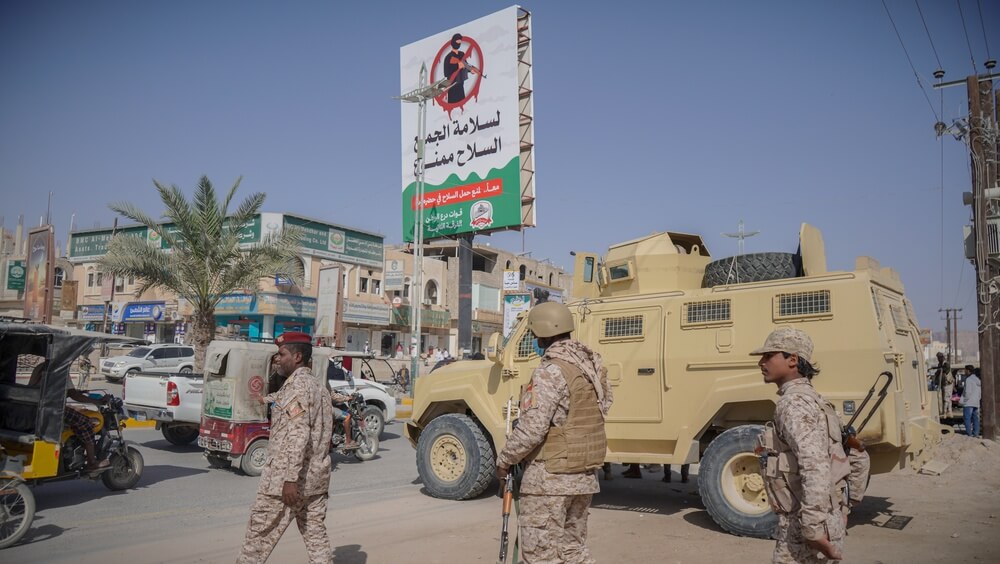 A permanent Saudi military presence at Bab al-Mandab and on Mayun, established through an agreement with the Yemeni government and maintained with Yemeni participation, will institutionalise the Kingdom’s commitment to the security of this internationally vital maritime passage
.
The Houthis, the Iranians and the Russians have made a fundamental strategic miscalculation.
They believed that the Saudi leadership lacked either the military capacity or the political determination to undertake a campaign of this magnitude.
They calculated that the deterioration of the military situation in Yemen would compel Crown Prince Mohammed bin Salman to accept another negotiated settlement on terms favourable to the Houthis, and by extension to them.
They have once again misunderstood the Saudi Crown Prince. They have underestimated the extent of the Kingdom’s military transformation, the scale of the resources it is prepared to commit and the political determination underpinning its preparations.
Saudi Arabia is no longer prepared to accept another temporary political accommodation that leaves the Houthi war machine intact.
The consequences of this strategic miscalculation will be profound, not only for the Houthis, but ultimately for Saudi Arabia’s relations with Iran and Russia, and for the balance of power in the Middle East.
Dr Nawaf Obaid is a Senior Research Fellow at the Department of War Studies, King’s College London.
