For more than a decade, Saudi Arabia has confronted the Houthi problem with virtually every instrument available short of imposing a definitive military solution.
It has fought, negotiated, paused, contained, deterred and supported repeated international attempts at de-escalation.
Even after the military stalemate that emerged from the war launched in 2015, Riyadh continued to seek an accommodation that would prevent Yemen from returning to permanent conflict.
That patience has now reached its limit. Containment has failed. Dissuasion has failed. Deterrence has proved only temporary.
The Houthis have used every period of relative calm to preserve or expand the military capabilities with which they can threaten Yemen, Saudi Arabia, international navigation and, by extension, the world economy.
The fundamental problem is no longer simply Houthi control of territory. The Houthis have hijacked the Yemeni state.
They have constructed an armed military-security order equipped with ballistic and cruise missiles, drones and maritime weapons, while remaining aligned with Iran and its regional network.
A country as large, populous and strategically important as Yemen cannot be indefinitely subordinated to an armed movement whose principal source of political authority remains its capacity to wage war.
Destructive political model
The consequences for Yemen itself have been devastating. Houthi governance has produced no credible programme for economic modernisation, national reconstruction or social development commensurate with Yemen’s needs.
Instead, the institutions of the state have been subordinated to an ideological and security apparatus built around mobilisation, coercion and conflict.
It reflects the same destructive political model that Iran and its proxies have imposed on themselves and elsewhere: military power is elevated above economic development, ideology above institutions, and permanent confrontation above the welfare of the population.
This cannot be Yemen’s future.
Freedom of navigation
Nor is this simply a Saudi-Yemeni question. Yemen overlooks Bab Al Mandab, one of the world’s most important maritime choke points.
Across the Arabian Peninsula lies the Strait of Hormuz. Between them sits Saudi Arabia, the world’s largest crude-oil exporter and the principal stabilising energy actor in the world.
Iran has understood the strategic relationship between these waterways for decades.
Freedom of navigation cannot exist at the discretion of the Houthis
Pressure at Hormuz threatens Gulf energy exports from the east; pressure at Bab Al Mandab threatens Red Sea access from the west.
Allowing an Iranian-aligned armed movement to retain the ability to close, disrupt or intimidate shipping through Bab Al Mandab therefore creates a permanent instrument of coercion against the Arabian Peninsula and the global economy.
Freedom of navigation cannot exist at the discretion of the Houthis.
Ending Houthi governance
An enormous amount of political and economic work will be required to rebuild Yemen.
Yemeni institutions will have to be restored, competing political forces reconciled and the country’s economy reconnected to the region. None of that will be easy.
But none of this can begin while one movement possesses an independent strategic arsenal with which it can impose its authority on the rest of the country.
The Houthi capability to wage strategic war has to be destroyed
The immediate requirement is therefore unambiguous: the Houthi capability to wage strategic war has to be destroyed. There are no ifs or buts about it.
That does not mean eradicating the Houthis as a social, religious or political constituency. They are part of Yemen and will remain so.
This means ending Houthi rule as an armed military-security dictatorship over northern Yemen and removing the missiles, drones, maritime systems and command infrastructure that enable it to threaten its neighbours.
The status quo is over
Saudi Arabia has also learned from the experience since 2015. Military force alone cannot produce a durable political settlement.
Any effective approach requires unified command, credible Yemeni forces, integrated intelligence, overwhelming air power, secure borders and a clear strategic objective.
The military requirement is to create the conditions under which a political future becomes possible, rather than to negotiate endlessly beneath the shadow of Houthi weapons.
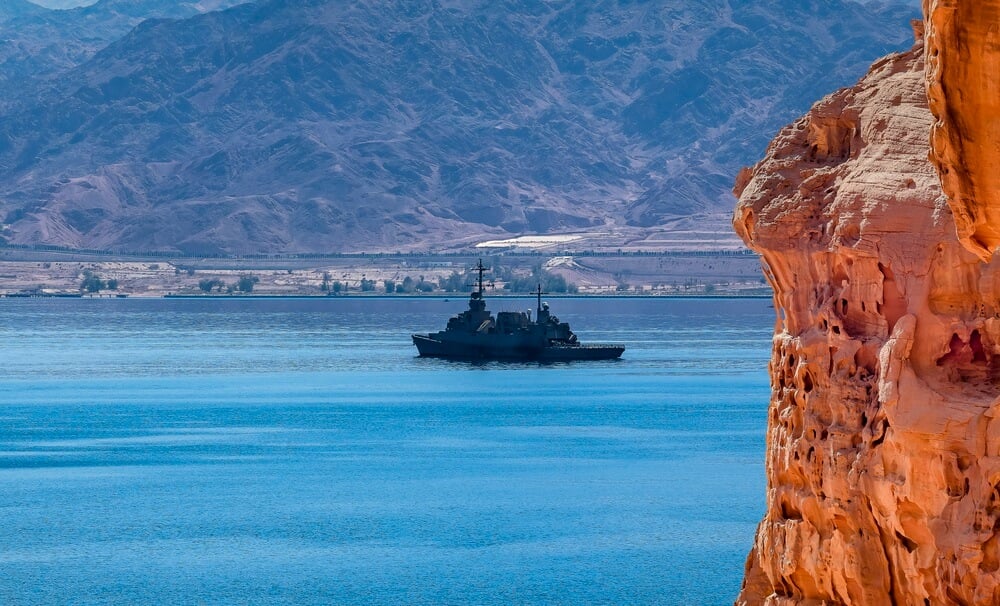 The international economy cannot allow one of its most important maritime passages to remain vulnerable to missile, drone and maritime coercion
There comes a moment when strategic patience ceases to be prudence and begins to preserve the very danger it was intended to contain. That moment has arrived.
Saudi Arabia cannot indefinitely tolerate a strategic military threat on its southern frontier.
The Arab world cannot accept the permanent hijacking of an entire Arab state by an Iran-aligned armed movement.
The international economy cannot allow one of its most important maritime passages to remain vulnerable to missile, drone and maritime coercion.
The status quo is over. The military capability that sustained it must now be dismantled, and it must be dismantled quickly.
What comes next will be difficult, but nothing lasting can begin until that first task is completed.
Diplomacy, restraint and deterrence have all been exhausted. The threat must now be resolved by force. That moment is no longer somewhere over the horizon. It is upon us.
Dr Nawaf Obaid is a Senior Research Fellow at the Department of War Studies, King’s College London.
