In 1967, the late Kenya-born scholar, Ali Mazrui, introduced the concept of Pax Africana.
Mazrui repeatedly argued that the continent could achieve peace and security by becoming its own policeman.
His principle of “continental jurisdiction” was an African Monroe Doctrine intended to keep external actors from meddling in disputes that Africans should resolve themselves (albeit in close partnership with the United Nations).
In his view, intra-African interventions were more legitimate than outside ones.
In recent years, the African Union has sought to implement Pax Africana by dispatching peacekeepers to Burundi (2003–04), Darfur (2004–07), and Somalia (since 2007).
But the AU’s persistent logistical and financial constraints eventually forced the UN to step in and assist the missions in Burundi and Darfur, while at least 3,500 of its peacekeepers have died in the Somalia operation, which has failed to contain the Islamist group al-Shabab.
Reconciling security and sovereignty has troubled Africa for decades. Following the end of the Cold War, devastating conflicts erupted in Liberia, Somalia, and Rwanda.
Fearing the recolonization of Africa under the pretense of Western humanitarianism, Mazrui urged African regional hegemons—Nigeria, South Africa, the Democratic Republic of the Congo, Ethiopia, and Kenya—to establish an African security council and a pan-African emergency force that could help pacify weaker, smaller neighbors.
A UN-led international administration would then nurse them back to health.
A 2013 AU report on the proposed 25,000-strong African Standby Force (ASF) called on leading military powers to enable rapid deployment.
But Nigeria, South Africa, Ethiopia, and others have been overwhelmed by domestic challenges in the intervening years, limiting their capacity to enforce Pax Africana—especially amid regional instability and the rising jihadist threat in the Sahel, the Horn of Africa, and northern Mozambique.
South Africa has helicopters, fighter jets, frigates, and submarines, but few are operational, and Nigeria’s ill-equipped army is mired in a 17-year conflict with Boko Haram and Islamic State West Africa Province insurgents that has caused an estimated 100,000 deaths.
Keeping out external meddlers and expelling foreign military bases thus remains out of reach.
Apartheid peacekeeping system
African regional bodies, for their part, still lack the necessary funding and logistics.
The UN Security Council has not strengthened these bodies’ capacity to manage conflict and counter-terrorism concerns.
While African armies should deploy more rapidly and temporarily lead missions on the continent, such operations should then be transferred to the better-resourced UN, which has primary responsibility for international peace and security.
Failure to do so risks creating an apartheid peacekeeping system, particularly since about 40% of UN peacekeepers are African.
The AU’s predicament is caused not by a lack of foresight and planning, but by funding constraints
The AU’s predicament is caused not by a lack of foresight and planning, but by funding constraints and the application of bureaucratic solutions to fundamentally political problems.
In February, the AU released a report on security reforms that bemoaned the limited implementation of its legal and policy frameworks and advocated closer alignment between its African Peace and Security Architecture and its African Governance Architecture.
Managing African conflicts more effectively, the report argued, requires members to adhere to agreed instruments and principles, and to pursue “joint assessments, integrated responses, and harmonized standards,” while operationalizing the ASF requires closer cooperation between the AU and Africa’s regional organizations.
But these suggestions, while reasonable, are no substitute for the difficult work of strengthening institutions across Africa’s five regions.
The issue of financing
There is also the issue of financing. The February report suggested increasing the AU Peace Fund from $400 million to $1 billion.
But with African countries’ external debt ballooning to approximately $1.2 trillion, this ambitious target will be hard to meet.
Member states fund only 24% of the AU’s program budget
Already, member states fund only 24% of the AU’s program budget, and external donors provide more than 90% of its peacekeeping budget, as a recent AU security consultation in Abuja noted.
Amid these challenges, the UN is facing its own crisis as the United States seeks to eliminate funding for peacekeeping missions.
UN Secretary-General António Guterres warned in July that the burden of such operations will increasingly fall on ill-equipped and poorly resourced AU and other African peacekeepers.
African troops should be fully integrated into UN peacekeeping
The AU should press for four reforms. For starters, a more effective division of labor between the UN and Africa’s fledgling organizations must be established, given that roughly half of UN peacekeeping missions in the post-Cold War era have been deployed to Africa.
The AU must also engage in genuine subsidiarity with the continent’s regional bodies, like the Economic Community of West African States, which has taken a lead on regional peacekeeping.
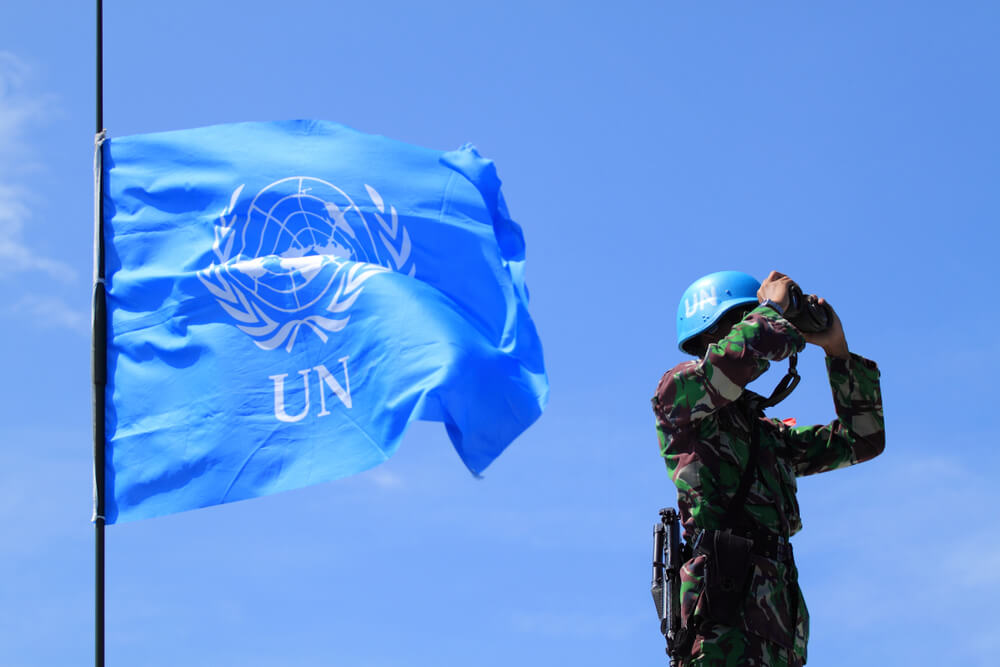 African troops should be fully integrated into UN peacekeeping
Second, African troops should be fully integrated into UN peacekeeping. In practice, that means the UN, the AU Peace Fund, and Africanimport levies should help provide the AU-led rapid response and counterterrorism brigades with the necessary financing and airlift and naval assets, as suggested by a September 2025 AU high-level panel of experts.
These brigades will be critical for any future enforcement missions.
Third, the AU and African countries should continue advancing a 2008 UN proposal to fund African-led peace missions for six months before taking them over.
Regional enforcers can operate alongside UN missions, but they must be funded from UN-assessed contributions under the same conditions of service as the global body’s own peacekeepers.
Lastly, the AU Peace and Security Council should coordinate more effectively with the three non-permanent UN Security Council members from Africa and consolidate the A3+1 formula that Africa established with the Caribbean on the UN Security Council in 2020.
A half-century later, Mazrui’s vision of Pax Africana remains an aspiration. Taking these steps would finally put the AU on the path toward fulfilling it.
Adekeye Adebajo, a professor and a senior research fellow at the University of Pretoria’s Centre for the Advancement of Scholarship, served on UN missions in South Africa, Western Sahara, and Iraq.
