Wars are often decided by what happens after the first defensive line breaks. An army can lose ground and still recover, provided its command and control remain intact and its soldiers retain the will to fight.
In southern Yemen, the latest battles have tested that capacity and challenged a central assumption behind the Houthis’ way of war.
The Houthis do not need to defeat every formation defending southern Yemen.
Their method depends on achieving a tactical penetration along a vulnerable axis, then persuading everyone behind it that the battle is already lost.
The fighting in Lahj, the governorate that covers key approaches to the southern port city of Aden, has exposed the limits of that approach.
Surprise is only the opening move. A concentrated ground assault, supported by aerial attacks, creates a breach that psychological operations immediately transform into a declaration of impending victory.
Accusations of betrayal spread through the opposing camp, while threats and intimidation carry the offensive into civilian communities.
The objective is to turn a tactical penetration into an operational breakthrough by collapsing resistance beyond the immediate battlefield.
Accusations of treachery
This sequence proved effective in Mocha, the port on Yemen’s southwestern Red Sea coast, and in the countryside surrounding the major city of Taiz.
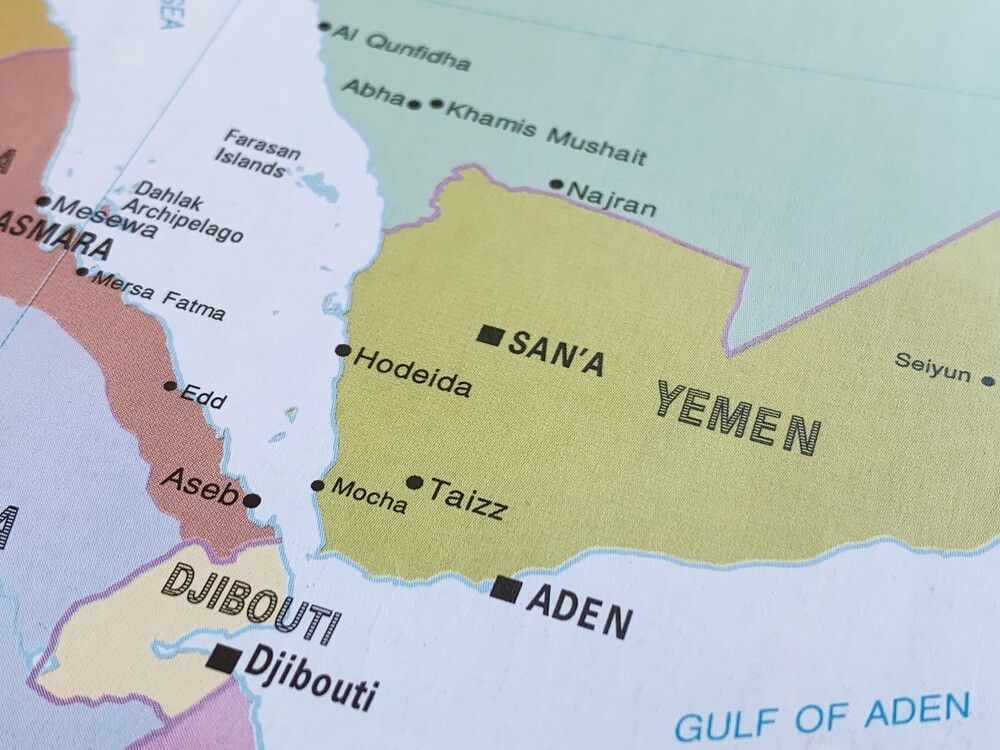
In Lahj, the Houthis sought another breakthrough towards Ras Al Ara, a coastal area west of Aden.
Their objective was to threaten lines of communication and supply serving forces near Bab Al Mandab, the strait connecting the Red Sea to the Gulf of Aden. Success would create conditions for a broader effort to isolate Aden.
Shukri is a senior commander of the Giants Brigades, a major southern fighting force, with strong connections in western Lahj’s Subaiha tribal community
Their advance towards Shatin, a frontline area on the approaches to Ras Al Ara, initially appeared to follow a familiar script.
Battlefield gains were accompanied by claims that Aden’s fall was imminent, accusations of treachery among its defenders, and reports that Hamdi Shukri had been wounded.
Shukri is a senior commander of the Giants Brigades, a major southern fighting force, with strong connections in western Lahj’s Subaiha tribal community.
Reports about such a figure can undermine confidence across formations whose cohesion depends in part on trusted leadership in battle.
Chain reaction of fear
Yet the southern defenders disrupted the expected sequence. Despite reports of lost positions in Al Sabiyah, also commonly rendered as Subaiha, neighbouring formations maintained their defensive posture.
These included the Giants Brigades and Nation’s Shield, a separate Saudi-backed military formation.
The anticipated chain reaction of fear, withdrawal and mutual accusation did not materialise.
At Kahbub and Dhubab, positions near the southwestern coastal approaches to Bab al-Mandab, the Giants Brigades denied reports that their forces had withdrawn.
Discipline prevented surprise from becoming paralysis
Holding these sectors prevented the initial penetration from unravelling the wider front.
Commanders preserved the time and space needed to restore situational awareness, move reinforcements and organise a counterattack. Discipline prevented surprise from becoming paralysis.
The leadership response in Aden and Lahj was equally significant.
Reinforcements reached the threatened sector, key positions were retaken, and fighting continued around Al Majza’ah, another contested frontline area in western Lahj.
These developments indicated functioning command and control and an ability to coordinate a response under pressure. Losing ground did not automatically mean surrendering the initiative.
Turning resilience into sustained operational initiative
Public resilience also mattered. The reaction in Aden and the south showed resistance to intimidation and a refusal to accept every rumour as proof of betrayal.
Communities that reject panic deny hostile psychological operations their most effective means of transmission.
Military cohesion becomes easier to sustain when the public refuses to declare defeat before the fighting is decided.
None of this establishes that the Houthis have lost the capacity to achieve tactical surprise.
Nor does the recovery of positions demonstrate that the strategic balance has shifted decisively in favour of Yemen’s internationally recognised government.
 The Houthis will continue to probe for weak points and opportunities to disrupt southern defences
A successful response to one offensive cannot erase deeper weaknesses in command, political cohesion or military capability. Tactical resilience must evolve into a repeatable operational capability.
That requires preserving the coordination demonstrated in Lahj and making it routine across vulnerable fronts.
Commanders need reliable reinforcement arrangements, shared situational awareness and the authority to respond before a local breach widens.
Political leaders must stop allowing every reversal to become an indictment of an entire allied formation.
Public communication must establish what happened before rumour establishes who betrayed whom.
The Houthis will continue to probe for weak points and opportunities to disrupt southern defences.
Their opponents have demonstrated that any penetration can be contained, its psychological effects resisted and lost positions contested.
The southern defenders’ next task is to turn that resilience into sustained operational initiative.
Holding together under pressure is the foundation from which they can begin to dictate the battle themselves.
Hussam Radman is a senior researcher at the Sana’a Center for Strategic Studies.
