Saudi Arabia and Russia jointly manage global oil markets through OPEC and OPEC+.
Yet Moscow is helping Iran and its allies attack the Kingdom’s energy infrastructure and military installations.
Vladimir Putin must decide whether Russia’s military partnership with Tehran is worth jeopardising one of Moscow’s most consequential economic, financial and strategic relationships: its partnership with Riyadh.
Saudi Arabia is by a substantial margin the world’s largest crude exporter by a substantial margin. It holds unrivalled conventional oil reserves and the largest spare production capacity.
Its total production capacity is approximately 12.5 million barrels per day, with sustainable capacity of roughly 12–12.1 million barrels per day.
The Saudi system has enough spare capacity to replace all of Iran’s crude exports. Delivering those additional barrels requires secure export routes.
This is the strategic importance of the East–West Pipeline.
Saudi Arabia mitigated the supply shock
The approximately 1,200-kilometre Petroline connects the eastern producing region to Yanbu on the Red Sea. It can transport up to 7 million barrels per day.
After domestic refinery requirements, our estimate places potential crude exports through the corridor at approximately 5–5.5 million barrels per day, depending on refinery allocations and terminal operations.
During the first wave of the US–Iran war, Iran interdicted the Strait of Hormuz, using mines and threats against shipping to blackmail the international community.
By sustaining deliveries through the Red Sea, Saudi Arabia mitigated the supply shock and helped contain the rise in oil prices
Petroline preserved critical access to crude from the world’s largest exporter. By sustaining deliveries through the Red Sea, Saudi Arabia mitigated the supply shock and helped contain the rise in oil prices.
September’s attacks struck at that protection. The pipeline crosses changing elevations and relies on successive pumping stages to sustain hydraulic pressure and throughput.
Damage to critical stations can constrain deliveries far beyond the facilities hit. The disruption tightened access to Saudi supplies and drove crude prices higher, exposing importing economies to another energy shock.
The Russian family of satellites
The Russian contribution must be understood through the different satellite families supporting its reconnaissance system.
Cosmos is a designation applied to spacecraft with distinct missions, rather than a single type of intelligence satellite.
Bars-M supplies military mapping and geodetic information, establishing the terrain and spatial framework needed for operational planning.
Persona provides high-resolution electro-optical imagery for the detailed examination of installations and military assets.
These functions complement each other: mapping establishes the physical setting, while detailed imagery characterises the target within it.
Kondor-FKA supplies synthetic aperture radar imagery. It can observe through cloud cover and darkness, allowing successive images to reveal changes in infrastructure, vehicle positions and activity.
Russia possesses the sensors to examine each and to combine observations into a broader operational picture
This sustains observation when optical collection is restricted and supports post-strike damage assessment.
Lotos-S1 performs passive electronic reconnaissance as part of the Liana system. It collects emissions that help locate and characterise radar systems and other electronic sources. Pion-NKS, Liana’s complementary maritime reconnaissance component, combines passive electronic collection with active radar to detect and locate vessels.
Together, these families provide land, electronic and maritime reconnaissance. Their capabilities matter because a pipeline, an air base and a ship present different collection requirements.
Russia possesses the sensors to examine each and to combine observations into a broader operational picture.
The fusion process links GEOINT with SIGINT/ELINT and radar-derived signatures.
Geolocation establishes the position of targets and emitters. Chronolocation and temporal sequencing relate observations to preparation, strike execution and subsequent activity.
Correlating successive collection windows supports target updates and battle-damage assessment.
Economic suicide
Project AURORAH identified recurring Russian reconnaissance activity surrounding attacks on Saudi targets.
CNN’s investigation into Prince Sultan Air Base and the recent Associated Press investigation into Houthi and Iraqi militia strikes brought different elements of that support into public view, including Iranian advisers’ transfer of intelligence.
The significance is operational. Iranian coordination gives armed groups access to Russian reconnaissance they cannot independently reproduce.
Missiles and drones become more effective when supported by detailed target characterisation, electronic intelligence and repeated observation.
Moscow is consequently helping to threaten infrastructure essential to international energy security while depending on Saudi cooperation in petroleum policy.
For Putin, losing OPEC+ would amount to economic suicide. The arrangement gives Russia a mechanism for coordinating supply with the producer best equipped to adjust output.
A rupture would expose Moscow to price competition and Saudi production decisions it could no longer help shape.
Iran cannot compensate Russia for the economic and strategic value of its relationship with Riyadh.
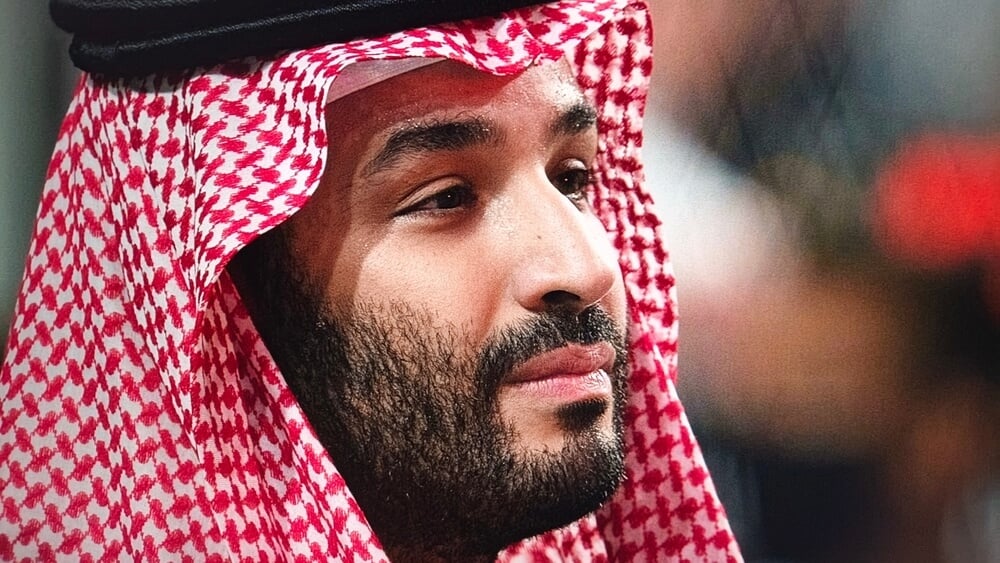 Saudi Arabia should demand an end to Russian intelligence assistance enabling attacks against the Kingdom - Mohammed bin Salman
Saudi Arabia should demand an end to Russian intelligence assistance enabling attacks against the Kingdom.
Compliance must be measured by operational conduct. Maintaining production agreements should not guarantee Moscow diplomatic confidence or an expanding strategic relationship.
Washington and Europe should reinforce that demand. The damaged Italian Eurofighter Typhoon at King Fahd Air Base demonstrates their direct exposure.
Stronger intelligence sharing and infrastructure protection should accompany coordinated diplomatic and economic measures against Russian organizations supplying operational assistance.
Putin’s regional influence has benefited from engagement with competing powers.
Allowing Iran’s military priorities to dictate Russia’s conduct now puts that flexibility at risk.
Riyadh can continue practical oil negotiations while restricting the wider partnership.
The Kremlin must choose. It can protect a relationship central to Russia’s long-term interests, or continue supporting attacks that progressively destroy it.
Saudi Arabia has no obligation to preserve Moscow’s advantages while Russian capabilities help its enemies prepare the next strike against the Kingdom’s critical infrastructure.
Dr Nawaf Obaid is a Senior Research Fellow at the Department of War Studies, King’s College London.
