The meeting between Donald Trump and Xi Jinping in Beijing occurs at a time when the United States is simultaneously burdened by the war with Iran, the crisis in the Strait of Hormuz, rising energy prices, and the depletion of military-industrial capacity due to support for Ukraine.
Meanwhile, China remains a key player in global industrial chains, rare earth processing, component manufacturing, and financial flows.
In this balance of power, Taiwan is no longer simply a matter of military deterrence between the two powers. It is becoming a test of the United States' willingness to bear the long-term political, economic, and security costs of confrontation with Beijing.
This is where the greatest strategic uncertainty in the Indo-Pacific lies today.
China is changing the way Washington assesses Taiwan
For decades, China's strategy towards Taiwan has been to increase the cost of American intervention.
Beijing has systematically developed anti-ship missile systems, a modern navy, cyber capabilities, and technologies to threaten American satellite infrastructure, while also strengthening its position in the industrial and technological chains on which Western defence production depends.
The goal was simple: make a potential US military response so expensive and risky that it would become politically difficult to sustain in Washington.
Taiwan is gradually shifting from the realm of strategic principle to that of political and economic cost accounting
Today, China takes another step. The focus is no longer solely on increasing the cost of a potential war, but on changing how American policy values Taiwan overall.
The key question now is whether a long-term confrontation with China over Taiwan is worth the economic consequences that would affect American industry, markets, energy, and voters.
This represents a fundamental change. Taiwan is gradually shifting from the realm of strategic principle to that of political and economic cost accounting.
American strategy is entering a phase of contradiction
For years, Washington has sought to contain China's rise, maintain the status quo around Taiwan, benefit from China's integration into the world economy, and involve Beijing in resolving international crises when necessary.
That approach now reveals serious limitations. China has become a central player in rare earth element processing, a major energy buyer, a key market for part of global industry, and a significant factor in the American financial system through the bond market.
The Taiwan issue in Washington is no longer measured solely by the military balance with China
Chinese manufacturing remains deeply embedded in the US economy, from industrial components to goods that directly affect prices in the US market.
Therefore, the Taiwan issue in Washington is no longer measured solely by the military balance with China, but also by the consequences for inflation, markets, energy stability, and US domestic policy.
Trump's logic alters Taiwan's position
The Trump administration formally maintains its policy of deterrence towards China. Support for Taiwan remains part of official policy, arms sales continue, and allies in the Indo-Pacific are encouraged to strengthen their own capabilities.
However, the administration's political logic differs. Success is measured by short-term economic results, market conditions, energy prices, and visible "deals" presented to voters. This is why Taiwan is entering a more sensitive phase.
Transactional politics turns every issue into a matter of balancing gains and losses
If war with Iran further destabilises the Strait of Hormuz, if energy prices continue to rise, and China increases pressure through rare earth elements or technological supply chains, the issue of Taiwan in Washington will no longer be solely a security matter. It will become part of a broader political calculation of costs and priorities.
For Taipei, this is a much worse position than the era when Washington, regardless of internal political differences, treated the island as a matter of national credibility rather than as an object of transaction.
Transactional politics, by definition, turns every issue into a matter of balancing gains and losses. In such a system, even alliances are no longer entirely exempt from political trade.
Chinese pressure without open war
Despite increasing pressure, the Chinese leadership currently has no rational interest in rapid military escalation.
An attack on Taiwan would result not only in military conflict with the West, but also in a serious blow to China's economy, trade, and financial system – a price Beijing has no reason to pay at present.
The long-term erosion of Taiwan's position is a more rational approach for Beijing
A more rational approach for Beijing is the long-term erosion of Taiwan's position. This involves continued military pressure without direct conflict, gradually weakening confidence in American guarantees, carefully increasing political polarisation within Taiwan, and creating the impression that American support is conditional and dependent on other global crises.
Such a strategy does not produce dramatic moments that would provoke an immediate response from the West. It works more slowly, but in the long run it can be more effective than an open military operation.
Taiwan is not a Ukrainian scenario
Taiwan has a completely different strategic significance from Ukraine.
Ukraine is a land conflict on European territory, with extensive logistical support from NATO and the EU. Taiwan is the focal point of the Indo-Pacific and one of the most important technological and maritime hubs in the world.
Any American hesitation over Taiwan would have far wider consequences than for the island itself
Control over Taiwan affects access to China’s coast, the security of key shipping lanes, and the stability of supply for the most advanced semiconductors.
It directly impacts the American technology and defence industries, as well as the economies of Japan, South Korea, and all of East Asia.
Therefore, any American hesitation over Taiwan would have far wider consequences than for the island itself. US allies in the region would immediately begin to question the reliability of US security guarantees.
Beijing is in no hurry
The most significant change may be political rather than military. Beijing likely believes that American political will for long-term confrontation may gradually weaken on its own.
The more the US is burdened by the war with Iran, the renewal of military supplies to Ukraine, and increasing budget pressures, the harder it becomes to sustain support for another major crisis in the Indo-Pacific.
China has no reason to risk a destabilising invasion
In such circumstances, China has no reason to risk a destabilising invasion. Time becomes its ally.
If Washington gradually begins to view Taiwan in terms of energy prices, stock market conditions, and domestic political risk, Beijing can achieve a strategic shift without a major war.
War is not the most dangerous scenario
The most likely scenario in the coming years is neither full-scale war nor a stable status quo, but rather a prolonged period of strategic ambiguity.
This means the United States will formally maintain its support for Taiwan, but in practice will carefully avoid actions that could provoke a direct conflict with China.
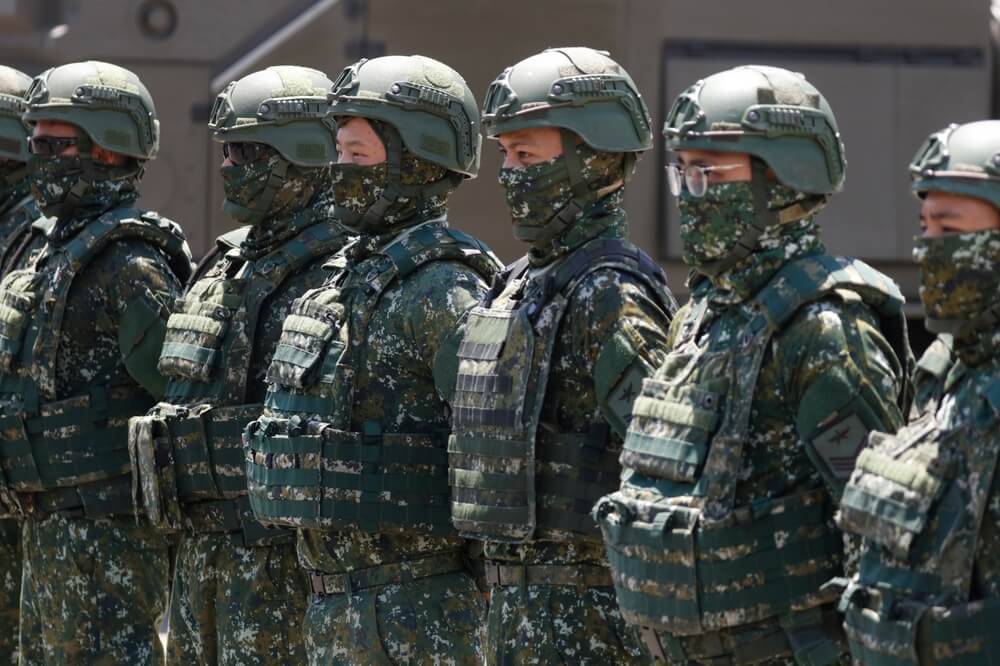 The United States will formally maintain its support for Taiwan, but in practice will carefully avoid actions that could provoke a direct conflict with China
Such a model involves limited arms deliveries, carefully managed political contacts with Taipei, and diplomatic language that avoids clear security commitments.
At the same time, China’s military, political, and economic pressure will become a constant condition rather than an occasional crisis.
This scenario suits Beijing best. Taiwan remains formally protected, but long-term uncertainty gradually undermines investment, technological security, and public confidence.
The core issue is no longer solely the military balance in the Taiwan Strait.
The key question is whether the US will maintain its model as a global power that accepts the long-term costs of alliances and strategic deterrence, or whether it is entering a phase in which security arrangements are assessed through short-term political and economic considerations.
China is basing its strategy on this. It is not only trying to increase the cost of America’s presence in Asia; it is also trying to change the very logic of American decision-making.
If it succeeds, the consequences will not be limited to Taiwan. It will alter the balance of power across the entire Indo-Pacific.
