On his recent trip to Beijing, US President Donald Trump, the world’s most powerful person, was accompanied by many of the top names in American business, finance, and technology, all of whom understand the importance of maintaining a working relationship with China.
For the rest of the world, this was a positive development, because we should all want the world’s two biggest powers to speak directly to each other.
Trump’s Chinese hosts showered him with pomp and circumstance—including flag-waving children—and he repaid the favor by lavishing praise on Chinese President Xi Jinping.
Beyond the spectacle, however, the summit’s results were meager. There seems to have been little progress on substantive matters like trade, nor (as far as we know) were there any major new supply contracts for American industry and agriculture or coordinated efforts to resolve major international conflicts such as the wars in Ukraine and the Gulf.
But the images from the summit visit spoke for themselves. Trump found himself in the rather unfamiliar role of a supplicant.
Everyone knew that he wanted China’s assistance to break the impasse in the Gulf region, where his failed “excursion” has handed Iran de facto strategic control of the Strait of Hormuz and sent oil and gas prices soaring.
Trump’s desperation was apparent in his demeanor; there was no bragging or hyperbole. Gone was any sense that he sees himself as the master of the world.
Negotiating chip
Xi, by contrast, is the leader of the 21st century’s most important rising power.
Almost as soon as Air Force One had touched down, he emphasized this strategic reality, warning Trump of the “Thucydides Trap”: the tendency of a waning hegemon to overreach in trying to hold down an emerging challenger (the dynamic that dragged Athens and Sparta into the Peloponnesian War).
Xi was referring here to Taiwan—the main flashpoint of today’s strategic rivalry—following Congress’s approval of a multibillion-dollar US weapons package for the island.
Whereas Xi spoke with confidence, Trump’s response was evasive and defensive
Whereas Xi spoke with confidence, Trump’s response was evasive and defensive.
He even described the weapons package as a “negotiating chip,” thus raising a potentially existential question not only for Taiwan but for all of East Asia: Would the United States really defend its partners and allies in the region if necessary?
In the end, Xi had every reason to be satisfied with the summit. He is the one now setting the agenda in the strategic confrontation between China and the US—or what China is calling “a relationship of strategic stability.”
The US is in decline
Meanwhile, American credibility has been dealt yet another serious blow.
From Europe and East Asia to the rest of the world, people will increasingly be asking themselves what, if anything, US commitments and agreements are actually worth.
This is no small matter. Credibility is a currency that shapes and regulates relations among states.
Trump’s visit to Beijing has reinforced the already widespread perception within China and around the world that the US is in decline
The US ought to understand this, given how successfully it amassed and deployed the currency of credibility throughout the Cold War era and for years thereafter.
America became the undisputed hegemon and the anchor of the global economy precisely because others saw it as a serious power that would keep its promises.
But now there is a hegemonic struggle between two superpowers, and Trump’s visit to Beijing has reinforced the already widespread perception within China and around the world that the US is in decline.
Europe is sinking even faster than the US
Trump himself bears a large share of the blame for this, given how eagerly he has trashed US alliances, weaponized America’s position within the international order, and rushed into a disastrous war of choice that he seems unable to win.
If one examines Trump’s foreign policy—and his systematic undermining of American superpower status and its alliances, particularly through his actions toward China—one cannot help but see him, ironically and unfortunately, as Xi’s best friend.
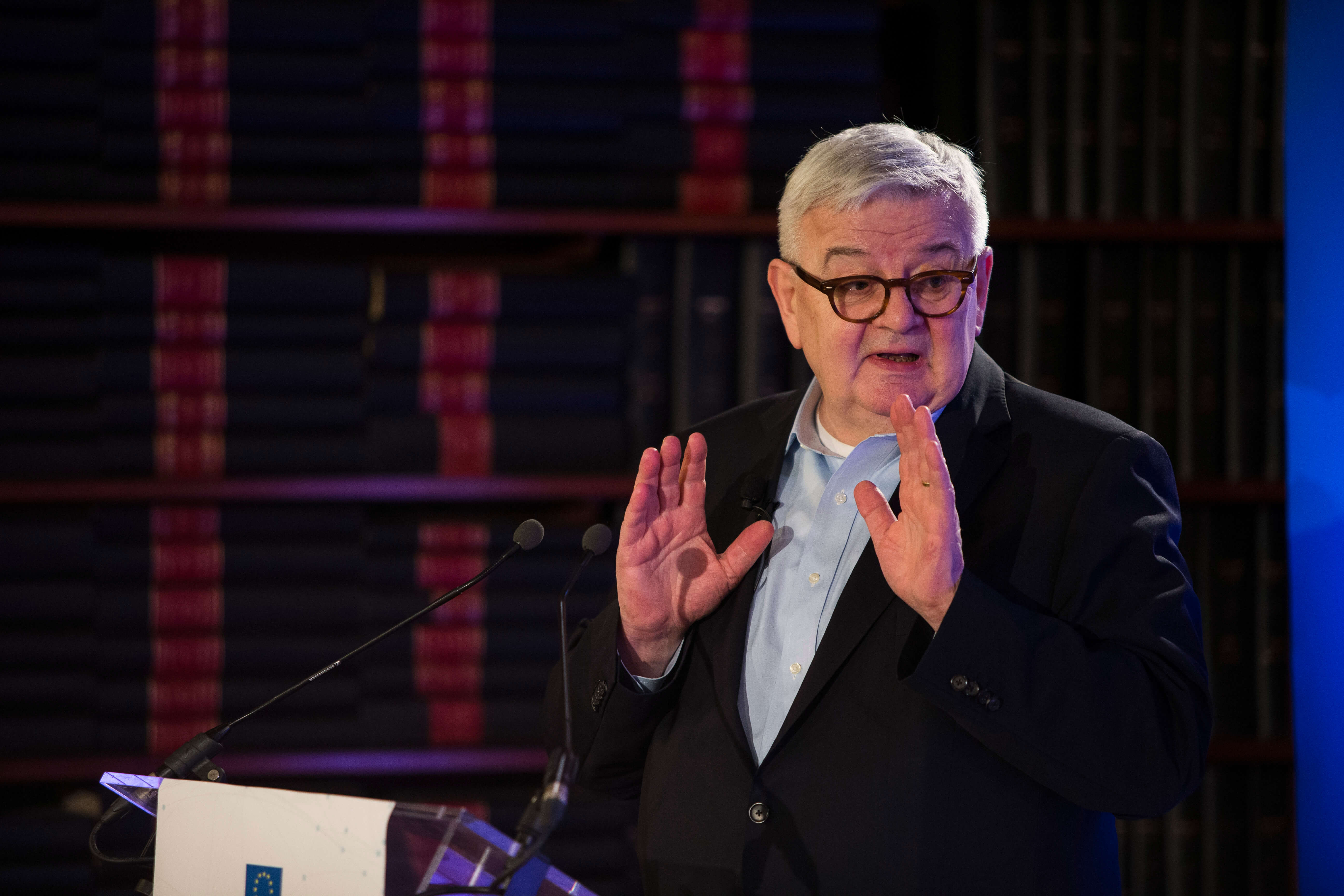 Trump’s visit to Beijing demonstrated the relative weakness of the US and the West vis-à-vis the People’s Republic and the Global South more broadly - Joschka Fischer
But a comeuppance for Trump is cold comfort for Europe. Despite all our conflicts with the current US administration, we cannot indulge in schadenfreude, because we are in the same boat of Western decline (especially from China’s perspective).
The only difference is that Europe is sinking even faster than the US. The US, at least, will remain the leading power of the West, even if Trump himself has no interest in preserving that concept or the liberal-democratic values it represents.
Trump’s visit to Beijing was nothing if not clarifying. It demonstrated the relative weakness of the US and the West vis-à-vis the People’s Republic and the Global South more broadly.
For Europe, the challenge of achieving and strengthening strategic autonomy has grown only more urgent.
Europe still possesses considerable technological and industrial strengths, but it will have to take great care not to be divided—or simply crushed—in the coming hegemonic duel.
Joschka Fischer, Germany’s foreign minister and vice chancellor from 1998 to 2005, was a leader of the German Green Party for almost 20 years.
