All of a sudden, at the start of 2026, there’s a rush to declare the old world order over. In some cases, accompanied by either a heartfelt or an implied good riddance!
As an ornery analyst and commentator, I see it as my duty to go against the grain. Very possibly I declared this same liberal world order on the way out when it actually still had some life in it.
Now, I feel reluctant to go along with the increasingly unanimous consensus, remarkably pushed by all parts of the political spectrum, that it is all over with the rules-based international order, whatever we might mean by that.
The current eagerness, also on view in Mark Carney’s hallowed Davos speech, to highlight the old order’s hypocrisies and imbalances and the implication, whether intended or not, that hence it’s no great loss particularly sticks in my craw.
The implied hypocrisy argument states the glaringly obvious: that the system worked for some more than others, was applied selectively, unevenly and unfairly.
This is the core of many populist approaches. Especially when combined with the call to then take the system down or declare it already deceased.
Donald Trump too thinks the international system is unfair, because the US has to pay too much for it, or irrelevant, because it doesn’t have the devastating power of the hegemon.
Vladimir Putin thinks the international system is unfair because it impinges on his ability to dominate Russia’s neighbours. And he thinks it’s irrelevant because he too has the power to take what he wants.
Xi Jinping is still trying to have it both ways: he tries to use the international system to China’s advantage but makes clear it won’t deter him where it matters, building islands in the South China Sea to encroach on his neighbours, disregarding international agreements on Hong Kong and threatening Taiwan, to mention but a few.
European populists and right-wing nationalists rail, as Trump and Putin do, against any constraints on national sovereignty, at least where these don’t suit them. This conveniently ignores that all countries are mired in a plethora of agreements and treaties without which life would become a lot more difficult, even for hegemons.
Very hard to see a better alternative
Just as with the democratic system, the international rules-based order is blamed for many inequities, sometimes rightly so, but it’s very hard to see a better alternative. Show me a system that is not in some ways unfair or unequal – I think that’s called utopia.
As with the democratic system, it’s far preferable to work towards righting or perfecting an even hypocritically well-intentioned yet creaking order, rather than throw it out altogether without having a realistic shot at something better.
This is another argument against declaring the old order over in the way that’s currently in fashion: Be careful of what you wish for – it’s not going to be so easy to find a replacement that is fit for purpose.
Carney’s analysis of what’s wrong with the way the current order works and the wilful blindness – living within the lie – of many remaining liberal democracies is, of course, recognisable and therefore powerful.
What he failed to do was make a convincing argument that: a – the old order should, or even could, be ditched, and b – that there is a good replacement.
The only meaningful difference with what came before is that the US, once the guarantor of the system, is now openly working to demolish it
In fact, while he speaks of a “rupture”, what his prescription comes down to is to live with the old order in the ‘new’ realisation that middle powers need to look after their own interests and no longer rely on the US.
They can still work “incrementally” towards making the system better but shouldn’t avoid doing deals with less savoury members of the international community where it benefits them. That is the new “values-based realism”.
This is not so very different from what middle powers have been doing for decades. The ‘realism’ part of this allows democracies to deal with a wide variety of human-rights-ignoring actors, from China to Saudi Arabia, just as before.
How this will give any more credence to the ‘values-based’ part than before is not easy to comprehend.
In all likelihood, Carney’s pitch is much more aimed at the global South, or rather the rising BRICS-type countries and their anger over cases such as Israel and Gaza. But it’s doubtful Canada and other middle powers can, or will, do much better in this regard.
The only meaningful difference with what came before is that the US, once the guarantor of the system, is now openly working to demolish it.
Great power drive
It’s no wonder, though, that many who declare the old world order over and highlight its hypocrisies fail to come up with a meaningful description of what should replace it.
In most cases, whether the criticism comes from the global South, Western populists or struggling middle powers, the critics themselves are heavily invested in the increasingly hyper-capitalist reality that holds sway over ever more aspects of the global system.
As the leader of a liberal Canadian government and speaking at the ultimate gathering of so-called ‘liberal’ capitalists that Davos is, it was to be expected that Carney, also a two-time former central banker, wouldn’t target the role of unrestrained capitalism and unfettered free markets.
Yet, not to look at the one element that unites the current batch of hegemonic autocrats and their fellow travellers makes any analysis of what ails the world order flawed.
What is behind the current great power drive towards the “unhindered pursuit of their power and interests”, as Carney put it?
The answer might be partially found in national self-interest, but it is married to, underpinned and largely driven by a capitalist-imperialist mindset reminiscent of the late 19th and early 20th centuries.
If there can be only one winner, or a few, does that mean automatic subjugation for all the others?
Today too, there’s a Scramble for Africa, a Great Game in Asia and even a US expansionist echo of when it seized Spanish and other possessions.
Now, as then, much of this is driven by equating the national self-interest with the profit-seeking aims of a country’s great corporations and its wealthiest citizens.
Take the case of Greenland, other than Trump’s national security argument: The US needs to win the tech and AI race. For that it needs rare earth and critical minerals. Ergo, it needs Greenland.
It is a subject for debate whether ‘winning’ the AI race is of supreme national importance to any country. If there can be only one winner, or a few, does that mean automatic subjugation for all the others?
But even if it is deemed crucial, does that mean it can serve as an excuse for expansionism in the same way that the struggle for resources such as rubber and copper did in the late 19th century?
It would surely be better to take the innovation route and obviate the need for such materials where possible.
It all does come down to money
We should not take the word of a mega-rich minority and those who profit from being aligned with it as the last word on how to run the world.
We already know their agenda: untrammelled access to whatever will make them richer and the total absence of any restraint on their freedom of action.
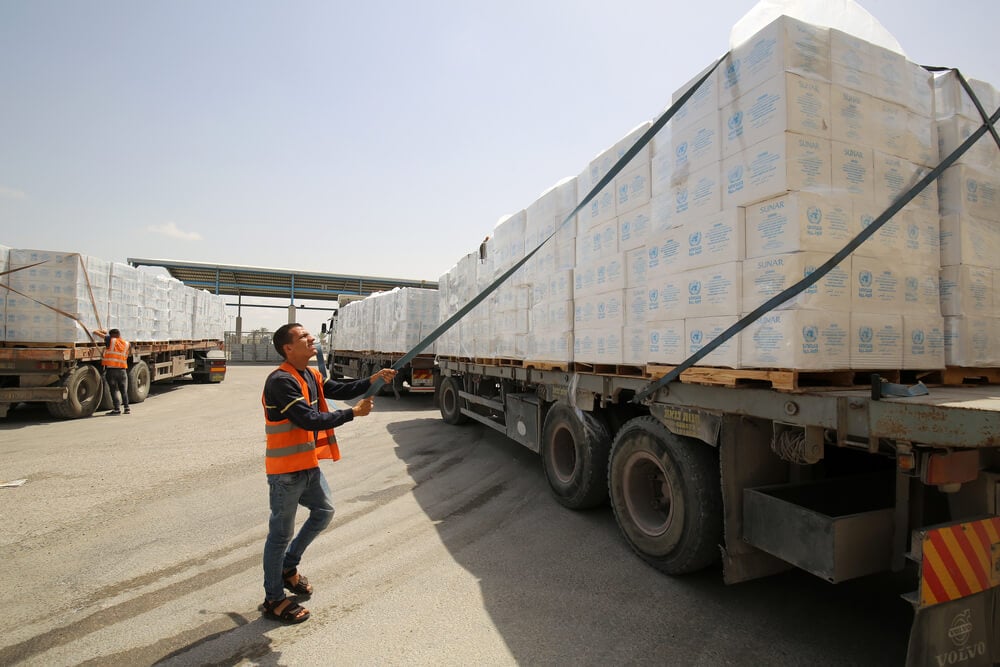 Western middle powers are reducing their international aid spending, including through some UN programmes
For the world not to regress to the unimpeded capitalist-imperialist way of doing things, we first and foremost need to restrain the modern-day robber barons and their increasingly dystopian corporations everywhere in the world.
This is not a discourse that will easily be heard at Davos or in other liberal-capitalist citadels.
For all its faults, there’s no real alternative to the rules-based global order and its various multilateral expressions to restore these restraints or come up with new ones.
Rather than turn away in righteous anger from the US and other newly illiberal countries, we’d be better off cooperating to bring them back into the fold, or, if necessary, impose a cost on them for their infractions.
And to return to the idea of hypocrisy, Canada and other Western middle powers are reducing their international aid spending, including through some UN programmes, just at the time when they should be stepping up to fill the Trump-sized void that has been created.
In one way or the other, it all does come down to money, and it might be a good idea for middle powers to start by putting some of it where their mouth is.
