As Australian John Paul Young wrote in his 1977 song, "Love Is in the Air", or Elton John's "Can You Feel the Love Tonight?", Valentine's weekend has arrived, and conversations about love fill our timelines.
This piece was overdue, as we cannot ignore how AI s also reshaping dating apps in 2026.
Love has always evolved with culture, and now it is evolving with code.
We are living through new moments in the relationship between AI and human connection.
Dating apps are not new, and neither is AI in dating apps. What is new is the scale, sophistication, and influence of algorithmic decision-making in one of the most emotional areas of life.
To understand the impact, we need to look at how we got here.
The rise, boom, and fatigue of dating apps
Online dating began long before smartphones. Match.com officially launched in 1995, introducing the idea that relationships could start on a screen.
In the early 2000s, platforms like eHarmony expanded on the model with compatibility questionnaires based on psychological principles.
Then came the mobile revolution that changed everything. In September 2012, Tinder introduced swipe-based matching. It removed friction, it gamified connection, and it turned dating into a fast, visual experience.
Bumble followed in December 2014, adding a female-first dynamic. Hinge positioned itself as relationship-focused. By the mid-2010s, dating apps were mainstream.
Generation Z entered teenage life with apps normalised as part of social interaction
The last generation to grow up as teenagers without dating apps was the early millennials born in the early 1980s. They experienced adolescence without smartphones or swipe culture.
Generation Z, by contrast, entered teenage life with apps normalised as part of social interaction.
The boom years were unmistakable. Between 2014 and 2020, downloads soared globally. According to industry reports, tens of millions of users engage daily. During the pandemic, app usage surged again as physical distancing limited in-person meetings.
By 2022/23, once the world returned to normal, survey reports of burnout, incessant swiping, ghosting, and shallow interactions online led to the downfall of dating apps. Many users believed they were wasting their time with no real return on investment.
Smarter matching with AI?
Surprise, surprise, in 2026, AI finds its way once again embedded across all major dating platforms. AI curates match suggestions using behavioural data, interaction patterns, and conversational tone analysis.
It rewrites dated bios to increase engagement, generates icebreakers tailored to personality traits, flags potentially harmful behaviour in real time, and, allegedly, predicts compatibility using increasingly complex models.
Some platforms now offer AI dating coaches that analyse message threads and suggest improvements. Others test voice AI companions that simulate conversation to help users practise confidence.
From a technical perspective, this is pretty impressive. Machine learning that can identify patterns across millions of interactions, and safety systems that detect red flags faster than manual moderation ever could.
Pro-app advocates focused on logic will argue that AI reduces inefficiency
AI can analyse data without a question, but can we agree that it cannot experience emotion from a human point of view? It can identify shared interests, but it cannot create human love chemistry.
Attraction will never be a dataset. It is influenced by tone, energy, timing, and countless micro signals that defy prediction. Can you explain to all algorithms what that "butterflies in the stomach" feeling feels like?
And this is why the world feels so divided. Pro-app advocates focused on logic will argue that AI reduces inefficiency. That it filters incompatible matches, improves safety, and empowers shy users to communicate more clearly.
Critics argue that hyper-optimisation strips spontaneity away. When every message is polished and suggested, authenticity becomes blurred. If AI crafts your opening line, who is speaking?
The emotional business model
The hope and curiosity humans possess, have driven app engagement. Just like with shopping, AI in 2026 enhances retention through personalisation. It learns what keeps users active, and it adapts feeds to maximise interaction among users.
But although engagement metrics can improve, and revenue models strengthen, engagement does not always equal the fulfilment feeling.
Technology companies aim to solve user pain points, investors expect growth, and users seek meaning
If users feel they are being optimised rather than understood, that is when fatigue intensifies. When predictive systems mediate every interaction we have, connections can start to feel transactional. And hey, some people prefer it that way. We all have our preferences.
This tension is what sits at the heart of the debate. Technology companies aim to solve user pain points, investors expect growth, and users seek meaning. Balancing these priorities requires ethical design.
AI can be biased
To be fair, AI has clearly brought improvements. We now have advanced moderation systems that can identify harassment and inappropriate behaviour faster, and fraud detection tools reduce catfishing and scams.
Identity verification powered by AI should increase trust. Safety tools matter. AI can filter abusive messages and block repeat offenders more efficiently than manual systems ever could.
Responsible governance of AI in dating platforms should include transparency, bias audits, and user control
Yet there is also a risk of bias. AI models trained on historical data may replicate societal inequalities. If unchecked, recommendation systems can amplify stereotypes rather than challenge them.
Responsible governance of AI in dating platforms should include transparency, bias audits, and user control.
AI for dating apps should be hybrid
Dating apps are not disappearing and most likely never will, but if you ask me, I do not believe AI will dominate romantic experiences anytime soon.
We are going to see more hybrid models leading the way. AI will handle background tasks, like enhancing safety, filtering matches, and suggesting insights, but human choice and unpredictability will remain the driver.
We may see smaller, interest-based communities supported by AI rather than mass-swiping platforms. We may see more integration between digital matching and real-world events.
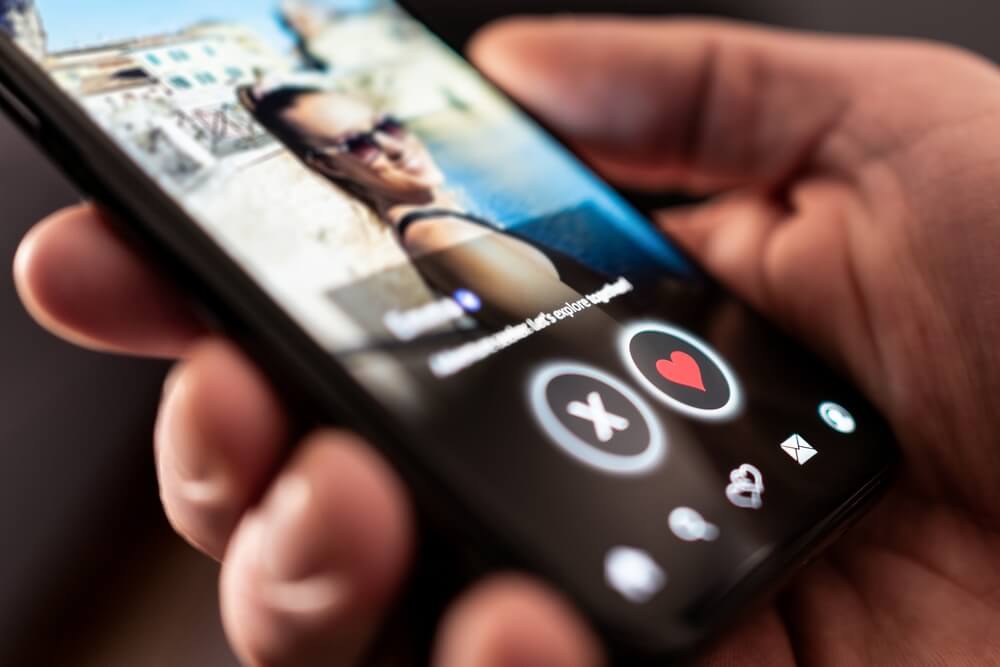 Technology can introduce two people, but only people can build a relationship
We may see AI providing reflection tools to help users understand their own patterns rather than manipulate outcomes.
The most successful platforms will treat AI as support, not a substitute.
While I believe in innovation and that AI can improve lives when designed responsibly, I also believe some aspects of life should remain imperfect and be enjoyed in the moment, away from technology.
Love has never been efficient. It is often irrational, and it requires vulnerability.
AI will never replicate the feeling of anticipation before a first meeting. It will never recreate the warmth of shared laughter in the same physical space and that "butterflies in the stomach" feeling.
That is not a weakness of technology by any means. It is a brilliant reminder of what makes us human. If we approach AI in dating with the right intention, we can reduce harm, increase safety, and improve access to meaningful connections.
If you remember one thing today, let it be this: technology can introduce two people, but only people can build a relationship.
Happy Valentine's Day weekend to all.
