Canadian Prime Minister Mark Carney has issued a battle cry in the global fight against deglobalization.
In a historic speech at the World Economic Forum’s annual meeting in Davos, he called on the world’s “middle powers” to take a new approach to revisionist powers, a list that now includes not only China and Russia, but also the United States.
In an era of economic nationalism, Carney thinks that middle powers must band together to uphold a rules-based international order.
Can India, the world’s largest middle power, reinvent its foreign policy to meet this moment?
Doing so would certainly be to the country’s benefit, as its interests are fully aligned with Carney’s proposed approach.
India’s economic success over the last three decades was born out of engagement with the world economy: the miracle of services exports, built on Western technology, financing, and markets.
US President Donald Trump’s capricious trade policy took aim at those commercial ties, dealing a serious blow to India.
The India-US trade deal that Trump recently announced will supposedly lower US tariffs on India’s goods exports from 50% – among the highest imposed by his administration – to 18% in exchange for India agreeing to halt Russian oil imports and reduce trade barriers.
But many questions remain unanswered, and the lack of a rules-based order means that trade friction between the two countries will continue.
Non-alignment doctrine
In this environment, deepening ties with the rest of the OECD economies, which boast a combined GDP of roughly $38 trillion, holds immense potential for India. Indian heft would also help stabilize the international order.
Logic dictates that India should focus its diplomatic engagement here, forging the commercial and technological links required to drive its economic growth.
Its new free-trade agreements with the European Union and the United Kingdom are steps in this direction.
But this approach is inconsistent with the conventional wisdom of India’s foreign-policy establishment.
Many in India have interpreted Carney’s call as a vindication of its traditional non-alignment doctrine
Many in India have interpreted Carney’s call as a vindication of its traditional non-alignment doctrine.
Some commentators have seized on the “middle power” rhetoric to argue for a return to the vision of India’s first prime minister, Jawaharlal Nehru, who believed that India should stand aloof from global affairs, hovering above great-power rivalries.
Where does this thinking come from? It reflects deep-seated anti-colonial, anti-Western sentiment.
In fact, while India’s stated position for decades was non-aligned, its operational bias tilted toward the Soviet Union.
The Indian state’s strategic memory is long: China’s attack on India in 1962, and the Soviet Union’s support for India in the 1971 war with US-backed Pakistan that established an independent Bangladesh, are not historical footnotes. For many in the establishment, they remain formative events.
Economic nationalism
Alongside this, the Indian establishment has long had a penchant for economic nationalism, with an ever-present tactical willingness to use state power to “protect” domestic firms and workers.
Former Prime Ministers Atal Bihari Vajpayee and Manmohan Singh, as well as former foreign ministers Jaswant Singh and Yashwant Sinha, spent years trying to awaken India’s foreign-policy and security establishment to post-Soviet realities.
They recognized that, in the 21st century, India’s natural partner is the West.
Trump’s behavior has reinforced skeptics’ view that the West is unreliable
Their impact upon mainstream beliefs was limited. Trump’s behavior has reinforced skeptics’ view that the West is unreliable, and that “strategic autonomy” is India’s only safe harbor.
To anticipate how Indian foreign policy will work, we should categorize state capability in foreign policy into three modes.
At the most basic level, a state may practice strategic autonomy and make no deals. Policymakers may engage in moral posturing and give stirring speeches while eschewing the compromises required for deep engagement with alliance partners.
This would be a bit like a judge who delivers lectures but refuses to issue enforceable orders.
The second mode is transactional behavior like that of Trump, resulting in hot-and-cold relationships that fluctuate with the news cycle.
The third, most advanced mode is focused on developing values-based alliances, which require long-term, strategic connections in the economic, defense, and cultural domains.
Foreign-policy sophistication is where governments accept the need to modify domestic policies to suit their partners, as the security and economic benefits outweigh the loss of absolute sovereignty.
The non-strategic approach
But building alliances calls for complex state capability in coordinating between the Ministry of External Affairs and all other arms of the government.
Wolf warrior diplomacy is easy; explaining necessary compromises to a domestic audience is hard.
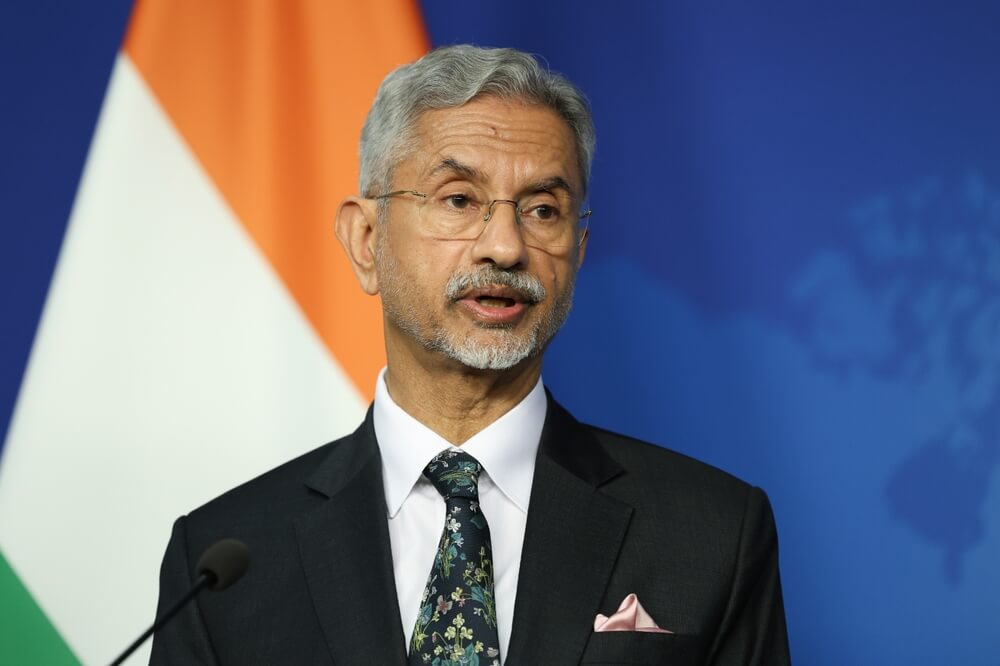 While many hope that India will participate in a coalition of middle powers to offset American isolationism and Chinese expansionism, such an evolution will be slow at best - FM Subrahmanyam Jaishankar
After decades of non-alignment and strategic autonomy, India’s foreign policy oscillates between the first and second modes.
Authorities are allergic to modifying domestic policy to accommodate external partners.
This is also consistent with the non-strategic approach seen more broadly in the Indian state.
As a result, India is often isolated, and when its security is threatened – for example by Chinese incursions into its northern borderlands – it is forced to fight alone.
State capability doesn’t change quickly. While many in the international community hope that India will participate in a coalition of middle powers to offset American isolationism and Chinese expansionism, such an evolution will be slow at best.
The Indian government will likely respond to the current global turbulence with a blend of aloofness and continued engagement with Russia.
Ajay Shah is a Co-Founder of XKDR Forum, a non-profit research organization in Mumbai.
