Trilateral negotiations between Ukraine, Russia and the United States on a ceasefire in Ukraine began in Geneva, with few expecting any progress from this new round.
The previous two rounds of negotiations in Abu Dhabi, in January and early February, did not yield any progress, although the latter did result in a prisoner of war exchange after a long interval.
The Geneva negotiations are not starting from scratch, but they are also not beginning with any positive momentum from the talks in Abu Dhabi or from any positions expressed by the parties in the meantime.
Moscow is adamant about territorial issues, particularly the requirement for any solution to be grounded in the current situation on the front, where it has occupied parts of eastern Ukraine and views them as an integral part of Russia.
Territorial concessions are unacceptable for Kyiv, as are Russia’s demands to shape Ukrainian politics according to its own standards – without Volodymyr Zelenskyy, whom it considers an illegitimate president, without Ukrainian “nationalism”, and certainly without NATO membership.
The two warring parties lack any points of contact that could serve as the foundation for a peace framework. What is even more concerning is that the American mediators do not appear to have a creative approach that could produce even a minimal point of contact.
Steve Witkoff, Jared Kushner, and Army Secretary Daniel Driscoll lead the American team, just as they did in Abu Dhabi. On the other side, Vladimir Medinsky, Vladimir Putin’s hard-line adviser and advocate of Russian expansionism, who was not part of the delegation in Abu Dhabi, has returned to lead the Russian team.
At first glance, his return to the negotiation table seems to indicate the Kremlin's intention to intensify pressure on both the Ukrainians and the Americans to comply with Moscow's territorial demands.
Are Russian military capabilities really unlimited?
However, the broader context following the Geneva talks does not provide much evidence for Russia's frequently cited ability to wage endless wars or that, in the case of Ukraine, time is on its side.
Russia's reckless campaign of airstrikes against Ukraine's energy facilities in recent weeks must be seen as an integral part of the negotiation process. Its aim is to exhaust the Ukrainian population and break its will to defend the country after four gruelling years.
Cities left without electricity and heating during the coldest winter months are expected to foster defeatism among millions of Ukrainians, which would translate into pressure on the state leadership and President Zelenskyy to make peace as soon as possible.
If Russia's resources for waging war are truly unlimited, why is there such urgency for a swift conclusion to peace?
This could be seen as a typical strategy from the perspective of the aggressor. However, if Russia's resources for waging war are truly unlimited, as its officials and propagandists claim, why is there such urgency for a swift conclusion to peace?
Moscow sees its main support for achieving its objectives, or most of them, in the fact that Washington has positioned itself as the principal peace mediator.
This period of American engagement appears strategically advantageous for Moscow, but that window may close at any time.
Venezuela as a strong warning for the Kremlin
As a very serious warning that this could happen at any moment, Moscow realised during the American operation in Venezuela when the United States arrested the head of state, Nicolás Maduro.
Moscow responded to this American action almost silently, even though it considers Venezuela one of its main allies in the world. It reacted quite mildly, primarily because it did not want to jeopardise its position with the administration of Donald Trump, which it considers close to its strategic goals.
The operation in Venezuela was the first practical demonstration of the new US National Security Strategy, in which Trump placed the Western Hemisphere, Latin America, and the Pacific as the focus of his interests, rather than Europe.
Losing Trump and his advisers as the main negotiators would mean a further prolongation of the war drama for the Kremlin
Hence the fear in the Kremlin that American interest in mediating the resolution of the Ukraine conflict could disappear at any moment. The window of opportunity for Moscow to rely on the understanding of the most powerful intermediary for its goals would then close.
The approaching November midterm elections in the United States and the anticipated shift of Trump's focus from foreign to domestic politics are additional factors contributing to Putin's race against time.
"It’s clear that if Congress comes under the Democrats' control, then it will be harder for Trump to make some decisions," a Russian source close to senior Russian diplomats told the Washington Post.
Losing Trump and his advisers as the main negotiators would mean a further prolongation of the war drama for the Kremlin, certainly a new tightening of Western sanctions, and massive human and economic losses.
The alternative is unfavourable for Moscow
With nearly four years after launching the invasion of Ukraine, Putin will be remembered as the leader who fought longer than the Soviet Union did in World War II (1941–1945).
His invasion of Ukraine, meanwhile, has resulted in 16 times more Russian casualties than the invasion of Afghanistan. The economy, particularly the energy sector that forms its backbone, is in ruins – recovery is impossible unless Russia first accepts a long-term peace in Ukraine that satisfies both Kyiv and its Western partners, who control the sanctions.
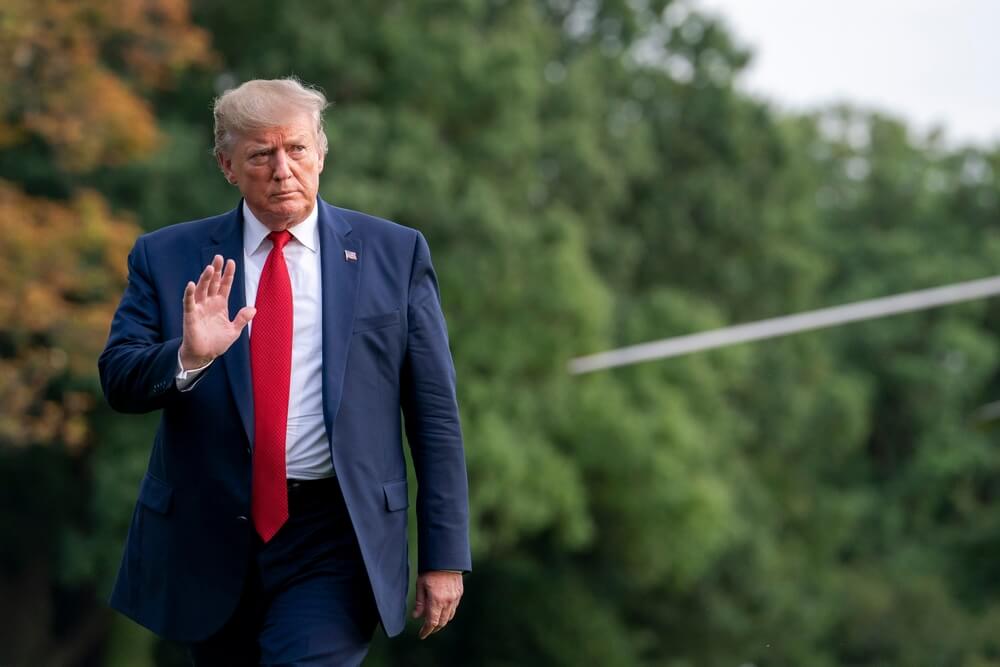 If Washington, for any reason, withdraws from the negotiations or loses interest, any alternative will be extremely unfavourable for the Kremlin
If Washington, for any reason, withdraws from the negotiations or loses interest, any alternative will be extremely unfavourable for the Kremlin.
This is especially true if European diplomats, whose positions on Ukraine are far from those of Washington, replace Trump’s negotiators.
After all, Putin has long sought to create a rift between the Atlantic partners, partly to exclude Europeans as a factor influencing the outcome of the war in Ukraine.
Therefore, Russia’s firm stance at the Geneva negotiations, including the deployment of its toughest negotiators, should not mislead anyone into thinking that Moscow is patient.
The notion of unlimited war resources and the capacity for endless warfare now appears more than ever to be a myth manufactured by the Kremlin, both for domestic consumption and, even more so, to intimidate Western publics and their leaders.
Time is one of the most unfavourable factors for Russia’s negotiating position, as evidenced by its efforts to conceal this with seeming composure and firmness in its demands.
