In an interview with Fox News, United States President Donald Trump offered a rare glimpse into how his administration views Taiwan.
When asked directly whether the US would defend the island militarily in the event of a Chinese invasion, Trump replied briefly: the decision is "up to President Xi."
He also stated that such a move would be a "very bad decision" for China, with serious economic and military consequences.
At first glance, the statement appears to be another example of Trump's policy of strategic ambiguity. In reality, it is more precise.
Trump deliberately refused to offer an automatic security guarantee to Taiwan but made it equally clear that China's use of force would have consequences. He did not set a red line but outlined a framework within which decisions are made.
The message was intended not only for Beijing but also for Taipei, regional allies, and American industry.
Trump reiterated the essence of his approach: he would rather not state in advance what he is prepared to do. As he said, "I do not want to reveal the cards in advance."
This is his distinctive style and the way he conducts foreign policy. He uses uncertainty as pressure on the other side. Predictability, in his view, weakens the negotiating position and limits the scope for decisions.
Signalling, not promises
This statement came at a time of heightened tensions. In late December 2025, China conducted one of its largest military operations around Taiwan in recent years.
Dozens of fighter jets and warships crossed the median line in the Taiwan Strait. Beijing described these actions as regular patrols and as a response to moves by Taipei and Washington.
Taiwan has increased its alert level, while US ships have been deployed in the region to monitor the situation. Trump made it clear in the interview that he does not view these exercises in isolation.
He perceives these exercises as a component of a wider Chinese strategy aimed at exerting pressure without crossing the brink of war.
This is precisely why he avoids automatic responses. Instead, he chooses signalling, which leaves room for agreement but also for escalation if he deems it necessary.
That statement should not be read as a sign of weakness, but neither should it be seen as a promise. It leaves room for manoeuvre.
In Trump's approach, security is a matter of negotiation, not an implicit obligation
China is making it clear that the use of force would have consequences, but without specifying how or when the US would respond.
At the same time, it sends an uncomfortable message to Taiwan that American protection is no longer something to be taken for granted, that is, it is not unconditional.
Trump repeated the position he expressed during the campaign: in his view, Taiwan does not pay enough for its own security. "Taiwan is taking our chips," he said, "but not paying enough for defence." This remark attracted attention in Beijing but caused unease in Taipei.
Trump does not see Taiwan primarily as a matter of values or political affinity. For him, it is a point of leverage in the broader relationship with China, a place where technology, trade and security intersect.
While previous US administrations assumed that protecting Taiwan was part of an ongoing US commitment, Trump sees it as a matter of calculation. The question is not whether the US can defend Taiwan, but at what cost and what it receives in return.
That does not mean he is ready to "sell out" Taiwan, but it does mean he is no longer offering free guarantees. In his approach, security is a matter of negotiation, not an implicit obligation.
US security umbrella shifts
China's Ministry of Foreign Affairs responded the same day. The spokesperson accused Trump of interfering in China's internal affairs and reiterated that Beijing would "resolutely defend sovereignty and territorial integrity."
The rhetoric was standard, without additional threats. It indicated that China was carefully calibrating its response.
Taiwan's defence minister emphasised that the island continues to strengthen its own capabilities
In Taipei, the reaction was divided. President Lai Ching-te welcomed Trump's remarks as confirmation that the US would not ignore China's use of force.
At the same time, he expressed concern over the suggestion that US protection is not automatic. Taiwan's defence minister emphasised that the island continues to strengthen its own capabilities, including purchasing American weapons and developing its domestic industry.
For regional allies – Japan, Australia and India – Trump's statement was a reminder that US strategy is changing. The security umbrella remains but is no longer unconditional.
Taiwan as leverage
The most important part of Trump's message was not military but economic. He openly indicated that he sees scope for a deal with Beijing on trade and technology to avoid conflict.
In this approach, Taiwan is not the ultimate goal of American policy but a means of leverage in the broader relationship with China.
The island produces more than 90 per cent of the world's most advanced semiconductors. Taiwan Semiconductor Manufacturing Company is not just a business – it is the basis of the global technology economy. Any serious conflict over Taiwan would disrupt supply chains, damage American industry and cause global shocks.
Trump assesses that open conflict would come at a high cost. That is why he avoids promises that would bind him in advance. His approach leaves room for negotiations with Beijing on trade and technology as a way to keep tensions under control.
Thus, the issue of Taiwan does not disappear but moves into a broader framework of relations between the two powers, where decisions are made according to interests, not principles.
For Chinese President Xi Jinping, Trump’s approach presents both a risk and an opportunity. China is experiencing an economic slowdown, difficulties in the real estate sector, and pressure to access advanced technologies. Stability is essential.
Trump indirectly confirmed that alliances such as QUAD and AUKUS remain important but not as automatic defence mechanisms
If Trump offers to ease technology restrictions in exchange for restraint over Taiwan, it is an offer Beijing cannot ignore. However, the price is high: relinquishing demonstrative pressure and accepting the long-term status quo.
For China, this means gaining time, but not a solution. Taiwan remains an unresolved issue, merely postponed.
In the interview, Trump indirectly confirmed that alliances such as QUAD and AUKUS remain important but not as automatic defence mechanisms. He views them as instruments of pressure, not as guarantees of military intervention.
This marks a fundamental change. Instead of clear lines, Trump proposes a network of pressures, negotiations, and economic levers. For allies, this entails greater responsibility. For opponents, it brings increased uncertainty.
American technology companies are following this dynamic closely. Apple and Nvidia are deeply connected to Taiwan’s manufacturing capabilities. Any disruption would have direct consequences for their balance sheets, as well as for American military and technological advantage.
Trump’s policy seeks to reconcile two previously conflicting aims: the strategic containment of China and the protection of American industry. Taiwan is clearly the point of intersection.
When uncertainty becomes policy
In the coming period, the focus will shift from public statements to private channels. Talks between Washington and Beijing will not take place in front of cameras but through a limited number of interlocutors, with the clear aim of keeping tensions below the threshold of open conflict.
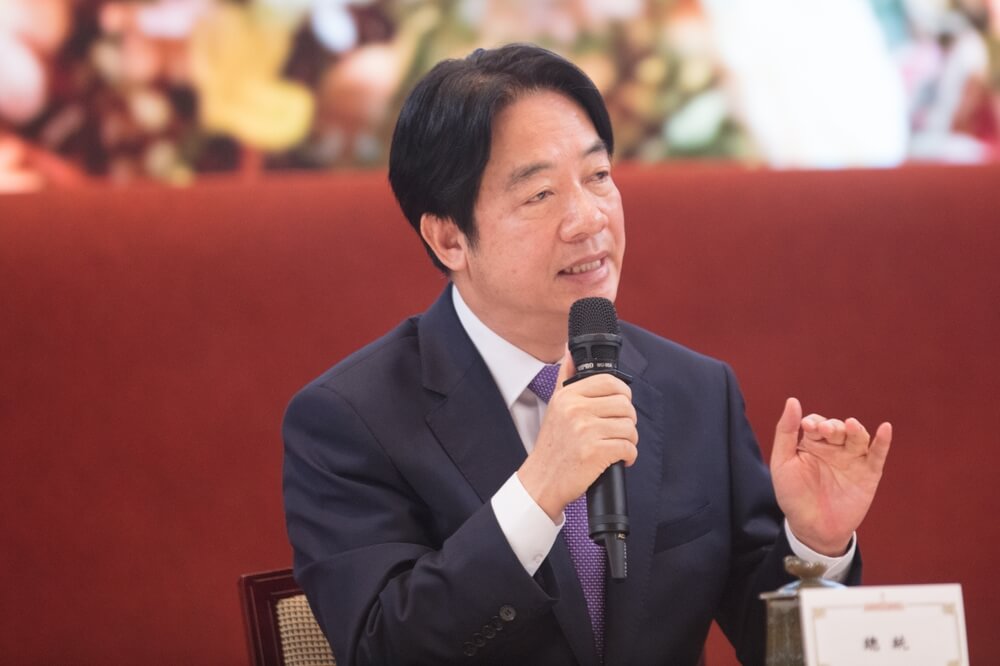 Taiwan remains important, but its role is changing – less as a symbol, more as a factor in the broader balance of power between Washington and Beijing - Lai Ching-te
The American side will insist on concessions in trade and technology. China will attempt to offer a reduction in military pressure without abandoning its long-term objectives.
For Taiwan, this means it can no longer rely on the swift and automatic involvement of the US in the event of a crisis.
Consequently, it is pressured to increase its own military readiness, extend the period it can defend itself without external assistance, and reduce the vulnerability of key industries.
It is particularly important that the production of the most sensitive chips is no longer concentrated exclusively on the island, as any interruption would have immediate global consequences and make Taiwan a more vulnerable target.
Taiwan remains important, but its role is changing – less as a symbol, more as a factor in the broader balance of power between Washington and Beijing.
This approach does not eliminate the risk of conflict but relegates it to the background, at a cost that is clearly visible.
Uncertainty becomes a permanent condition, both for Taiwan and for allies who have become accustomed to clearer lines in American policy.
