The Kremlin’s chief propagandist, Vladimir Solovyov, has publicly stated that Russia may expand the so-called “special military operation” to countries in Central Asia.
Speaking on his television programme, the Russian host emphasised that the potential loss of Armenia could pose a serious strategic problem for Moscow and called for considering a force-based scenario as a means of protecting Russia’s interests in the region.
According to Solovyov, in the name of Russia’s national security, international law and the existing world order may be disregarded.
In his view, Armenia and the countries of Central Asia should remain priorities for the Russian Federation, rather than involvement in conflicts in Syria or Venezuela.
Thus, one of the Kremlin’s main mouthpieces has once again publicly articulated narratives that have long circulated within Vladimir Putin’s inner circle.
The restoration of the USSR—or, more broadly, a Russian empire—remains a strategic objective of the current Russian leadership. Under previous U.S. administrations, the implementation of this project was significantly constrained.
While Washington did not place excessive focus on the post-Soviet space, it clearly understood the need to play a leading role in monitoring the security situation across newly independent states, most of which possessed their own historical traditions of statehood.
The U.S. strategy was aimed at preventing Moscow from realising its aggressive ambitions. The Baltic states—Lithuania, Latvia, and Estonia—were admitted to NATO.
Ukraine, Moldova, and Georgia received consistent support in pursuing European integration and closer ties with the European Union.
For Kazakhstan, Uzbekistan, Kyrgyzstan, Tajikistan, and Turkmenistan, a special cooperation format, “United States–Central Asia,” was established. Washington also devoted particular attention to resolving the Armenian-Azerbaijani conflict.
President Donald Trump even finalised peace arrangements between Baku and Yerevan. Belarus effectively remained the only country fully under Moscow’s control.
Ukraine as a first step
Within this configuration, the Kremlin considered it essential, as a first step towards restoring dominance over the post-Soviet space, to seize Ukraine—the largest former Soviet republic after Russia itself.
The calculation relied on the element of surprise, which Moscow understood could work only once.
For this reason, Russia made extensive efforts to conceal its aggressive intentions, despite repeated warnings from U.S. intelligence.
Even just days before the full-scale invasion, Russian officials publicly denied any plans to attack Ukraine.
However, once military, financial, and information preparations were complete, the Kremlin abruptly changed its rhetoric, declaring the invasion “inevitable” and justifying it with fabricated threats allegedly posed by Ukraine.
Moscow managed to persuade Washington of the expediency of dividing global spheres of influence
These calculations ultimately failed. Ukraine has now been mounting effective military resistance for four years, effectively freezing Moscow’s plan to revive a Soviet-style imperial project.
However, with the arrival of a new U.S. administration, the geopolitical environment, in the Kremlin’s assessment, has changed fundamentally.
Moscow managed to persuade Washington of the expediency of dividing global spheres of influence.
According to expert assessments, such understandings were reached during the meeting between the U.S. and Russian presidents in Alaska.
For public cover, Donald Trump stated that no concrete outcomes had been achieved, citing organisational reasons for the Russian delegation’s early departure.
Russia’s sphere of influence
Subsequently, Vladimir Putin himself repeatedly stressed the need for the United States to adhere to the agreements reached in Alaska.
The outlines of these arrangements are already visible in the new U.S. National Security Strategy.
The Western Hemisphere remains under full U.S. control, while Moscow effectively withdraws active support for Venezuela and Cuba and refrains from condemning the seizure of Greenland in exchange for minimal U.S. involvement in Ukraine and European affairs.
Post-Soviet space is de facto recognised as Russia’s sphere of influence, while U.S. troops are expected to withdraw from Europe within a year, significantly diminishing NATO’s role.
More than two thousand Russian troops stationed in Venezuela offered no resistance during the U.S. military operation
Events in Venezuela became a revealing test case. More than two thousand Russian troops stationed there offered no resistance during the U.S. military operation.
Russia’s air defence systems and aviation assets remained inactive. Only Cuban forces resisted, and they were quickly eliminated.
Moscow’s official reaction was notably restrained, confirming the new logic governing relations between the two powers.
At the same time, Russia continues massive strikes against Ukraine’s critical infrastructure, destroying much of the country’s power generation capacity and leaving millions of civilians without electricity and heating.
Moscow has even employed the strategic ballistic missile “Oreshnik,” while Washington’s response has remained largely muted.
Moscow tests the resilience of Central Asian countries
Under these new conditions, the Kremlin is shifting from the use of “soft power” to open coercion and blackmail towards former satellites.
Diplomatic engagement is increasingly replaced by military rhetoric and direct threats, including against Uzbekistan and Armenia—countries that are still formally considered Russia’s partners.
This indicates that Moscow has lost its traditional instruments of influence, both economic and cultural.
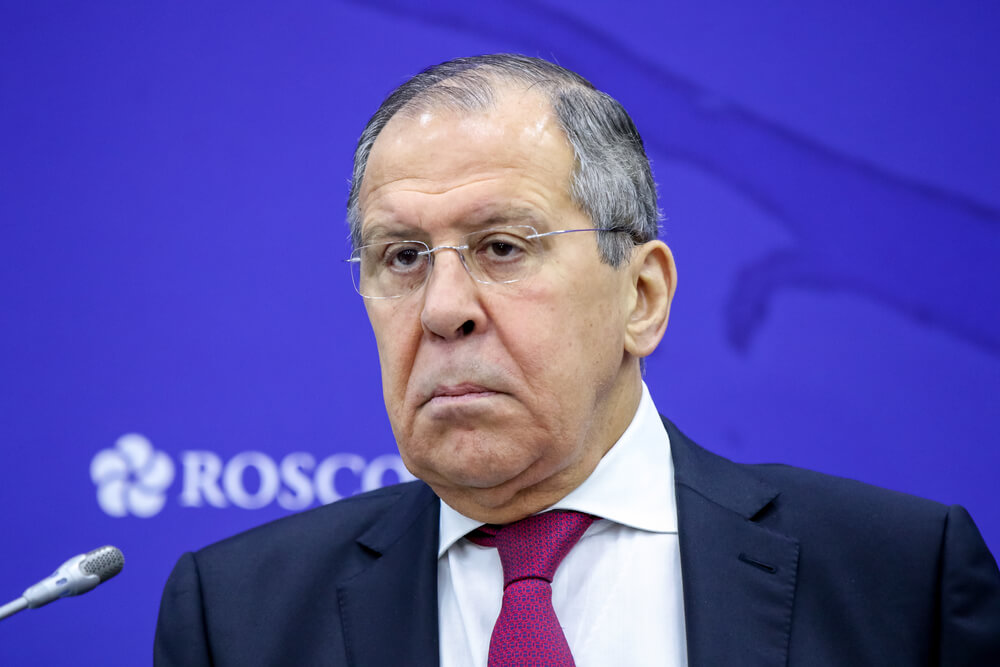 Attempts by the Russian Foreign Ministry to distance itself from Solovyov’s statements have appeared unconvincing - Sergey Lavrov
Russia is no longer perceived as a security guarantor within the framework of the Collective Security Treaty Organization (CSTO), and the open designation of Central Asian states as potential military targets by Russian state propaganda completely undermines trust in the Kremlin.
As a result, countries in the region are increasingly seeking protection from alternative power centres, primarily China and Turkey.
Attempts by the Russian Foreign Ministry to distance itself from Solovyov’s statements have appeared unconvincing.
This is one of the rare instances in which Moscow has felt compelled to publicly contradict its chief propagandist, underscoring an internal communications crisis.
It is likely that the Kremlin has decided, for the time being, to postpone direct pressure on the Baltic states, given the presence of U.S. troops in Europe in 2026.
At the same time, Moscow may attempt to “test the resilience” of Armenia or a Central Asian country while simultaneously intensifying military pressure on Ukraine and accusing Kyiv of unwillingness to pursue peace.
Unlike Russia, Ukraine continues active work on finalising a comprehensive package of peace documents.
Nevertheless, statements from the White House suggesting that Ukraine is less interested in peace than Russia have not been officially retracted.
There remains hope that the United States will objectively assess Ukraine’s peace efforts.
Should the Kremlin continue to sabotage the peace process, the imposition of severe sanctions against Russia is expected. However, the question remains whether Washington is prepared to take such a step.
Against this backdrop, at the opening of the Davos summit, Russia once again launched a massive missile strike against Ukraine.
While Denmark will not be represented at the summit, Russia will be present.
Meanwhile, in four-million-strong Kyiv, amid temperatures of minus 15 degrees Celsius, residents are once again left without water, electricity, and heating.
Oleksandr Levchenko, a former Ukrainian diplomat, is a professor at the State University (Kyiv) and a member of the Academy of Geopolitics and Geostrategy (Kyiv).
