This week, Washington sent a strong and unambiguous signal to its European NATO allies.
The Pentagon informed diplomats in the US capital that Europe must assume responsibility for most of the Alliance's conventional defence capabilities by 2027.
This includes everything except nuclear weapons: from intelligence systems and satellite reconnaissance, through missile defence and aviation, to ground forces and logistics.
If Europe does not meet this deadline, the United States may withdraw from some key defence coordination mechanisms within NATO.
The message was delivered at a closed-door meeting this week, and several sources familiar with the discussion, including a US official, confirmed it to Reuters.
The Pentagon has expressed dissatisfaction with the pace at which Europe has been strengthening its forces since the Russian invasion of Ukraine in 2022.
US officials note that Washington wants to free up resources for the Indo-Pacific, where it perceives China as the main threat.
The 2027 deadline appears extremely ambitious, especially as the European Union's own plan foresees the continent being capable of independent defence by 2030.
Burden of defence gradually shifting to Europe
Many European diplomats consider the request unrealistic. It is not enough simply to increase defence budgets; time is needed to build infrastructure, train personnel, and overcome production delays affecting the entire industry.
For example, orders for tanks, artillery, and missiles often take years to fulfil, even when placed with American or European manufacturers.
The Pentagon has not specified how it will measure Europe's progress
The Pentagon has not specified how it will measure Europe's progress or what proportion of capability should come under European control.
It is even less clear whether this ultimatum represents the official position of the entire administration of President Donald Trump or only the view of part of the military leadership, as there are deep divisions in Washington over the future US role in Europe.
A NATO official confirmed that European allies are already taking greater responsibility for the continent's security and that the need for increased investment has been acknowledged.
However, he avoided making a direct comment on the 2027 deadline, emphasising only that the burden of conventional defence is gradually shifting from the US to Europe.
Trump’s unilateralism—or something more complex?
This development is unsurprising when viewed in a broader context. During the 2024 election campaign, Trump repeatedly criticised European allies for not spending enough on defence and even threatened not to defend countries that do not pay their share.
Now that he is back in the White House, the policy of fairer burden sharing is taking concrete shape and a deadline.
What is new, however, is the speed and the threat of partial withdrawal from coordination mechanisms.
Until now, the Americans have generally insisted on a target of at least two per cent of GDP for defence, which most allies have met or have nearly met.
Now, a much deeper change is being proposed: Europe should become the dominant force in the conventional defence of its continent.
Most of the media see this as another example of Trump's unilateralism, which weakens NATO and pleases Moscow.
The United States has no plans to leave the Alliance or withdraw all troops from Europe
However, the reality is more complex and less dramatic than it appears at first glance.
First, the United States has no plans to leave the Alliance or withdraw all troops from Europe.
The nuclear umbrella remains American, as do most strategic capabilities that Europe simply cannot quickly replicate.
Second, Washington is not asking Europe to become fully independent; it only wants Europe to take over most of the responsibilities concerning conventional forces.
This is a logical step, considering that the USA has financed about seventy per cent of total NATO capabilities for decades.
Why 2027?
The key question is not whether Europe should do more, but why specifically by 2027.
That date is not accidental. China has publicly announced that it will have an army ready for a potential invasion of Taiwan by 2027.
American strategists want to free up as many resources as possible for the Pacific, which means Europe must bear the burden of dealing with Russia alone.
If Moscow sees that NATO remains strong without full US conventional engagement, deterrence is actually strengthened.
Paradoxically, this kind of pressure may make the Alliance more resilient than it has been in recent decades, when Europe was too comfortable under the American shield.
The Europeans have already responded by increasing their budgets. After 2022, many countries exceeded the goal of two per cent of GDP, and at this year's NATO summit, a gradual increase to five per cent by 2035 was agreed.
The European Union has launched an ambitious rearmament plan worth around eight hundred billion euros.
If Europe fails to meet expectations by 2027, the consequences will not be the collapse of NATO, as some fear
But money alone does not build capability overnight. It takes years to build factories, train soldiers, and establish joint commands that are not dependent on American satellites or logistics centres.
If Europe fails to meet expectations by 2027, the consequences will not be the collapse of NATO, as some fear.
It is more likely that the United States will simply reduce its presence in certain areas, such as intelligence sharing or joint defence planning in the Baltics and Eastern Europe.
This would force Europeans to accelerate their own initiatives, such as developing a European air defence system or establishing a joint rapid response command.
In the long term, the continent could emerge stronger and more cohesive, less dependent on the will of a single administration across the Atlantic.
A wake-up call or an excuse for further hesitation?
However, there is a significant risk. If the pressure is too intense and too rapid, it could cause internal divisions within Europe.
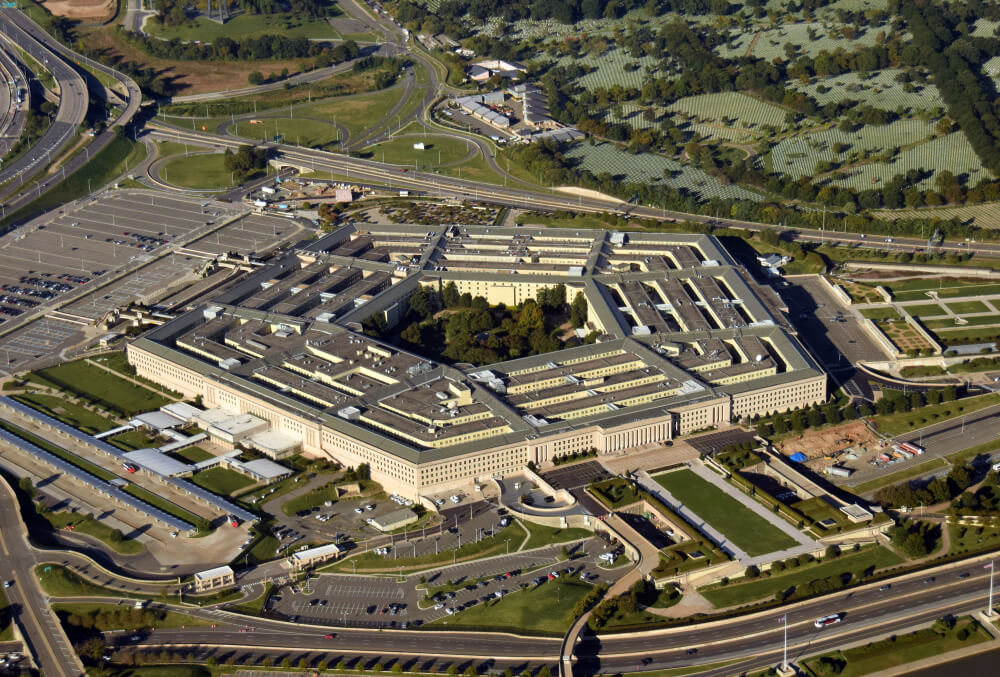 The message from the Pentagon represents a fundamental change in the transatlantic relationship that has lasted for seven decades
Countries like Poland and the Baltic states already spend more than three per cent of GDP on defence and are prepared for faster progress.
France and Germany, however, hesitate due to economic costs and domestic politics.
Without a clear consensus, an ultimatum from Washington may have the opposite effect: instead of acceleration, it could cause paralysis.
Essentially, this message from the Pentagon is not just about money or weapons. It represents a fundamental change in the transatlantic relationship that has lasted for seven decades.
The United States no longer wants to be Europe's policeman; it wants to be a global player with a focus on Asia. Europe has two years to demonstrate that it can stand on its own.
If it succeeds, NATO will become a more mature alliance of equal partners. If it fails, the Alliance will enter a period of uncertainty that could alter the continent's security landscape more than any Russian tank.
The deadline is set. It is now up to Europeans to decide whether to treat it as a wake-up call or as an excuse for further hesitation.
