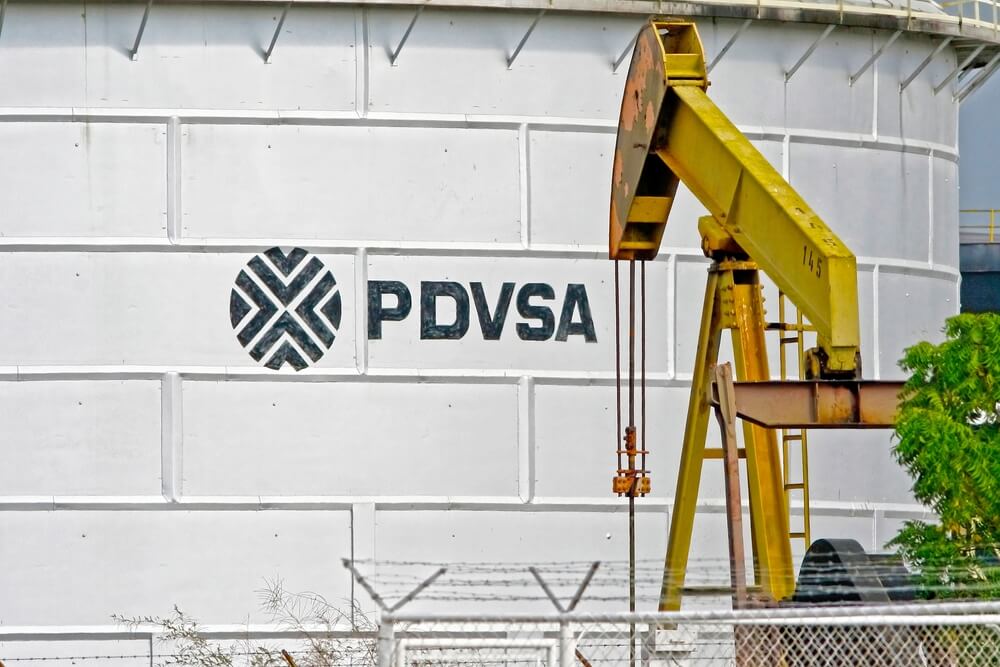
As the World Economic Forum convenes in Davos under the banner “A Spirit of Dialogue,” the United States has seized control of Venezuela’s oil infrastructure, installing what President Donald Trump calls an “indefinite” American administration of the country's petroleum reserves, while blackmailing European countries over his demand for Greenland.
The disconnect between the WEF’s call for dialogue and America’s unilateral aggression – between the denizens of Davos and today’s emerging global disorder – is jarring, to say the least.
US intervention in Latin America may be taking new forms, but the seizure of oil infrastructure echoes past resource grabs.
While Davos attendees parse the nuances of stakeholder capitalism, the old rules of power politics and resource extraction are being unleashed anew.
In 2019, the Dutch historian Rutger Bregman cut through the Davos spectacle with surgical precision: “Taxes, taxes, taxes. All the rest is bullshit.”
With those eight words, he exposed the gap between rhetoric and reality, between the language of shared prosperity and the practice of wealth concentration.
Of course, companies should pay their fair tax bill. But beyond this, we also need to look at how value is created in the first place – not just redistribution but also predistribution.
The latter is about restructuring how value is created and shared from the outset, not merely redistributing crumbs after value is extracted, and requires forging new social contracts with concrete conditions and accountability.
That is why modern industrial strategy should be organized around missions: specific, measurable goals that address societal challenges while catalyzing innovation and investment across sectors.
Growth is not a mission
Growth is not a mission; it is an outcome of investing in solutions to real problems.
A mission to decarbonize the economy, for example, would transform energy, transport, food, and digital technology simultaneously.
A mission to achieve “health for all” could advance public-health outcomes through innovation in areas including the life sciences.
It is not about favoring a particular sector but about asking what a sector’s role is in accomplishing a mission.
This requires leadership, confidence, and attention to detail. Collaborative innovation initiatives must be structured to prevent publicly funded research from being privatized through patents that are too broad and difficult to license, and to prohibit excessive pricing that ignores where the value came from.
The UK offers a masterclass in how not to structure public-private partnerships, and the “unreservedly pro-business” Labour government risks repeating expensive mistake
The United Kingdom offers a masterclass in how not to structure public-private partnerships, and the “unreservedly pro-business” Labour government risks repeating expensive mistakes.
Consider the US data and analytics company Palantir’s expanding grip on UK public services.
During the pandemic, the company offered its services to the National Health Service free of charge – a gesture its UK chief later compared to a magazine’s trial subscription.
Today, Palantir holds contracts worth over £330 million ($443 million) with the NHS, plus a new £240 million defense contract awarded without competition.
The Swiss army rejected Palantir following a seven-year courtship, as experts warned that its US ownership created intelligence access risks and that dependence on Palantir specialists could “limit the army’s ability to act in crisis situations.”
Yet the UK’s new contract with Palantir represents a tripling of spending on the firm since 2022, with the defense ministry admitting that changing suppliers would require rebuilding the entire data architecture at “significant cost.”
Preventing vendor lock-in and the likelihood of spiraling costs to the public requires contracts that embed conditions on developing state capability.
Thames Water, where the Australian asset manager Macquarie loaded the utility with £2 billion in debt while extracting profits, offers another sorry example.
With major UK infrastructure funding coming from firms like Blackstone and Macquarie, a clear pattern emerges: socialized risks, privatized rewards, and essential services compromised by financial engineering.
Last week’s Clean Industry Bonus for offshore wind – requiring investment in British supply chains – suggests that the government is learning some lessons, though time will tell whether such conditions are strong enough to prevent parasitism.
Effective public-private partnerships
Effective public-private partnerships include conditionalities that ensure public support generates public value.
The US CHIPS and Science Act made funding for firms conditional on their limiting stock buybacks, investing in workforce development, and providing childcare.
Germany’s public bank KfW ties low-interest loans to decarbonization targets. Chile’s lithium strategy ensures mining companies invest in domestic value-added activities and meet sustainability standards, with the state securing a significant share of profits.
These are not anti-business measures; they are pro-reciprocity frameworks that align private incentives with public goals.
When the UK provided £65.5 million to support the Oxford/AstraZeneca vaccine, it required the company to operate on a not-for-profit basis during the pandemic.
This is what genuine partnership looks like: shared risks, shared rewards, and shared purpose
This is what genuine partnership looks like: shared risks, shared rewards, and shared purpose.
So, implementation matters as much as design. Building state capacity means resisting the temptation to outsource core functions to consultants.
It requires cross-ministerial coordination, meaningful partnerships with labor and business, and investment in civil-service capabilities to design, implement, and adapt tools, from procurement to digital public infrastructure.
Sweden’s innovation agency Vinnova demonstrates this approach, using the procurement of “healthy, sustainable, tasty, and accessible” school meals as a lever to transform the entire food system.
To achieve this goal, Vinnova brings together government agencies, municipalities, and private actors in different sectors around the shared objectives of health, sustainability, and local development.
New frameworks for global governance
This week, Davos will feature the usual pledges about stakeholder capitalism, purpose-driven business, and sustainable development.
But without concrete mechanisms – binding conditionalities, accountability frameworks, and equitable risk-sharing that distinguish genuine value creators from rent extractors – it remains theater.
As another chapter in the long history of resource extraction unfolds in Latin America – Davos attendees should ask themselves: are we building genuine partnerships or sophisticated extraction mechanisms?
 Davos attendees should ask themselves: are we building genuine partnerships or sophisticated extraction mechanisms?
The answer seems clear as tech titans line up to pledge fealty to Trump, with Meta’s Mark Zuckerberg ending fact-checking and Amazon’s Jeff Bezos killing the Washington Post’s editorial independence, genuflecting to power in exchange for free rein in using their platforms to extract value through algorithmic rents.
Meanwhile, oil executives openly discuss carving up Venezuela’s reserves, with Trump promising them “total safety, total security” to extract wealth from a country in chaos.
Because traditional multilateral institutions appear ineffective, we need coalitions of the willing to forge new frameworks for global governance.
Countries serious about sustainable development must work together to embed mechanisms for consensus-building and develop the state capacity needed to deliver green growth.
This means moving from voluntary pledges to binding agreements on technology transfers, green finance, and shared innovation frameworks – the building blocks of a new economic order that serves people and planet.
The spirit of dialogue is meaningless unless it is accompanied by fundamentally new ways to create value.
True reciprocity requires new contracts that reflect a more symbiotic public-private relationship, with conditions that have teeth and share both risks and rewards.
Otherwise, we will end up repeating the mistakes of the past. As Giuseppe Tomasi Di Lampedusa famously put it: “Everything must change so that everything can stay the same.”
Mariana Mazzucato, Professor in the Economics of Innovation and Public Value at University College London, is Founding Director of the UCL Institute for Innovation and Public Purpose, Co-Chair of the Global Commission on the Economics of Water, and Co-Chair of the Group of Experts to the G20 Taskforce for a Global Mobilization Against Climate Change. She was Chair of the World Health Organization’s Council on the Economics of Health For All.
