The new Hungarian government, led by Péter Magyar, has had 100 days to expose some of the most serious drains on public funds during Viktor Orbán's 16-year rule.
The former Hungarian Prime Minister, in addition to being the most vocal sceptic in the EU and NATO and maintaining close ties with the Kremlin, built a system that diverted hundreds of millions of dollars of public money into his own coffers and those of his political and business allies.
These abuses also affected the Paks nuclear power plant, which supplies almost half of Hungary's electricity and is now facing serious difficulties due to the low water level of the Danube.
The long-standing practice of extracting profits from the Paks Nuclear Power Plant in the form of dividends during Viktor Orbán’s extended tenure as prime minister has raised questions about its financial resilience and created additional risks for Hungary’s energy security.
According to media reports, between 2010 and 2025 the plant generated approximately HUF 197 billion (USD 627 million) in net profit, most of which the Viktor Orbán government, through the state-owned energy company MVM, redirected to government-designated priorities.
The situation was further complicated by the government’s introduction of an administrative utility price-control programme, which significantly reduced the plant’s revenues.
In 2023, its profit amounted to only around HUF 120 million (USD 382,000), while in 2024 it rose to approximately HUF 11.2 billion (USD 36.6 million), before falling to just over HUF 3 billion (USD 9.5 million) in 2025.
András Perger of Energiaklub stresses that the plant has effectively been left without sufficient financial reserves for development.
In his view, a private operator would be unlikely to agree to run a nuclear power plant with such a low level of profitability.
The lack of accumulated funds limits the capacity to finance necessary investments, including the construction of an additional pumping station for the cooling system.
This is particularly significant in the context of the Danube’s current critical decline in water levels.
Thus, the systematic extraction of profits from the Paks Nuclear Power Plant demonstrated the prioritising of short-term fiscal and political interests over the long-term planning of strategic energy infrastructure.
Insufficient funding for modernisation and the lack of adequate reserves have weakened the state’s ability to respond promptly to emerging infrastructure challenges.
The Szijjártó case
Against this backdrop, particular attention is being drawn to criminal proceedings involving Viktor Orbán’s close ally and former Hungarian Foreign Minister Péter Szijjártó, in connection with the alleged receipt of a particularly large bribe.
The investigation has been transferred to the Budapest Police Headquarters. Following the loss of his parliamentary mandate, Szijjártó no longer enjoys parliamentary immunity.
Any final conclusion regarding Szijjártó’s guilt can only be reached on the basis of an independent investigation and judicial proceedings
According to media reports, the scandal was triggered by recordings of his telephone conversations with Russian Foreign Minister Sergei Lavrov, during which, it is alleged, classified information concerning internal EU discussions and the possibility of facilitating the easing of European sanctions against Russia was discussed.
If the allegations are proven in court, the case could become an important test for Hungary’s new authorities and their willingness to ensure the personal accountability of former senior officials.
At the same time, any final conclusion regarding Szijjártó’s guilt can only be reached on the basis of an independent investigation and judicial proceedings.
Triton Communications
Another telling example of potentially inefficient use of public resources is the activity of Triton Communications, a company linked to Orbán adviser Fanni Kaminski.
According to Hungarian media reports, over a period of 44 months the company received approximately HUF 4.228 billion from the state budget – more than €10.5 million – for photography, video production, and media monitoring. The company, however, employed only five people.
Individual work performance reports are particularly revealing. For example, in one month, for more than HUF 63 million (USD 200,000), the company produced approximately 21 minutes of video material and published 411 photographs.
This case requires not political assessments, but an independent audit of the contracts
Media-industry representatives interviewed by journalists considered these costs significantly inflated, noting that a comparable volume of services could have been provided several times more cheaply.
This case requires not political assessments, but an independent audit of the contracts, an analysis of the market value of the services, and an examination of any potential conflicts of interest.
If inflated pricing is confirmed, it would provide further evidence of the misuse of state resources for the benefit of politically connected entities.
Public procurement and the influence of oligarchic groups
The problem is not limited to the former prime minister’s immediate circle. Business groups associated with the Orbán era continue to be awarded government contracts.
One particularly controversial case involved the procurement of rail welding services for the railway operators GYSEV and MÁV.
The contract was awarded to V-Híd Zrt., a company linked to the Hungarian businessman Lőrinc Mészáros. A notable feature of the procedure was that the company was the only bidder.
Minister for Transport and Investment Dávid Vitézy stated that an analysis had found no violations, as the procurement procedure had been lawfully initiated before the current government was established.
According to him, the state could not reject the sole bid purely for political reasons.
The long-term displacement of alternative contractors from the market creates a risk that the state may become dependent on a small number of companies
At the same time, the government has begun rebuilding its own technical and maintenance capacity in order to reduce dependence on private monopolies.
The mere absence of competition is not, in itself, automatic evidence of corruption.
However, the long-term displacement of alternative contractors from the market creates a risk that the state may become dependent on a small number of companies.
The situation is particularly concerning when strategic infrastructure contracts are effectively concentrated in the hands of a single supplier.
Additional questions have been raised by the exclusion of an independent laboratory at the Budapest University of Technology from the acceptance and assessment of the completed work.
Given the high concentration of contractors, independent technical oversight is particularly important to ensure the quality and safety of railway infrastructure.
Large-scale embezzlement
Viktor Orbán’s inner circle accumulated 3 trillion forints (USD 9.5 billion), which, according to Hungarian media reports, were transferred through a system of public-interest asset management foundations that formally carry out public functions.
During the years of Fidesz rule, substantial amounts of state assets and financial resources were transferred to companies and structures linked to the ruling political elite.
According to the Hungarian State Audit Office, state assets worth at least 3 trillion forints were transferred to such foundations.
Journalistic investigations have revealed specific examples of how this system was used to benefit structures close to those in power.
For example, the Kék Bolygó Foundation, established by former Hungarian President János Áder, awarded substantial contracts to companies linked to the NER – the system of political and economic relationships that developed around Fidesz.
These included organisers of the Planet Budapest event, communications and IT suppliers, as well as entities linked to Viktor Orbán’s son-in-law, István Tiborcz.
The Hauszmann Alajos Foundation, in turn, paid substantial remuneration to members of its board of trustees and entered into contracts with legal and consulting firms that had previously provided services to state institutions.
Fidesz spent years actively promoting a narrative of its own efficiency, professionalism, and exceptional competence in governing the country
The Batthyány Lajos Foundation financed pro-government institutions and cultural projects while awarding contracts to companies linked to Fidesz.
Another foundation, established to preserve Central European architectural heritage, received multibillion-forint injections of state funding and paid substantial fees to its management.
During his years in power, Viktor Orbán built an extensive political and economic system which, according to government critics and numerous journalistic investigations, created favourable conditions for the enrichment of businessmen and NER officials close to Fidesz.
Among the principal beneficiaries of this system are oligarchs from the prime minister’s inner circle, including his son-in-law, István Tiborcz.
At the same time, Fidesz spent years actively promoting a narrative of its own efficiency, professionalism, and exceptional competence in governing the country.
However, recent investigations and revelations have called this image into question, pointing to a large-scale redistribution of state assets and financial flows in favour of a narrow circle of individuals connected to the country’s political leadership.
To preserve this system, the Orbán government also systematically weakened the positions of independent media and opposition forces, limiting their ability to scrutinise government activities and inform the public about possible abuses of state resources.
Challenges for the new government
The consequences of the political and economic model established during the Orbán era extend far beyond individual cases of alleged corruption.
They concern a systemic problem in the interaction between the state, business, and political power, whereby strategic assets, public procurement, and budgetary resources can be used to the advantage of a narrow circle of politically connected structures.
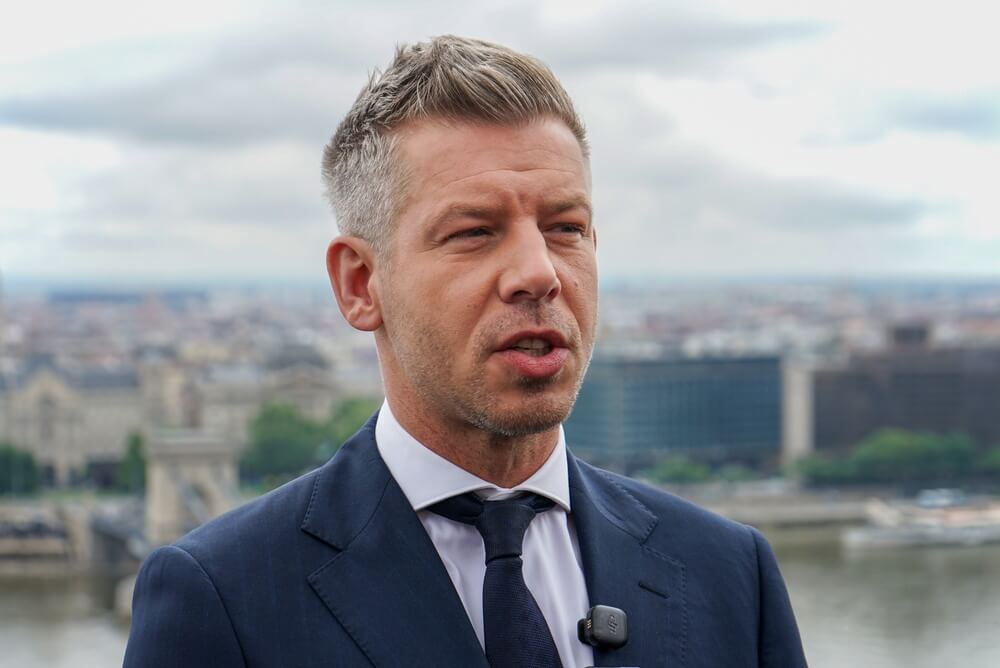 For Péter Magyar’s new government, the key challenge will not only be to investigate individual cases of possible wrongdoing but also to dismantle the mechanisms that created the conditions for such abuses
For Péter Magyar’s new government, the key challenge will not only be to investigate individual cases of possible wrongdoing but also to dismantle the mechanisms that created the conditions for such abuses.
This would require an independent audit of major government contracts, more robust competitive procurement procedures, the restoration of independent oversight of strategic infrastructure, guaranteed access for independent media, and transparent investigations into potential conflicts of interest.
At the same time, a fundamental condition for such a process is the rejection of political revenge.
Criminal liability should arise only where violations have been proven, regardless of the political affiliation of those under investigation.
Ultimately, the ability of the new authorities to draw a clear line between political change and institutional reform will determine whether Hungary can restore the trust of its citizens and its European partners.
Oleksandr Levchenko, a former Ukrainian diplomat, is a professor at the State University (Kyiv) and a member of the Academy of Geopolitics and Geostrategy (Kyiv).
