It’s come to this: last week, while Donald Trump held an event in the Oval Office, a significant slice of the internet speculated that a woman standing to his right was manipulating a hidden buzzer located near her stomach to keep him awake.
Preposterous? Pretty much. Pythonesque? Most assuredly. But questions about the American president’s health and his fitness for office are mounting – and critics say the lack of transparency coming from the White House is only adding fuel to a debate that is likely to hound Trump for the rest of his term.
The issue was brought to a head after the New York Times published a piece by Jonathan Reiner, a leading cardiologist who treated former Vice President Dick Cheney, that attempted to summarize the gamut of medical mysteries surrounding Trump. Reiner has been the most prominent physician to publicly question the White House’s stance on the president’s health.
“Despite reassurances from the White House to the contrary, at times over the past year, the president has not looked well,” Reiner wrote.
Reiner pointed to a May report from Trump’s doctor, Sean Barbabella, in which he said 22 consultants helped to evaluate the president’s condition, a number Reiner called “extraordinary.”
Trump has also undergone several imaging procedures for largely undisclosed reasons and – as Reiner noted – has revealed he has taken multiple cognitive tests.
After Trump was last examined, Barbabella said he remains in “excellent health” and the White House insists Trump is as sharp and energetic as he ever was.
Part meme, part conspiracy theory
At 80, Trump is on pace to become the oldest serving president in U.S. history. Reiner specifically cited the bruising on Trump’s hands (which the White House says is caused by aspirin and handshakes) and the documented swelling in his legs, which Reiner speculated could be the result of heart or kidney disease.
But what has attracted the most attention is Trump’s increasingly recurring habit of resting at events with his eyes closed. Is he dozing or deep in thought? The White House says the latter. (Trump has said he gets bored – and having attended some of those cabinet meetings, this writer can sympathize.)
Trump has long insisted that he doesn’t need much sleep
It happened last week at a vaccine event with health secretary Robert F. Kennedy Jr. in which Trump’s eyes fluttered and he appeared to be trying to rouse himself awake. To his side stood Jayme Franklin, the CEO of a conservative website, who repeatedly placed her hand on her stomach as the event proceeded.
Internet sleuths went to work, suggesting that Franklin was concealing a device that zapped Trump alert as needed – the same kind of gizmo that keeps a dog out of a neighbor’s yard.
It was part meme, part Bizarro World conspiracy theory but a sure sign that the subject of his health had penetrated the public’s consciousness. (Franklin later said she was touching her belly because she is pregnant.)
Trump has long insisted that he doesn’t need much sleep – and he’s still sending out social media posts in the dead of night as he did earlier this month when he accused leakers inside his administration of treason.
Concealed conditions and succession risks
Even so, you can’t blame the public for wanting answers after the condition of the preceding president, Joe Biden, was largely concealed during the last couple of years of his tenure in office.
Biden’s decline appeared to be precipitous because of careful management of his image by close aides to such a degree that when he was exposed during his 2024 debate with Trump, it came as a jaw-on-the-floor surprise.
The episode, however, laid bare an uncomfortable truth about how the U.S. media covers the chief executive. Questions about health and fitness have often been off-limits, particularly among the reporters who rely on access to the president to do their jobs.
Had Biden been elected to a second term, the country would be facing a succession crisis
It was clear to anyone who had followed his career that when Biden was running in 2020 at the age of 78, he wasn’t quite the same man he had been as vice president to Barack Obama – which wasn’t to say he couldn’t handle the presidency. But to raise those questions at all was considered ageist.
The lack of pressing inquiries during much of Biden’s term has allowed the Trump White House to argue that doing so now applies a double standard and dismiss the questions as politically motivated.
Biden’s son, Hunter, recently disclosed that the prostate cancer from which the former president is suffering has spread, meaning that had Biden been elected to a second term, the country would be facing a succession crisis.
When the presidency becomes a gerontocracy
Those are the risks that come when the presidency becomes a gerontocracy. In a way, the age of America’s last two leaders and the lengths to which aides have insisted that all is well echoes the Cold War days when the health of high Soviet officials was the subject of widespread speculation in the absence of facts.
But this is not a new phenomenon. As Reiner pointed out, President Franklin D. Roosevelt and his aides hid his use of a wheelchair from the public.
During the presidency of Ronald Reagan his cognitive decline became a source of internal concern
And during the presidency of Ronald Reagan, then the oldest man to ever reach the White House, his cognitive decline became a source of internal concern even as his sunny public image remained intact.
Other administrations have been more forthcoming. The George W. Bush White House was largely open about Cheney’s extensive heart issues. And it told the world in 2002 when Bush fainted after choking on a pretzel while watching TV – something that seems unimaginable for the two most recent administrations.
Aging only goes in one direction
Trump’s own penchant for unpredictable behavior only adds to the conundrum. The president has embraced the so-called “madman theory,” first espoused by Richard Nixon, that seeks to keep adversaries off-balance by suggesting he is capable of irrational acts.
So, when Trump earlier this year threatened to lay waste to Iran’s bridges and power plants (a potential war crime), it was nearly impossible to decode whether his conduct was strategic or erratic.
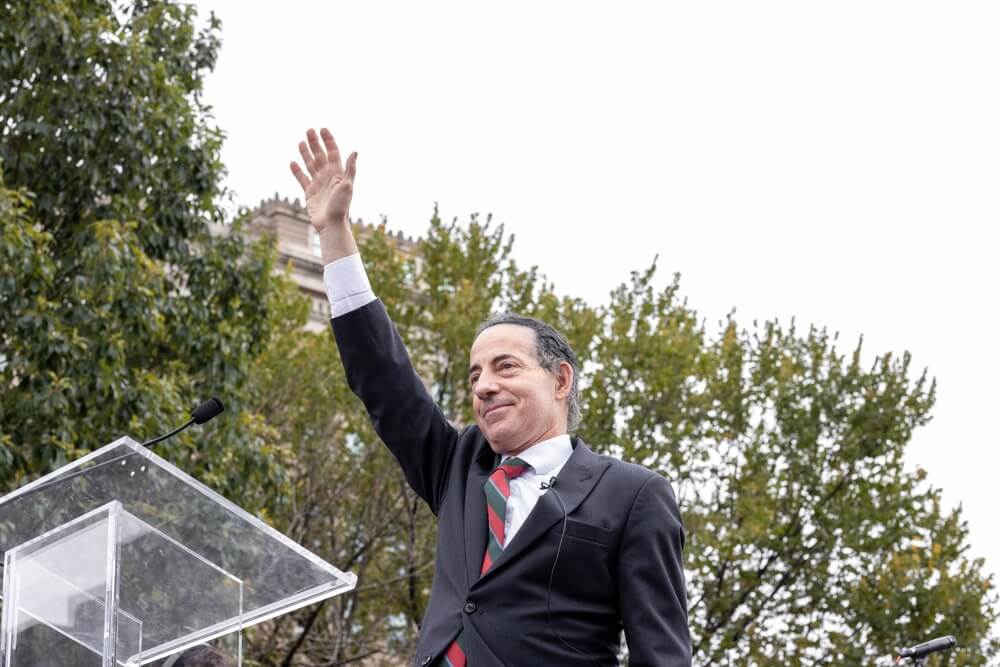 Public trust in Donald Trump’s ability to meet the duties of his office has dropped to unprecedented lows - Jamie Raskin
Reagan’s issues became so acute that in 1987 an aide drafted a memo that raised the possibility of removing him from office under the 25th Amendment to the U.S. Constitution. Reagan was diagnosed with Alzheimer’s in 1994.
The amendment allows the vice president and a majority of the Cabinet to declare the president incapacitated but provides no criteria for that assessment.
After Trump’s Iran threat, Democratic Representative Jamie Raskin, a frequent Trump critic, introduced legislation that would establish a 17-member bipartisan commission on presidential fitness and include physicians and psychiatrists.
The bill would institute a process consistent with the 25th Amendment for evaluating a president’s mental and physical condition.
“Public trust in Donald Trump’s ability to meet the duties of his office has dropped to unprecedented lows,” Raskin said at the time.
Raskin’s bill is likely to go nowhere. However, he’s in line to chair the House Judiciary Committee should Democrats take control of the House of Representatives after midterm elections in November, as appears likely.
That would give Raskin the power to hold hearings on Trump’s fitness, placing the matter front and center as the president seeks to finish his second term and his potential successor is nominated.
Even if that doesn’t happen, the issue isn’t likely to go away anytime soon – and could potentially mushroom into something even larger as Trump heads further into his eighties.
That’s the unfortunate thing about aging: it only goes in one direction.
