On 19 September, Michelle Bachelet withdrew her candidacy for Secretary-General of the United Nations, a day after she received only one ‘encourage’ vote, eleven ‘discourage’ votes and three ‘no opinion’ votes in the Security Council’s third informal vote.
Her withdrawal reduced the number of candidates from eight to seven, but did not bring the Council any closer to deciding on António Guterres’s successor.
After three rounds, none of the remaining candidates has a pattern of support suggesting that the Security Council is rallying around them, while the number of explicit opponents is increasing rapidly.
Rebeca Grynspan of Costa Rica returned to the top spot with nine ‘encourage’ votes, five ‘discourage’ votes, and one ‘no opinion’.
Carolyn Rodrigues-Birkett of Guyana received eight ‘encourage’ votes, six ‘discourage’ votes, and one ‘no opinion’. None of the other candidates received more than five ‘encourage’ votes.
At first glance, nine votes for Grynspan look like progress towards the required threshold. However, a comparison of the three rounds of voting shows a different dynamic.
The Council is clarifying its position, but for now this greater clarity is producing rejections rather than a majority behind any single candidate.
‘Discourage’ votes now dictate the course of the race
In the second straw poll, held on 21 August, all eight candidates together received 39 ‘encourage’ votes, 42 ‘discourage’ votes and 39 ‘no opinion’.
In the third round, the figures shifted to 36 ‘encourage’ votes, 62 ‘discourage’ votes and 22 ‘no opinion’.
The number of ‘discourage’ votes increased by twenty, while the number of ‘no opinion’ votes fell by seventeen.
These are not votes distributed between candidates as in elections, because each of the fifteen members of the Council evaluates each candidate separately, but the totals still show the direction in which assessments of the viability of the candidacies are changing.
The key question is not who is first on the list, but who can reduce opposition and broaden support enough to become acceptable to a majority of the Security Council
This trend can be seen in the two leading candidates. In the first round, on 30 July, Grynspan had ten ‘encourage’, one ‘discourage’, and four ‘no opinion’. In the second, this fell to seven ‘encourage’ and four ‘discourage’, and now it is back to nine ‘encourage’ with five ‘discourage’.
Rodrigues-Birkett started with nine ‘encourage’ votes and two ‘discourage’; in the second round she had eight and three, and in the third eight and six.
Both have retained the core backing that keeps them ahead of the rest, but neither has yet been able to expand support without simultaneously increasing opposition.
Bachelet’s withdrawal shows that candidates with weak support are beginning to drop out of the race, but so far there is no sign that their backing is shifting towards either of the leading contenders.
On the contrary, in the third round the number of ‘discourage’ votes increased, while no candidate managed to achieve a convincing breakthrough.
At present, therefore, the key question is not who is first on the list, but who can reduce opposition and broaden support enough to become acceptable to a majority of the Security Council.
Nine votes do not yet guarantee a path to office
Article 97 of the UN Charter stipulates that the Secretary-General is appointed by the General Assembly on the recommendation of the Security Council.
When the Council moves from informal votes to a formal decision, a candidate needs at least nine votes and no ‘discourage’ vote from any of the five permanent members.
The United States, China, Russia, France and the United Kingdom therefore wield an influence that the current sum of ‘encourage’ and ‘discourage’ votes does not yet reveal.
What is needed is a combination of sufficiently broad support and a very low level of unacceptability
In the first three rounds, all Council members use identical ballots, so it is not known whether the five ‘discourage’ votes for Grynspan or the six for Rodrigues-Birkett include a vote from a permanent member.
Only when the Council switches to colour-coded ballots, which distinguish the votes of the P5 from those of the ten elected members, will it be possible to determine whether the leading candidates face a problem that can be resolved through negotiations or an obstacle that could become a veto.
Grynspan’s nine votes therefore confirm that her candidacy is serious, but do not yet confirm that there are nine votes capable of turning into a formal recommendation.
This distinction is particularly important in the Secretary-General election, where a candidate does not win simply by securing the largest number of supporters while maintaining an acceptable number of opponents.
What is needed is a combination of sufficiently broad support and a very low level of unacceptability, especially among permanent members. In the current field, no candidate has yet demonstrated both qualities simultaneously.
In 2016, consensus was already evident
A comparison with the election of António Guterres ten years ago offers the best measure of the current uncertainty. In the first straw poll of 2016, Guterres received twelve ‘encourage’ votes and none ‘discourage’.
In the second, he had eleven ‘encourage’ votes, two ‘discourage’, and two ‘no opinion’, and in the third, eleven, three, and one respectively. Across all five straw polls, he never dropped below eleven ‘encourage’ votes.
When, in the sixth round, the distinction between the votes of permanent and non-permanent members was introduced, he finished with thirteen ‘encourage’ votes and not a single ‘discourage’, which practically confirmed that there was no obstacle among the P5.
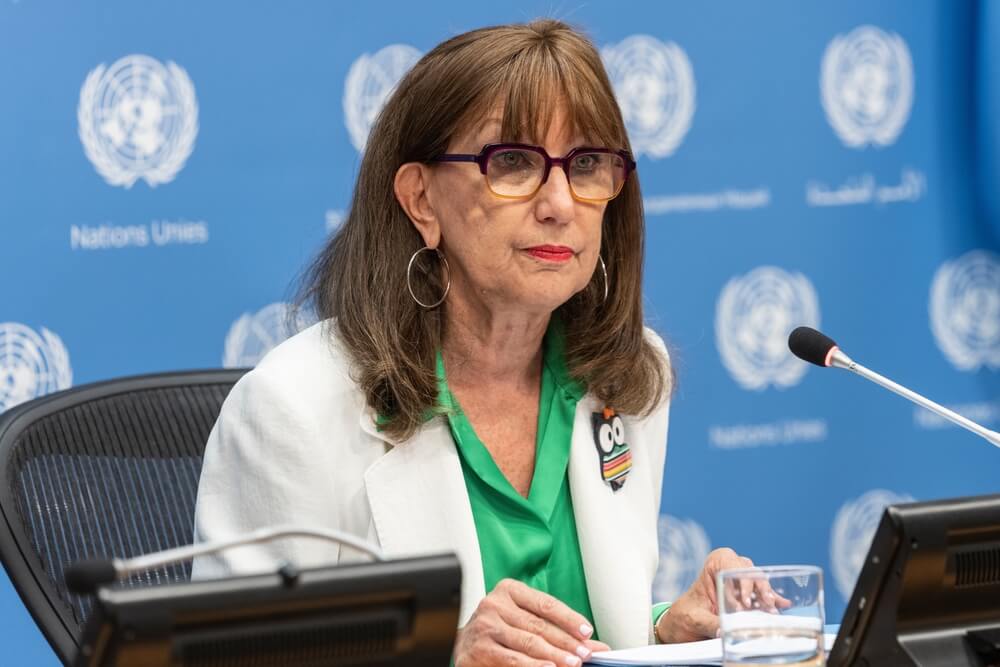 The best result so far is nine ‘encourage’ votes and five ‘discourage’ votes - Rebeca Grynspan
Today’s race, after three rounds, shows no such trajectory. The best result so far is nine ‘encourage’ votes and five ‘discourage’ votes, while opposition to the second-placed candidate doubled between the first and third rounds. That does not prove that Grynspan or Rodrigues-Birkett cannot secure the necessary agreement.
It does show, however, that the consensus visible in 2016 long before the final stage has not yet emerged.
The difference lies not only in the candidates. Today, the Security Council takes decisions in a much more difficult political environment, in which relations between permanent members are strained by the war in Ukraine, conflicts in the Middle East, sanctions, trade and technology disputes and differing ideas about what the UN should do.
Electing the Secretary-General does not require agreement among the P5 on those matters, but it does require agreement that none of them considers a particular candidate sufficiently objectionable to block their election.
In such an environment, the threshold of political acceptability becomes narrower precisely when the organisation would benefit from a broad and clear mandate for the new leadership.
A more transparent process has not changed where decisions are made
The 2026 election is more open to public scrutiny than previous elections for the Secretary-General.
Candidatures, biographies, programmes and financial disclosures are published, the General Assembly has organised interactive dialogues with candidates, and non-Council states have more opportunities to assess their views and influence the political atmosphere surrounding the process.
This openness is significant because it reduces the possibility of the entire selection being narrowed to a few names agreed behind closed doors.
However, greater transparency has not changed the fact that the key decision is still taken in the Security Council.
The candidate must be acceptable to a sufficiently wide circle of Council members and, at the same time, must not trigger a veto in any of the five capitals
The General Assembly can scrutinise candidates and increase the political cost of certain choices, but without the Council’s recommendation it cannot appoint the Secretary-General.
As the race approaches its final stage, the quality of public speaking, regional support and programme differences increasingly intersect with an issue that is far less visible and more institutionally crucial.
The candidate must be acceptable to a sufficiently wide circle of Council members and, at the same time, must not trigger a veto in any of the five capitals.
Because of this, the logic of the race can change. The current front-runner may not be the closest to appointment, while a late contender can quickly become relevant if the existing names fail to reduce the number of ‘discourage’ votes.
Such an entry would not be unusual in this procedure. In 2016, candidates also moved in and out during the process, but the late changes did not dislodge Guterres because his lead was already stable. That stabilising factor is now absent.
After the General Assembly the race can be reopened
The high-level week of the General Assembly in New York comes at a time when the formal ranking of candidates is not the most important outcome of the process so far.
Presidents, prime ministers, foreign ministers and permanent representatives will have several days of talks that could show whether it is possible to consolidate support around one of the current candidates.
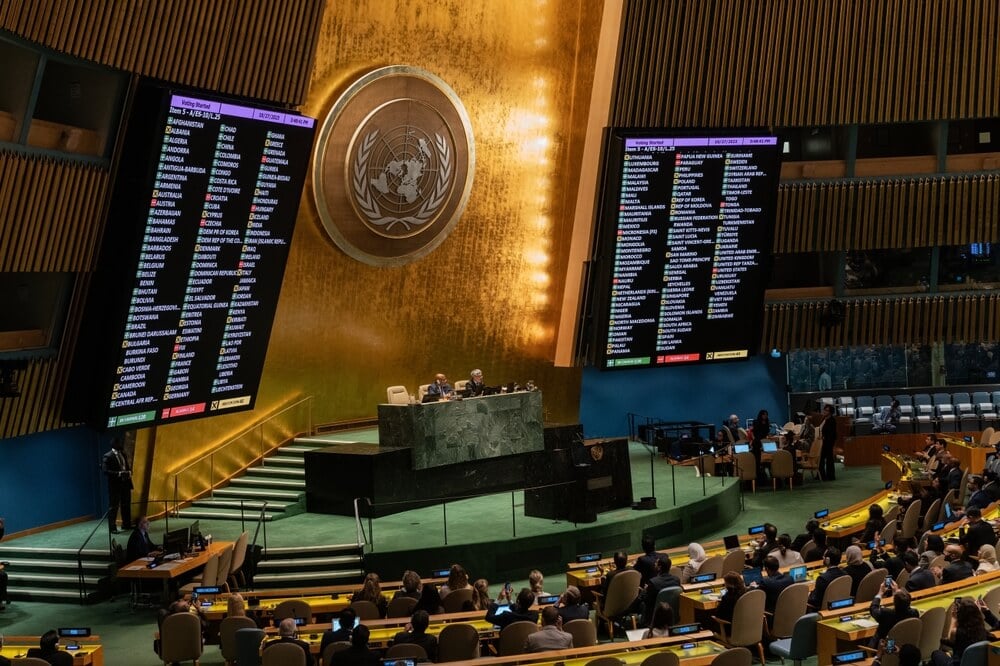 Presidents, prime ministers, foreign ministers and permanent representatives will have several days of talks that could show whether it is possible to consolidate support around one of the current candidates
Security Council Report expects that the fourth straw poll will follow shortly after the end of the high-level week on 28 September, so that vote will be the first real test of the effect of those consultations.
If Grynspan or Rodrigues-Birkett increase the number of ‘encourage’ votes while reducing the number of ‘discourage’ votes, the race will, for the first time, move towards a final agreement.
If, however, the current pattern – ‘no opinion’ votes disappearing as opposition mounts – is repeated, the Council will have less reason to believe that additional rounds will resolve the problem by themselves.
The withdrawal of some more poorly placed candidates will then become more likely, and pressure for the entry of a new name will be much stronger.
At this stage, the most reliable forecast is not who will succeed Guterres, as there is not yet enough data to reach such a conclusion. It is far more certain that the next round will determine whether the current race can produce a consensus candidate or will have to be reopened.
If, even after discussions during the General Assembly, none of the leading candidates succeeds in reducing the number of ‘discourage’ votes, there will be diminishing reason to expect that the current balance of power will produce an agreement.
The next turning point will be the colour-coded ballot, a vote in which the ballots of the permanent members of the Security Council are printed in a different colour from the others, revealing for the first time whether a possible P5 veto is hidden behind any ‘discourage’ vote.
If, even then, none of the leading candidates shows a clear path to the necessary support, space will open for the entry of a new candidate.
At that point the race will no longer be a question of who currently has the most votes, but of who can secure nine votes in the Security Council without being blocked by any of the five permanent members.
