Ethiopia’s Chief of General Staff, Birhanu Jula, said on 27 September that the army was responding with restraint to attacks from the northern Tigray region. At the same time, he accused neighbouring Eritrea of supporting armed opponents of the government in Addis Ababa with money and other assistance. Eritrea denies this.
The general’s comments follow several days of fighting in Tigray and neighbouring areas, the seizure of three regional airports and the disruption of telephone and internet connections, making it difficult to know what is happening outside the major cities.
The interruption of communications in Tigray reminded residents of the war from 2020 to 2022, when they were cut off from information and struggled to obtain money, medicine and food.
According to Reuters, as soon as new clashes began, people again rushed to banks and shops.
The Tigray People’s Liberation Front (TPLF) has been blamed by people familiar with the network for the latest disruption, while a source close to that organisation claims it was ordered by the federal government; neither allegation has yet been confirmed.
Western Tigray divides new allies
On 21 September, seven armed organisations announced an alliance against the government of Prime Minister Abiy Ahmed.
These include the Tigray People’s Liberation Front (TPLF), the Amhara Fano movement and the Oromo Liberation Army.
The joint announcement makes clear whom they intend to remove, but does not say whether they have established a unified command or how they would share power if they succeed.
The relationship between the TPLF and Fano illustrates how much the war has changed.
From 2020 to 2022, Fano supported the federal army against Tigray, and since 2023 it has been at war with that same army in Amhara
From 2020 to 2022, Fano supported the federal army against Tigray, and since 2023 it has been at war with that same army in Amhara.
Reuters, citing security sources, reported that members of the two movements are now fighting together in the area.
The federal forces are therefore simultaneously under pressure from groups that were on opposite sides in the previous war.
Their dispute over Western Tigray remains unresolved. Amhara forces occupied the area during the previous war; the TPLF wants it returned to Tigray’s administration and the displaced residents to return home, while Fano regards it as belonging to Amhara.
The allies can postpone the issue while they wage war against Abiy, but any serious agreement to end the fighting will have to determine who will govern the disputed area.
Who implements the Pretoria Agreement?
The Pretoria Agreement halted the 2022 war between the federal government and the TPLF.
It envisaged the disarmament of Tigrayan forces, the return of displaced people and the temporary administration of Tigray.
Ten days later, the military commanders agreed that foreign forces and other formations that are not part of the federal army should withdraw, and that Tigrayan fighters should hand over their heavy weapons. Fano and Eritrea did not sign the agreement.
It remains unclear who will provide security for returnees
In Western Tigray, it remains unclear who will provide security for returnees, lead the police and resolve disputes over houses and land.
In May, Tigray’s own government was contested. The TPLF leadership restored the regional institutions that had existed before the war and assumed political administration, which was opposed by the head of the transitional administration established after the agreement.
The TPLF accused the federal government of defaulting on its commitments and withholding money for salaries.
That dispute over the governance of Tigray was still ongoing when new fighting began in September.
A war on multiple fronts is exhausting for both sides
On 23 September, fighting spread to Amhara and Afar, regions bordering Tigray.
The African Union announced that Tigrayan forces had taken over airports in Mekelle, the capital of Tigray, as well as in Axum and Shire, cities in the north of the region; civilian flights were then suspended.
The TPLF claims it is defending itself against attacks by the federal army, while the army says it is responding to attacks and has inflicted heavy casualties on Tigrayan forces, which has not been independently confirmed.
The federal army has had to deploy forces in new positions while continuing its years-long fight against Fano in Amhara.
Aviation and drones give it an edge over larger rebel units, as seen in the previous war.
However, the Amhara rebellion so far shows the limits of that advantage: air strikes have not prevented Fano from continuing to fight across a wide area.
Since 2022, protests have been held in Tigray over harsh living conditions and unpaid compensation to ex-combatants
The TPLF faces internal problems with the people who are supposed to wage and support the war.
Since 2022, protests have been held in Tigray over harsh living conditions and unpaid compensation to ex-combatants, and some party and military leaders have broken with the leadership.
A family member of Tadesse Werede, who commanded the Tigray forces in the previous war, told Reuters that he and three other officers were taken into custody after they expressed concern about a new conflict.
Human rights organisations and residents report the forced recruitment of young men, which the TPLF denies.
Given these divisions, it will be more difficult for the leadership to mobilise the population as in 2020.
Tigray could drag Ethiopia and Eritrea into war
The Eritrean army fought the TPLF from 2020 to 2022, but relations between Asmara and Addis Ababa deteriorated after a peace agreement in which Eritrea did not participate.
The Ethiopian government now claims that Asmara is funding the TPLF and its allies.
Eritrea denies this, and there is no public confirmation that its regular units are involved in the renewed fighting.
If the Ethiopian army were to cross the border to cut off aid it claims is reaching the rebels, the fighting could escalate into a conflict between the two states
The two countries are already in dispute over Ethiopia’s bid to secure access to the Red Sea.
Ethiopia has been landlocked since Eritrea gained independence in 1993, while Asmara fears that any move to secure access to its ports could threaten Eritrean territory.
If the Ethiopian army were to cross the border to cut off aid it claims is reaching the rebels, the fighting could escalate into a conflict between the two states. There is currently no confirmation that such an operation has been launched.
An agreement without Fano does not resolve Western Tigray
The African Union has called on the federal government and the TPLF to resume talks based on the Pretoria Agreement.
It has instructed its envoy, former Nigerian president Olusegun Obasanjo, to contact them urgently.
The talks may bring an end to fighting between the signatories of the 2022 agreement, but decisions on the security and governance of Western Tigray will be difficult to implement without the consent of the Amhara forces currently holding positions there.
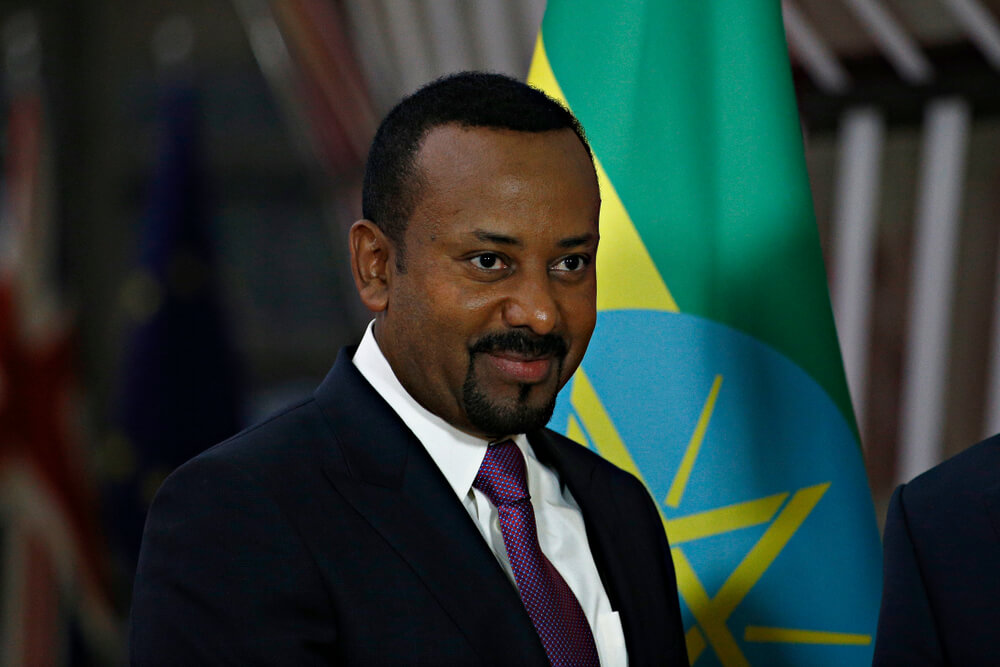 The government has the means to repel major attacks, while its opponents have not yet demonstrated that they can conduct a joint offensive - PM Abiy Ahmed
For now, a rapid advance by the rebel alliance on Addis Ababa appears unlikely.
The government has the means to repel major attacks, while its opponents have not yet demonstrated that they can conduct a joint offensive.
A prolonged conflict in which neither side manages to impose a solution is more likely.
Evidence that rebel groups are coordinating major operations, or confirmation that the Eritrean army has entered the fighting, would alter that assessment.
The re-establishment of telephone connections and civilian flights, together with the unimpeded passage of aid, would suggest scope for a ceasefire.
A more permanent agreement will also require decisions that can be implemented by forces on the ground.
If Fano stays out of the talks, Addis Ababa and the TPLF could stop fighting each other, leaving the conflict over Western Tigray unresolved.
A prolonged conflict is unlikely to topple the government in Addis Ababa, but it could deprive it of the ability to govern the north of the country on a regular basis.
If the movement of people, the operation of public services and the delivery of goods depend on local ceasefires, state decisions will be valid only where the army can enforce them. It is an outcome from which Ethiopia would struggle to recover, even after the fighting ceases.
