The honeymoon of the new Hungarian government and its leader, Péter Magyar, whose spectacular victory in the elections on 12 April marked the end of the long rule of one of the most corrupt regimes in the EU and NATO, is coming to an end.
The landslide victory of Magyar’s Tisza party over continental Eurosceptic leader Viktor Orbán was celebrated in a manner reminiscent of the days surrounding the fall of the Berlin Wall.
Hungarians’ enthusiasm was shared by all European capitals (or almost all), aware that Péter Magyar’s arrival signalled the end of Orbán’s blackmail, which had often blocked key European decisions, including those on support for Ukraine.
The days of celebration are behind Hungarians and Europeans, largely because of the challenges faced by the Magyar majority in recent months, both expected and unexpected.
Election of the President
The final stage of institutional change in Budapest is expected to take place on Tuesday, 11 August, when Parliament, with a two-thirds majority, is due to elect Hungary’s new President.
Magyar’s movement will thereby complete the takeover of the most important decision-making levers in Budapest in a relatively short time.
It has not been an easy task, given that Orbán’s machine has spent the past 16 years filling even the smallest capillaries of the state administration with loyalists.
Magyar’s government faces the problem of finding a candidate for the new president
At the same time, in the process of replacing the outgoing (Orbán’s) president of Hungary, Tamás Sulyok, the new government has created its biggest problems (and apparent damage) of the entire transition period.
Because Sulyok refused to resign, Tisza’s parliamentary supermajority even resorted to amending the constitution to end the former president’s term.
Even more than this display of political power, which Orbán’s remaining followers have called a “constitutional coup”, Magyar’s government faces the problem of finding a candidate for the new president.
The attempt to nominate Judit Polgár, the world chess star, ended ingloriously: she politely declined the offer. This move by Péter Magyar further shows that the new government does not yet have a fully developed strategy for “the day after”.
Rating drop
Toppling Viktor Orbán may now seem like the easier part of the job compared with creating a new state structure led by people with clearly defined roles.
Even a few days before the parliamentary session, Magyar and his partners had not announced the name of their candidate for head of state. Although largely a protocol position and not particularly influential, this role still deserves dignified treatment from Hungary’s new government.
Magyar's government is already suffering a drop in approval ratings
As a result, Magyar's government is already suffering a drop in approval ratings, from 61% in May to 57% now, as is the prime minister, whose rating has fallen from 72% to 62%. Analysts link these results directly to the process of replacing the president and, in particular, to the failed nomination of Judit Polgár, which some of Tisza's voters believe was insufficiently democratic and transparent.
Nevertheless, the slight fall in the new government’s rating must also be attributed to the “cooling” of the initial reformist enthusiasm generated by its sweeping victory in the April elections.
No Eastern European reform government has avoided a similar period of declining support, particularly during the political and economic transition of the 1990s. Hungary is now going through this experience for the second time.
Energy crisis
While the difficulties in dismantling Orbán's system could have been anticipated, Péter Magyar's government certainly could not have foreseen the energy crisis that Hungary has faced due to severe drought and a dramatic fall in the level of the Danube.
This is the first real test for his government, and it appears he will pass it, largely because Hungarians' enthusiasm for the change of government still endures.
Hungarians have drastically reduced consumption, which, together with the gradual rise in the water level of the Danube, is likely to lead to an end to the energy crisis
Hungary somehow survived the critical days when its only nuclear power plant, Paks, which provides almost half of the country's electricity consumption, was almost completely shut down, because citizens responded to Magyar's call to save energy.
Hungarians have drastically reduced consumption, which, together with the gradual rise in the water level of the Danube, is likely to lead to an end to the energy crisis.
Europe is an ally in economic recovery
The first 100 days of Péter Magyar's government will end in the second half of August, marking the end of the initial test of its functionality and efficiency.
The internal changes appear consistent with Magyar's pre-election promises, particularly regarding the dismantling of Orbán's vast propaganda apparatus and the corrupt channels through which public money flowed.
Péter Magyar faces much greater challenges with the country's economic recovery. The Hungarian economy has been stagnating for years, burdened with a large budget deficit of between 6 and 7 per cent of GDP, which Orbán has left to Péter Magyar.
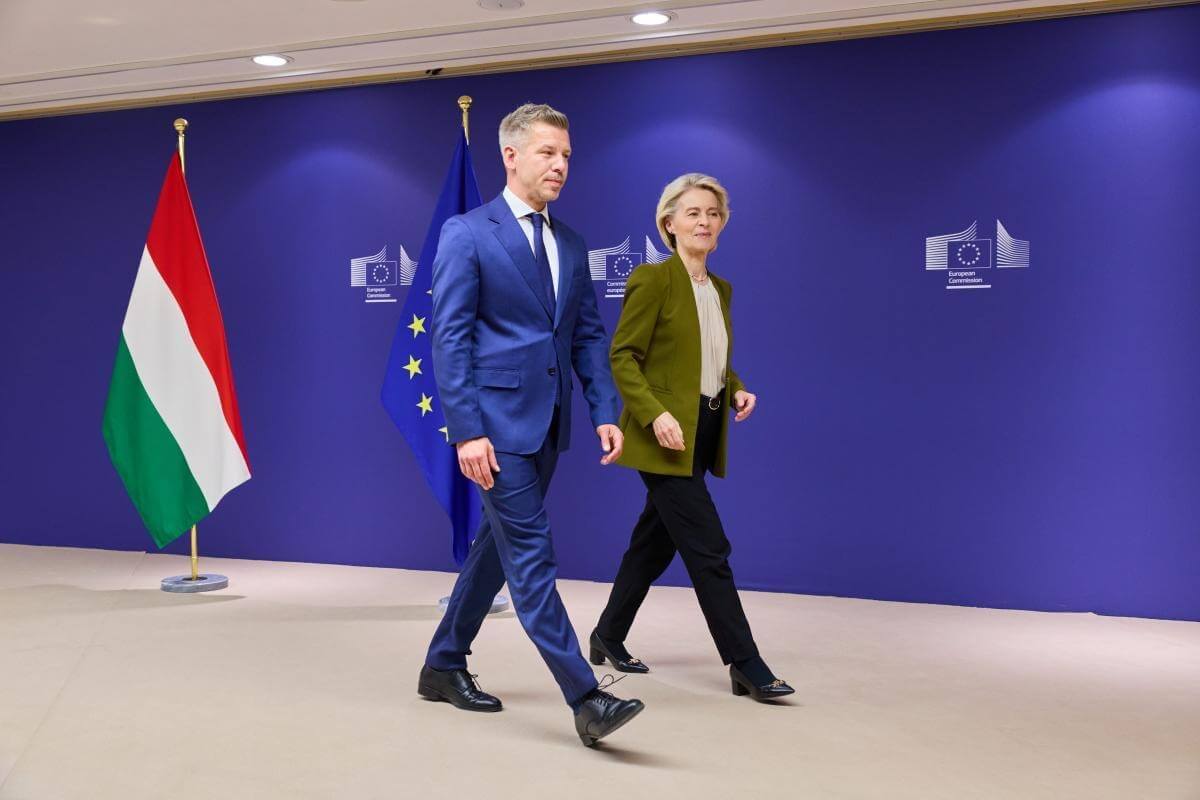 The EU has unfrozen more than 16 billion euros, giving Budapest vital breathing room to repair its damaged budget
As the main sign of support for the new government, the European Union has unfrozen more than 16 billion euros from EU funds, giving Budapest vital breathing room to repair its damaged budget.
However, the money will begin to flow only after Budapest submits detailed reform plans to Brussels by the end of August.
Reducing the deficit is a long-term task for Magyar's government, which has projected that by the end of the decade it will be able to meet the criteria qualifying Hungary for the introduction of the euro.
This process is directly linked to the reform of public services and to the main economic flows in the country, which for years were driven by the corrupt practices of Orbán and his establishment.
Péter Magyar still has two important allies to help him complete the job successfully: his still very broad public support in the country, despite a slight drop in ratings, and the support of the European Union, which sees the success of Hungarian reforms as an opportunity to improve its own image as a functional economic and political community.
Time, however, does not favour the new Hungarian government, because neither of these pillars of support will remain patient indefinitely for successful reform.
This is especially true for the millions of Hungarians who voted for Magyar’s victory and a break with the Orbán regime, expecting swift justice and an even faster economic recovery.
