This will be a tipping-point year. The biggest source of global instability won’t be China, Russia, Iran, or any of the 60-odd conflicts burning across the planet (the most since World War II). It will be the United States.
This conclusion runs throughout the Eurasia Group’s Top Risks 2026 report.
The world’s most powerful country and architect of the postwar global order is now actively unwinding that order, led by a president who is more committed to, and capable of, reshaping America’s international role than any of his modern predecessors.
Last weekend offered a preview of what this will mean in practice. After months of escalating pressure – sanctions, a massive naval deployment, and a full oil blockade – US special forces captured Venezuelan strongman Nicolás Maduro in Caracas and flew him to New York City to face criminal charges.
A dictator removed and brought to justice with no American casualties – it was President Donald Trump’s cleanest military win yet.
Trump has already branded his approach to the Western Hemisphere the “Donroe Doctrine.”
It is his version of President James Monroe’s 19th-century assertion of US primacy in the Americas.
But whereas Monroe warned European powers to stay out of America’s neighborhood, Trump is using military pressure, economic coercion, and personal score-settling to bend the region to his will. And he’s just getting started.
The spheres-of-influence framework
“America First” isolationism this is not. Simultaneously, the US is becoming more, not less, entangled with Israel and various Gulf states.
Trump’s willingness to strike Iran last year and meddle in European politics doesn’t exactly scream retrenchment, either.
Nor does the spheres-of-influence framework fit what he is doing. That label implies that Trump is carving up the world with rival powers, each staying in their own lane.
But his administration just sent Taiwan its largest-ever arms package, and its Indo-Pacific posture does not evince a desire to cede Asia to China.
Trump’s foreign policy doesn’t run on traditional axes like allies versus adversaries, democracies versus autocracies, or strategic competition versus cooperation.
A simpler calculus is at work: Can you hit back hard enough to hurt the man in charge?
A simpler calculus is at work: Can you hit back hard enough to hurt the man in charge?
If the answer is no, and you have something he wants, you are a target. If the answer is yes, you can probably cut a deal.
In the case of Venezuela, Trump wanted to topple Maduro, and there was nothing Maduro could do to stop him.
He had no allies willing to act, no military capable of retaliating, and no leverage over anything Trump cared about. So, he was removed.
Never mind that Venezuela’s entire regime structure remains intact, and that any transition to a stable democratic government will be messy, contested, and largely Venezuela’s to manage (or mismanage).
Trump is content with Venezuela continuing to be run by the same repressive regime, as long as it agrees to do his bidding (indeed, he chose this arrangement over an opposition-led government).
The law of the jungle
The threat of “or else” appears to be working so far. Trump has just announced that Venezuela’s “new” authorities will hand over 30-50 million barrels of oil to the US, with the proceeds “controlled by me, as president.”
Moreover, continued success in Venezuela, however narrowly defined, will embolden Trump to double down on this approach and push further – whether in Cuba, Colombia, Nicaragua, Mexico, or Greenland.
On the other end of the spectrum is China. When Trump escalated tariffs last year, the Chinese retaliated with export restrictions on rare earths and critical minerals – essential ingredients for a broad array of 21st-century consumer and military products.
With US vulnerabilities exposed, Trump was forced to back down. Now, he’s intent on maintaining détente and securing a deal at all costs.
What we are dealing with here is not grand strategy, but the law of the jungle
What we are dealing with here is not grand strategy, but the law of the jungle.
America is unilaterally exercising power wherever Trump thinks he can get away with it, uncoupled from the norms, bureaucratic processes, alliance structures, and multilateral institutions that once gave US leadership legitimacy.
As constraints tighten elsewhere – voters angry about affordability ahead of this year’s midterm elections, for example, and shrinking US trade leverage – Trump is eager to cement his legacy.
His willingness to take risks on the security side, where he remains largely unconstrained, will only grow.
The Western Hemisphere happens to be an especially prey-rich habitat – and one where the US has asymmetric leverage that no one can counter. Trump can score easy wins with minimal pushback and costs.
America’s lost credibility
But Trump’s approach is hardly confined to America’s immediate neighborhood.
If it wasn’t already clear, the administration’s threats against Greenland show that Europe is also in its sights.
The continent’s three largest economies – the United Kingdom, France, and Germany – all entered the new year with weak, unpopular governments besieged by populists within.
With Russia at their doorstep, the Trump administration is openly backing far-right parties that would further fragment the continent.
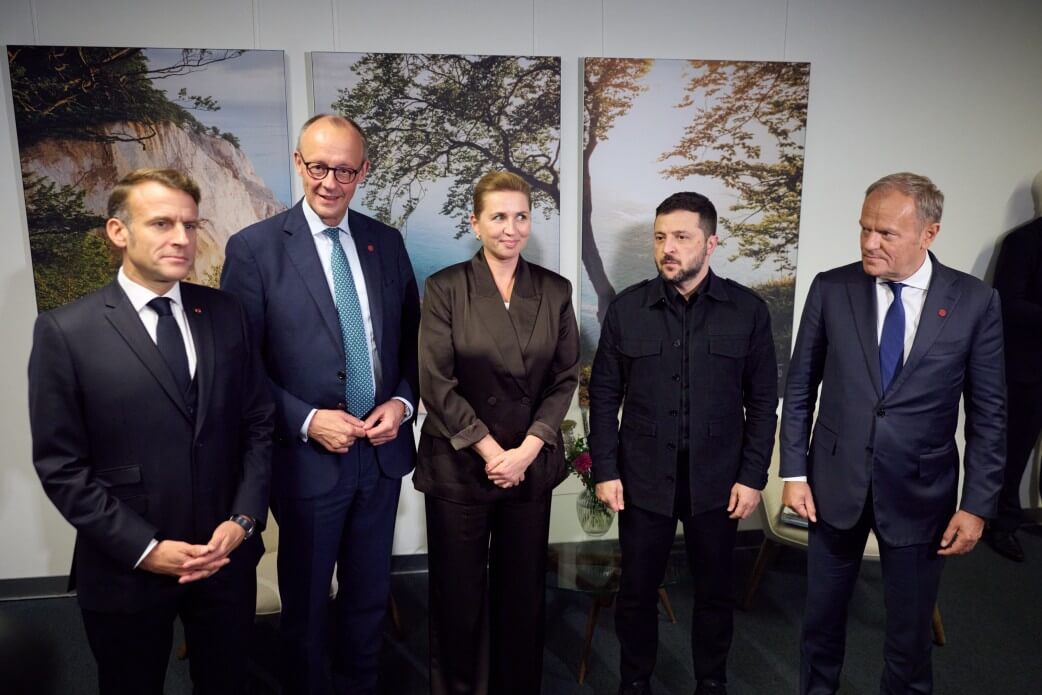 Unless Europeans find ways to gain leverage and credibly impose costs that Trump cares about – and soon – they will feel the same squeeze he’s applying across the Western Hemisphere
Unless Europeans find ways to gain leverage and credibly impose costs that Trump cares about – and soon – they will feel the same squeeze he’s applying across the Western Hemisphere.
For most countries, responding to an unpredictable, unreliable, and dangerous US is now an urgent priority. Some will fail, and some will succeed.
It may already be too late for Europe to adapt, but China is in a stronger position, content to let its chief rival undermine itself.
Chinese President Xi Jinping can afford to play the long game. He will be in power well after Trump’s term ends in 2029.
The damage to American power itself will persist past this administration. Alliances, partnerships, and credibility aren’t just nice to have.
They are force multipliers, giving the US leverage that raw military and economic power alone cannot sustain.
Trump is burning through that inheritance, treating it as a constraint rather than an asset.
He is governing as though American power operates outside of time, and as if he can reshape the world by force without lasting consequence.
But the alliances he’s shredding won’t snap back when the next president takes office.
America’s lost credibility will take a generation to rebuild, if it can be rebuilt at all. That is why 2026 is a tipping-point year – not because we know how things will end, but because we are already starting to see what happens when the country that wrote the rules decides it no longer wants to play by them.
Ian Bremmer, Founder and President of Eurasia Group and GZERO Media, is a member of the Executive Committee of the UN High-level Advisory Body on Artificial Intelligence.
