A golden rule of British diplomacy is to avoid public disputes with the United States, with the proviso that it does not always work.
The doctrine has been sorely tested in recent days as Prime Minister Keir Starmer came under pressure, including from his own side, to condemn Donald Trump’s Venezuela adventure.
As a former human rights lawyer and public prosecutor, Starmer could no doubt mount a persuasive case that the US’s kidnapping of the country’s now ex-president, Nicolas Maduro, broke international law.
As prime minister, he has evidently decided to keep his powder dry for even more contentious issues that might lie ahead.
Starmer’s Trump-friendly strategy
Establishing a positive relationship with Trump has been central to Starmer’s foreign policy priorities in the year since a guidance note to parliament acknowledged the view of some commentators that the outcome of the 2024 US election might put strain on cooperation with Washington.
That assessment now looks like a masterpiece of understatement after 12 months in which Trump has ripped up the rule book and inspired a proliferation of obituaries for the rules-based international order.
Starmer has nevertheless succeeded in maintaining an outwardly cosy relationship with the US president while abiding by the other unwritten rule of the ‘special relationship’, that the two sides can agree to disagree as long as they maintain the underlying friendship.
Starmer welcomed Maduro’s departure while stressing the UK played no role in the operation
The PM can argue that his Trump-friendly strategy spared the UK the worst of the US president’s tariff onslaught. But he has also effectively acknowledged that his influence on White House thinking on other issues is strictly limited.
In his limited response to events in Venezuela, he avoided either endorsing or condemning Trump’s actions, saying that would be a matter for international courts. He nevertheless welcomed Maduro’s departure while stressing the UK played no role in the operation.
As for relations with Trump, he said in a weekend interview that it was his responsibility to ensure that the relationship worked. “And not only have I stepped up to that responsibility,” he said. “I have made it my business, and I do get on with President Trump.”
If that means soft-pedalling on issues such as Venezuela, his unspoken message seemed to be, so be it. But will Starmer’s circumspection survive the next outrage by his Washington ‘friend’.
Standing with Denmark
The prime minister adopted a very different tone when it came to Trump’s latest threats to take over Greenland, arguing that US control over the self-governing Danish territory was vital for Western defence.
Without naming Trump, Starmer publicly backed Denmark and its prime minister, Mette Frederiksen, who rejected the threat and warned that US action to seize the territory would spell the end of NATO.
“I stand with her,” said Starmer, stressing that the future of the territory was a matter for Denmark and Greenland alone to decide.
That position was reiterated in a joint statement this week by European leaders gathered in Paris to discuss developments in Ukraine with President Volodymyr Zelenskyy and US officials.
Given that Trump pursued his threats against the Maduro regime, it would be rash of the Europeans to regard his designs on Greenland as a bluff.
Trump risks giving encouragement to Vladimir Putin and Xi Jinping that they can also get away with breaking the rules
If Starmer is willing to risk some of the political capital he claims to have with Trump, he might be as well-positioned as anyone on the European side to promote a compromise that might avert a worsening split over Greenland.
That might involve addressing US security concerns about Russian and Chinese expansion into the melting waters of the Arctic in negotiations that would take into consideration the interests of Denmark and the people of Greenland and ultimately avert the threatened annexation.
What unites the latest Trump controversies - Venezuela and Greenland - is that they both involve the Americas and evoke the president’s beloved Monroe Doctrine, a two-centuries-old declaration of US hemispheric hegemony.
However, by acting without the established restraints, Trump risks giving encouragement to Vladimir Putin and Xi Jinping that they can also get away with breaking the rules.
From Greenland to the Falklands
Perhaps Starmer might seek an opportunity to gently remind Trump that Britain and Europe retain a legitimate self-interest in what happens in the multiple states on the other side of the Atlantic.
The UK has Commonwealth partners in Canada and among independent states of the Caribbean and, along with its European partners, has an interest in evolving Arctic sea routes.
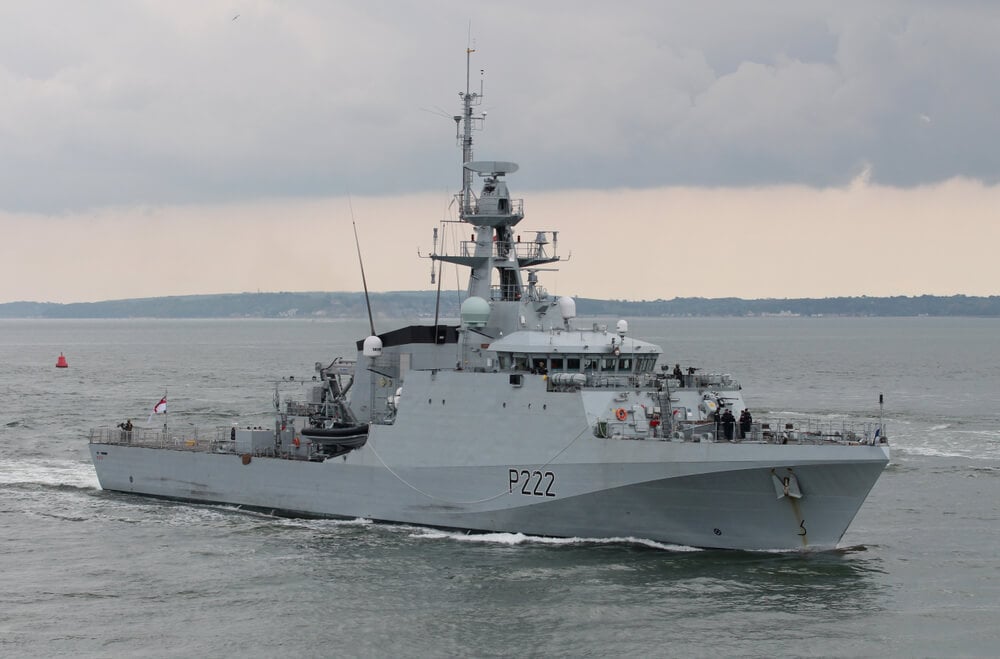 In December’s operation, the British deployment included a flagship, a detachment of the Royal Irish Regiment and military aircraft flying out of the Falklands - HMS Forth
Historically, Britain’s interests also extend to the opposite end of the American continent. As coincidence would have it, the British military just completed Operation Southern Sovereignty, billed as “a powerful display of joint capability and commitment to safeguarding sovereignty across the South Atlantic Islands”.
It was the latest of the periodic shows of force that the UK mounts to remind Argentina to keep out, more than 40 years after they waged a war for control over the Falkland Islands.
Argentine President and Trump friend Javier Milei has recently been reviving talk about the UK’s ‘illegal occupation’ of the Malvinas. It often happens when things are not going too well domestically.
In December’s operation, the British deployment included a flagship, a detachment of the Royal Irish Regiment and military aircraft flying out of the Falklands.
Perhaps if Starmer gets to speak to Trump, he should forget to mention that.
