In the early hours of 3 January, the United States conducted an operation that changes the frame of reference for modern international relations.
Through a combination of airstrikes and a helicopter raid in Caracas, U.S. forces arrested Venezuela's president, Nicolás Maduro, and his wife, Cilia Flores, and took them out of the country into U.S. custody.
A day later, the Venezuelan Supreme Court declared "administrative continuity" and appointed Delcy Rodríguez, the vice president of Venezuela and a key figure in the regime, an interim president, while the president of the United States, Donald Trump, publicly announced that Washington would "temporarily lead the country."
Maduro as an individual is not the subject of this article. Repression, systemic corruption, and institutional collapse marked his rule for years. That is not in dispute.
What is disputed, and requires serious analysis, is the method by which one state physically removed the head of another state – without a Security Council mandate, without seeking broader international consensus, and with rhetoric that openly introduces an element of governing another country. This is not a moral dilemma; it is a matter of order.
Operation as a message
The structure of the operation indicates that the decision was political rather than tactical.
The simultaneous airstrikes on military facilities in and around Caracas, followed by a helicopter raid, were not intended as a means of pressure but as the final stage of a premeditated decision.
The decision had been made, the capability existed, and the consequences would be addressed afterwards
The objective was not to alter the regime's behaviour but to remove the highest levels of government. The decision to arrest Maduro was not influenced by his position as head of state.
This approach is a clear departure from previous practice, where layers of legal and political justification cloaked even the most controversial interventions.
There was minimal effort here. The message was clear: the decision had been made, the capability existed, and the consequences would be addressed afterwards.
When the law is bypassed
In the traditional system of international law, the use of force has clearly defined, narrow exceptions. Nothing in the initial publicly available explanations of this operation fits squarely within those frameworks.
Instead, a hybrid narrative emerged: Maduro as a criminal actor, the operation as the administration of justice, and simultaneously as the beginning of “transitional governance.”
Prosecution of criminal offences and violent change of government are not in the same category
This combination is politically expedient but legally highly problematic. Prosecution of criminal offences and violent change of government are not in the same category.
Erasing those distinctions transforms the legal order from a constraint to an instrument. This may bring short-term efficiency, but in the long term it creates unpredictability.
Venezuela without Maduro, but not without a system
The assumption that removing Maduro automatically paves the way for democratic change is based on a misunderstanding of the Venezuelan government.
That regime was never just one man. It was a network of security structures, military loyalties, and economic interests, particularly in the oil, smuggling, and foreign exchange control sectors.
Who controls the armed forces, intelligence apparatus, and financial flows?
The Supreme Court’s formal decision to appoint an interim president resolves the constitutional vacuum on paper but does not address the issue of real power.
The key question in the coming period is not who occupies the presidential palace, but who controls the armed forces, intelligence apparatus, and financial flows.
Without a clear answer to that question, any political transition remains merely declarative.
A fight for control, not for reform
In the coming weeks and months, the most likely scenario is not liberalisation, but rather a struggle within existing structures to preserve or redistribute power.
Part of the elite will attempt to adapt to the new circumstances and offer cooperation to Washington in order to maintain their positions.
Another faction will rely on resistance, counting on nationalist mobilisation and fear of external supervision.
In such an environment, security becomes the central issue, while political reforms become secondary
A third group will simply continue to operate outside the institutional framework, exploiting the weakness of the state for their own interests.
In such an environment, security becomes the central issue, while political reforms become secondary. Any attempt to impose a "new beginning" quickly, without agreement with key internal actors, carries the risk of prolonged chaos, increased violence, and further population outflow.
Regional and global consequences
Reactions in Latin America have already revealed deep divisions. Even countries that have criticised Maduro for years now face an uncomfortable fact: the precedent set today may be applied tomorrow in a different context, against a different regime, with a different justification. Once sovereignty is relativised, it is difficult to reassert.
Globally, this event further weakens the already fragile role of international institutions. Not because they formally disappear, but because they are openly bypassed.
When decisions of such importance are made without real consequences for those implementing them, the message is clear: the rules apply only as long as they do not stand in the way.
America's post-operation problem
For Washington, the technically successful operation presents a series of political and strategic problems. Any serious form of "interim governance" in Venezuela carries a triple burden: legitimacy, capacity, and security.
Governing a country that has been economically and institutionally devastated for years requires a long-term presence, a clear exit strategy, and a willingness to bear the consequences of failure.
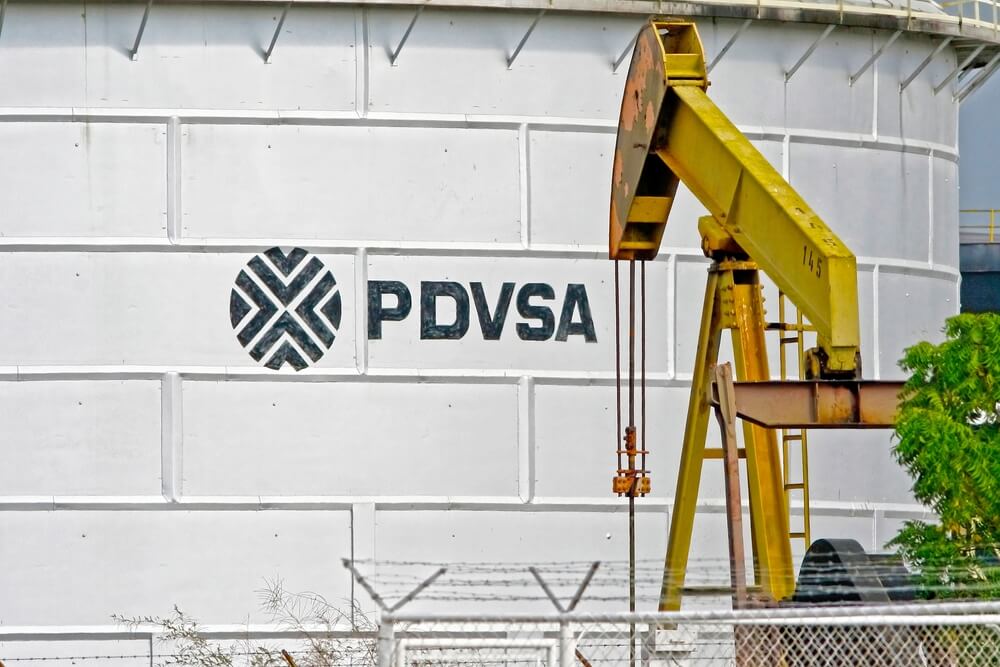 Without political agreement and minimal internal cohesion, attempts to rapidly increase oil production can easily become a new source of conflict
The energy dimension adds to the complexity of the situation. Venezuelan oil is often presented as an easy prize, but, in reality, it depends on stability, infrastructure, and people.
Without political agreement and minimal internal cohesion, attempts to rapidly increase production can easily become a new source of conflict.
If this precedent goes unanswered by the international community, it becomes part of the legitimate arsenal of power – not an everyday tool, but a permissible option.
In such a world, the difference between "rights" and "capabilities" becomes increasingly blurred, and the security of small and medium-sized states depends more and more on how useful or irrelevant they are deemed at any given moment.
Venezuela is entering a phase in which power will not be decided by elections or political programmes but rather by controlling the apparatus of force and economic flows.
Promises of rapid recovery will clash with the reality of a country that has been systematically depleted and degraded for years.
At the same time, international relations provide another example in which the use of force replaces established rules, without the need to justify this decision.
Maduro has been removed. What remains is a world where such actions become possible – and acceptable.
