What will Europe be like without a US military and political presence? Europeans had better start preparing themselves for this eventuality, because there is no longer any doubt that US President Donald Trump wants to end the North Atlantic alliance and is well on his way to doing so.
The only remaining question is whether he will formally withdraw the United States from NATO, or simply hollow it out through neglect and contempt.
Either way, the alliance’s dissolution has already begun. Arrangements as long-standing and as tested as NATO usually do not collapse in a single day or through a single act.
Rather, they erode as trust in their defining commitments—namely, mutual defense—diminishes.
That is precisely what has been happening during Trump’s second presidency, especially now that Europeans have refrained from joining his disastrous war of choice in the Middle East.
Meanwhile, despite the Republican Party’s supposed dedication to maintaining a strong US defense, no major figure in the party has called Trump out on the irreversible damage he has done.
The decisive factor in European security
Throughout the Cold War and the period following it, America’s presence in Europe was the decisive factor in European security and internal stability.
The US underwrote the peace and prosperity that allowed for economic integration and, ultimately, the creation of the European Union.
Following the electoral defeat of Viktor Orbán, Trump will be even more inclined to leave Europeans to their own devices
But Trump and his MAGA movement could not care less about this history. For scarcely coherent reasons, they harbor deep hostilities toward the EU and are bent on dragging Europe back to the age of self-destructive nationalism.
It is a dangerously misguided objective, given that success would ultimately leave America itself much weaker and more isolated.
But such arguments have no purchase on Trump. Following the electoral defeat of his illiberal ally in Hungary, Viktor Orbán, he will be even more inclined to leave Europeans to their own devices.
Europe will find itself on its own
For the first time in eight decades, Europe will find itself on its own. Europeans will need to decide their own fate and take responsibility for their own security.
This might sound like a banal observation, if not for Europe’s uniquely bloody history.
It was America’s presence on the continent that allowed for Germany’s eventual reunification and the eastward enlargement of NATO and the EU
The US withdrawal from the European theater after World War I set the stage for Hitler’s rise and, eventually, World War II. Had the world’s premier military and economic power remained through the interwar years, German revanchism would have been a non-starter.
That was the lesson that the WWII generation drew from the war and applied in its aftermath.
US President Harry S. Truman maintained a strong US presence in Europe, not only to meet the threat posed by Stalin’s Red Army—which was standing in Berlin, at the center of Europe—but also to alleviate Europeans’ fears of German revanchism.
This US decision created the conditions for moving toward “ever-closer union” in Europe.
It was America’s presence on the continent that allowed for Germany’s eventual reunification and the eastward enlargement of NATO and the EU. Europe as we know it would never have emerged otherwise.
Europe’s post-American future
What, then, does Europe’s post-American future hold? Can it manage its security and maintain its unity without the US?
For Germany, with its own history of hegemonic aspirations on the continent, America’s withdrawal raises difficult questions.
Does the current generation of German political leadership exhibit the historical sensitivities needed to assume a new role, in partnership with France and others?
The rise of the far-right Alternative für Deutschland shows that nothing can be taken for granted.
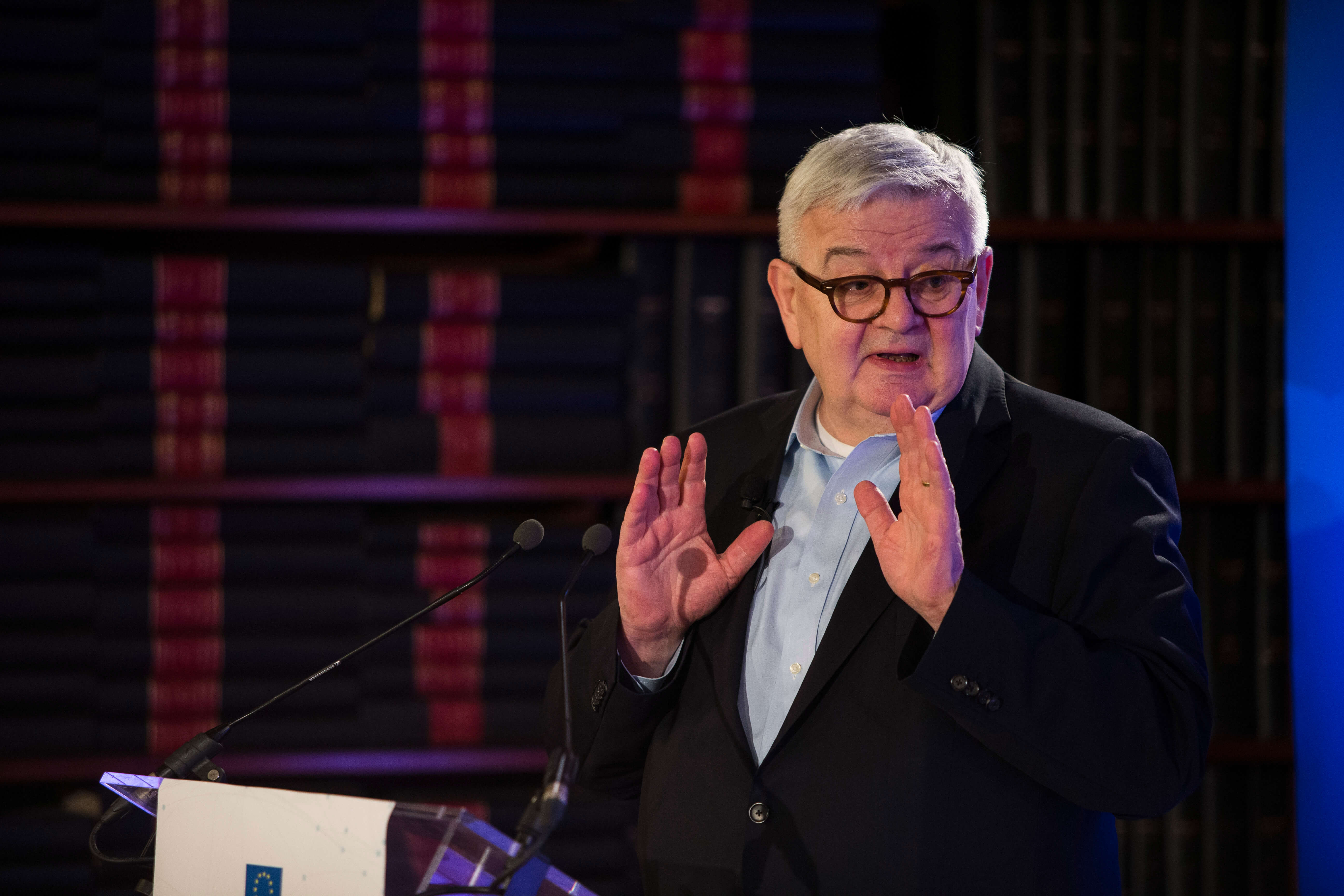 The two strongest European powers must step up to fill the vacuum. No longer can Europeans simply wait for the US to provide the necessary leadership - Joschka Fischer
On the question of who will lead Europe, there is no alternative to Germany and France.
The two strongest European powers must step up to fill the vacuum. No longer can Europeans simply wait for the US to provide the necessary leadership.
One wonders if Americans realize that they are destroying the greatest diplomatic success in their own history, as well as significantly weakening the foundation of American power and prosperity.
There is no reason to think that the US can simply dispense with its strategic counterpart and suffer no costs.
Unfortunately, the window for reversing course has closed. The long American protectorate has come to an end under Trump, and it will not return. Europe must now chart its own course.
Somehow, the transatlantic relationship—the very idea of the West—will need to be redefined whenever the MAGA fever breaks.
But even amid so much uncertainty, one thing remains clear: Europeans and Americans will always be stronger in the new world order together than apart.
Joschka Fischer, Germany’s foreign minister and vice chancellor from 1998 to 2005, was a leader of the German Green Party for almost 20 years.
