Hungary's resources alone are insufficient for the country to be influential in European or global contexts. Its economy, at about USD 270 billion, is comparable to that of Iowa or Kansas, and it ranks as the 21st largest in Europe out of 45 countries.
With a population just under 10 million, Hungary is similar in size to New Jersey, Switzerland, or Austria.
However, years ago, it established itself as an important European and even global political actor, with influence far exceeding its economic, developmental, and demographic potential.
Populist leader Viktor Orbán, solely responsible for Hungary's breakthrough on the international stage, suffered a convincing defeat in Sunday's elections, ending his 16-year rule often described as authoritarian.
Just as Hungary punched above its weight for years, the consequences of its internal political upheaval will now be felt far beyond its borders.
Vladimir Putin is probably the biggest loser abroad from Orbán's defeat. His government announced that it respects the election result and expects "pragmatic contacts" with the new government in Budapest.
At this point, both positions of the Kremlin are probably correct and sincere, which is rare.
Unprofitable investment
Faced with the convincing defeat of its Hungarian proxy, Moscow has no interest in continuing to invest in Orbán's sovereigntist, anti-EU, pro-Russian project.
Attempting to weaken the pro-European government of future Prime Minister Péter Magyar would be too costly and time-consuming for Moscow, and Putin needs quick results.
His interest in Hungary has been clear until now: to have a loyal ally within the EU and NATO, capable of sabotaging key decisions of these two blocs, especially those directly related to supporting Ukraine in resisting Russian aggression.
In this respect, Hungary under Orbán was a highly valuable ally for Moscow.
Moscow did not leave its Hungarian partner unrewarded for the strategic services
Packages of European sanctions against Russia, and especially aid packages for Kyiv worth tens of billions of euros, were either slowed or completely blocked in recent years by the Hungarian government's veto.
Moscow did not leave its Hungarian partner unrewarded for these strategic services, primarily through the still open channel of oil flow to Hungary via the Druzhba pipeline, constructed during the Soviet Union era.
Orbán and his ideological partner in Slovakia, Prime Minister Robert Fico, stated in Brussels that their landlocked countries still receive oil from this source, despite the bloc's decision to gradually eliminate energy imports from Russia.
Of course, the Hungarian leader received this oil at a substantial discount, just like Russian gas, which accounts for 60% of Hungary's demand.
Less and less space for Russia
As these arrangements are expected to expire with the imminent arrival of Péter Magyar's government, Moscow will lose its focus on Hungary.
It will shift its attention to parts of Europe where it can still expect a similar outcome, namely a proxy with the power to sabotage European decisions related to Russia and Ukraine.
Russia still has certain hopes for the outcome of parliamentary elections in Bulgaria on 19 April
However, there are fewer such places. The young democracies in Eastern Europe and former Moscow satellites, which are the main areas of Russian influence, are largely closed to infiltration from the East.
The victory of pro-European forces in Poland in 2023 and in Romania in 2024/2025 was, for Russia, an unpleasant prelude to what happened in Hungary on 12 April.
Russia still has certain hopes for the outcome of parliamentary elections in Bulgaria on 19 April, where it is also attempting to use hybrid pressures to secure the success of forces that could be loyal to it.
Trump's withdrawal from Europe
At the same time, alongside Orbán, the standing of US President Donald Trump is also declining. He regarded the former Hungarian leader as the head of the European version of his populist movement in America, MAGA.
The aim of this alliance, not paradoxically, was identical to Moscow's plans: to weaken internal European ties and impose its own influence on divided (and small) economies and diplomacies in Europe.
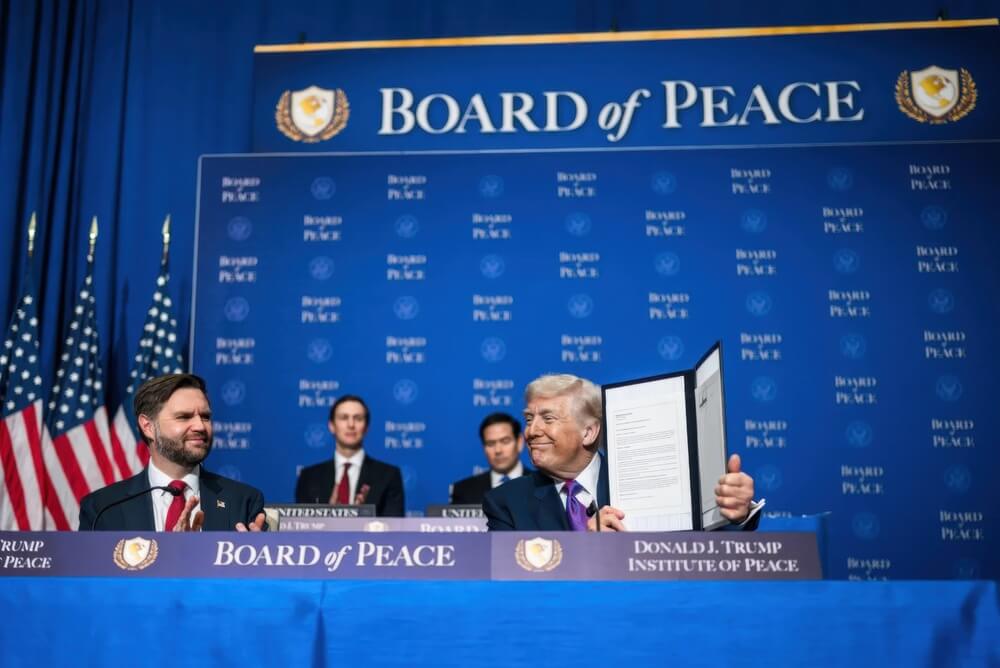 Overwhelmed by the crisis in the Middle East and the troubles of the domestic economy, Trump will leave European affairs to their actors
The vehicle for achieving that aim is precisely leaders and movements like Orbán and his Fidesz. Moreover, with Sunday's election defeat, Trump lost a carefully nurtured European centre of gravity for his isolationist, anti-immigrant ideology.
From today, Trump, like Putin, will lose interest in Hungary and its politics, leaving it to the European orbit.
He will continue to seek opportunities to compensate for the loss on the extreme right, primarily in Germany (AfD) and France (National Rally).
However, turning these two largest and most influential European powers into a new Orbán's Hungary is an unprofitable and impossible task for the American president, who, like Putin, is running out of time.
His biggest political test will come in seven months, at the midterm elections, which will determine the fate of the second half of his presidency.
Overwhelmed by the crisis in the Middle East and the troubles of the domestic economy, Trump will inevitably leave European affairs to their actors; he is simply compelled to do so.
