Some institutional failures unfold not through scandal but procedure, with acts of sabotage dressed up in the language of good-faith inquiry and accountability. By the time anyone notices what is happening, the damage has been done.
I fear that this is what we are witnessing in attacks against Karim Khan, the chief prosecutor for the International Criminal Court in The Hague.
Recent developments seem to satisfy goals that the United States and Israel have spent months working toward.
The story starts in April 2024, when a group of US senators warned—in fact, threatened—Khan that if he dared to seek an arrest warrant against Israeli Prime Minister Benjamin Netanyahu for war crimes, he would become a target himself.
Undeterred, Khan did just that, filing applications for warrants to arrest Netanyahu, former Israeli Defense Minister Yoav Gallant, and a Hamas commander—just as he had previously sought the arrests of Russian President Vladimir Putin, former Philippine President Rodrigo Duterte, and the Taliban leadership.
But now, Khan’s enemies have managed to start a debate about his potential removal, with allegations of sexual misconduct serving as the tip of the spear.
It is a classic case of an institution failing to subject an internal matter to the principles (namely, the rule of law) that it is supposed to uphold globally.
Although an internal judicial panel—the mechanism the Court itself created to weigh such matters—examined the allegations and found that they did not meet the threshold for proving misconduct, those pushing for Khan’s removal have not given up.
Part of a larger offensive against the ICC
In the latest development, ICC member states are preparing to conflate two separate questions—whether serious misconduct occurred and whether the prosecutor should be removed—in a single vote.
This is no mere formality. Folding the second question into the first—which, again, has not been proven—enables removal based on an unsubstantiated accusation, or on a different issue altogether (such as engaging in a consensual intimate relationship from a position of authority—something that no one ever alleged).
Since the Khan case is obviously part of a larger offensive against the ICC, it is worth calling attention to the identity of the ICC’s enemies and what they want.
Marco Rubio published a commentary in The Wall Street Journal whose title left no room for ambiguity: “Why We’re Dismantling the International Criminal Court”
On July 13, US Secretary of State Marco Rubio published a commentary in The Wall Street Journal whose title left no room for ambiguity: “Why We’re Dismantling the International Criminal Court.”
That was not idle rhetoric. The US has already sanctioned 11 senior ICC officials, including Khan, two deputy prosecutors, and eight judges—all of whom have had their bank accounts frozen, credit cards canceled, Apple, Amazon, and PayPal accounts locked, and so forth.
Nor did Rubio stop at announcing the administration’s intention to dismantle the ICC “brick by brick.” He also dressed up the effort as a civilizational crusade.
Casting the court as an instrument of progressive activists, globalist elites, and governments hostile to the US, he announced a diplomatic campaign to rally every ally that endorses the MAGA creed of national sovereignty against globalism.
The real purpose of the operation against Khan
Moreover, according to the Financial Times, when US President Donald Trump met with Chinese President Xi Jinping in May, he suggested that China and Russia—neither of which is a party to the Rome Statute, which created the ICC—join him in opposing the tribunal.
That America’s chosen partners in this crusade are precisely the two countries with the greatest reason to fear the Court says more about the real purpose of the operation against Khan than any communiqué about sovereignty.
The Trump administration and Netanyahu want the same thing: to ensure that no international court can touch soldiers, border agents, or its chosen allies
One need not believe in conspiracies to see the confluence of interests between US and Israeli leaders.
The Trump administration and Netanyahu want the same thing: to ensure that no international court can touch soldiers, border agents, or its chosen allies, no matter how serious the allegations of war crimes and crimes against humanity.
Both see the “Khan scandal” as the perfect occasion to defang the court.
They do not need to destroy it from the outside if its own member states can hollow it out from within, ignoring a judicial finding to hold a political vote against the man who signed the warrants that most inconvenienced them.
The ICC must remain an independent court
The countries that are still party to the Rome Statute therefore face a choice that will outlast this case.
They can demand a process worthy of the institution they built, and which would afford the ICC’s own prosecutor the same procedural fairness that it demands of every state. Or they can set a precedent that politics trumps judicial findings.
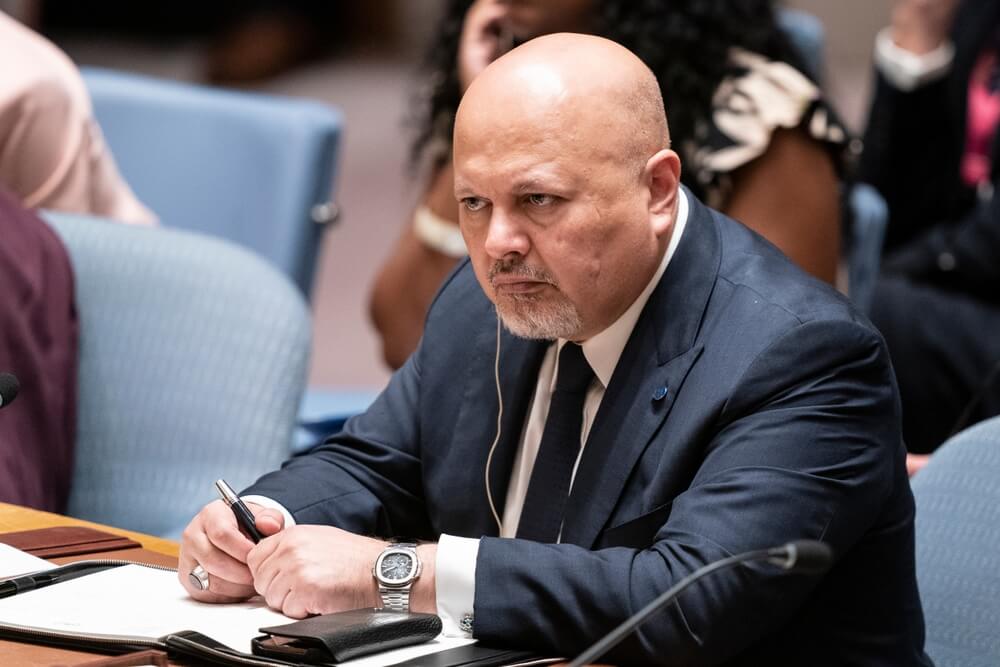 Karim Khan has shown the courage and fortitude to seek arrest warrants for suspects who would have been considered untouchable in the court’s earlier years
The right choice is obvious. The ICC must remain an independent court, and it certainly should not roll over for those who want to dismantle it “brick by brick.”
Khan has shown the courage and fortitude to seek arrest warrants for suspects who would have been considered untouchable in the court’s earlier years.
At a time when international criminal justice and the rule of law face a full-scale frontal assault, not least from indicted war criminals, he deserves the world’s recognition and support.
Josep Borrell is a former high representative of the European Union for foreign affairs and security policy, a former vice-president of the European Commission, a former president of the European Parliament, and a former foreign minister of Spain.
